




























Futures on Bitcoin are a financial instrument for hedging risks and trading in the cryptocurrency market. Most often, this term is associated with speculative actions by major players – institutional investors. But can a regular private investor use this instrument?
In this article, we will explain what it is, how futures work, and how to use them for trading Bitcoin.
What are Bitcoin futures?

A future is a contract to buy or sell Bitcoin at a specific point in time and at a predetermined price. At the end of the futures term, at the designated time, its buyer is obliged to fulfill the contract—that is, to buy or sell the asset in the specified amount at the agreed-upon price, regardless of the market value of the asset at the moment of purchase/sale.
How it works
Futures allow market participants to speculate on the anticipated future price of Bitcoin. In practice, the price at which the asset will be sold/bought according to the futures contract may differ from the market price of Bitcoin.
Futures specification
Each futures contract has a set of specific conditions. These include:
-
Name of the futures contract;
-
Size, i.e., the amount of assets to buy or sell;
-
Purchase price of the asset at the time of contract execution;
-
Contract type: cash‑settled or physically delivered.
The cash‑settled type implies crediting or debiting the difference between the futures price and the asset price at the time of execution, whereas the physically delivered type means direct delivery of the asset.
-
Trading period of the future – the period during which the contract can be resold or repurchased;
-
Delivery date or expiration date of the Bitcoin future—i.e., the end of the futures trading period. At the moment of contract expiration, the parties are obliged to fulfill their obligations.
Price of Bitcoin futures
Before the contract’s expiration date, the actual price of the underlying asset—Bitcoin—and the price specified in the contract usually differ from each other.
When market participants set the asset price in a futures contract, it can be influenced by additional parameters. If the seller is confident in the asset’s price increase in the market or in anticipation of positive news, the futures price will exceed the spot price at the time of agreement. Such a situation on the market is called contango.
When the futures price is lower than the spot price, this situation is called backwardation. This may occur, for example, in anticipation of a deep correction of the asset or in the context of negative news.
How to use Bitcoin futures on an exchange
Futures contracts are most often used as a trading tool:
-
For short‑term trading on the spot market;
-
For leveraged trading;
-
For risk hedging.
For long‑term purchases, futures are usually not used. This is because each future has a specific expiration period, and it is practically impossible to hedge far‑term market declines without constantly purchasing new futures contracts with later execution terms.
Short‑term trading
This involves speculative actions in the short term to achieve maximum profit. Futures allow trading strategies to be more flexible in changing conditions.
For example, traders who open and close trades within a single day use scalping — closing dozens or even hundreds of trades on one account within a short time. Combined with margin futuristic trading, this strategy can yield large profits—but risks are very high.
Features of leveraged trading
Leverage is a tool for trading borrowed assets. The user invests only part of the capital for the trade; the rest (for example, with 10× leverage—90% borrowed funds) is provided by the exchange for a certain percentage of the deal. Exchanges offer leverage from modest 2.5× to colossal 100× and above.
Risk hedging
Futures contracts are used to minimize risks. Facing the risk of assets declining, one places a futures contract for the entire amount of their crypto investment portfolio. In the event of a drawdown, the sale price under the contract compensates for the losses from the price drop.
Thus, futures are used in the short term to compensate for potential losses, earning from price declines.
Where to buy and trade Bitcoin futures?

There are two options for buying futures contracts:
-
Stock markets
Over several years, companies applied to the U.S. SEC to get approval to trade Bitcoin futures, but these attempts failed until October 2021, when the SEC approved the first Bitcoin futures ETF from ProShares. Note: a Bitcoin futures ETF is not direct trading of futures but trading of shares in a regulated investment fund tied to futures, allowing indirect exposure to Bitcoin.
-
Crypto exchanges
On crypto platforms, futures trading is not state-regulated. Entry thresholds are lower in terms of ID and capital requirements. Many crypto services offer Bitcoin futures trading, including BitMex, OKEx, Deribit, Binance. OKEx also trades Bitcoin Cash futures, and Deribit offers Bitcoin and Ether futures. Leverage can reach 100× on platforms such as BitFlyer, Deribit, and BaseFEX.
When choosing a platform, pay attention to:
-
Platform features: deposit/withdrawal methods, security;
-
Prefer not to store assets on the exchange—use mobile crypto wallets;
-
Exchange conditions: trading fees, available tools;
-
Tradable coins, contract types, asset liquidity.
Advantages and risks in futures trading
Trading futures opens up opportunities in Bitcoin and other cryptocurrencies, but it can both reduce risks via hedging and increase them through leverage.
Advantages
-
Ability to start trading with a small capital;
-
More flexibility in trading strategies;
-
Portfolio hedging as a main loss‑minimizing tool;
-
High profit potential with successful leveraged trading;
-
High liquidity — futures trading volume is very high. For example, one day after launching the Bitcoin Strategy ETF, trading volume reached 24 million shares, and asset value rose from $20 million to $570 million.
Risks
High returns through leverage come with huge risks. Leverage up to 100× can lead to enormous profits but also full portfolio loss.
Experts warn that Bitcoin futures trading is not suitable for beginners. You must understand market movements to use them properly.
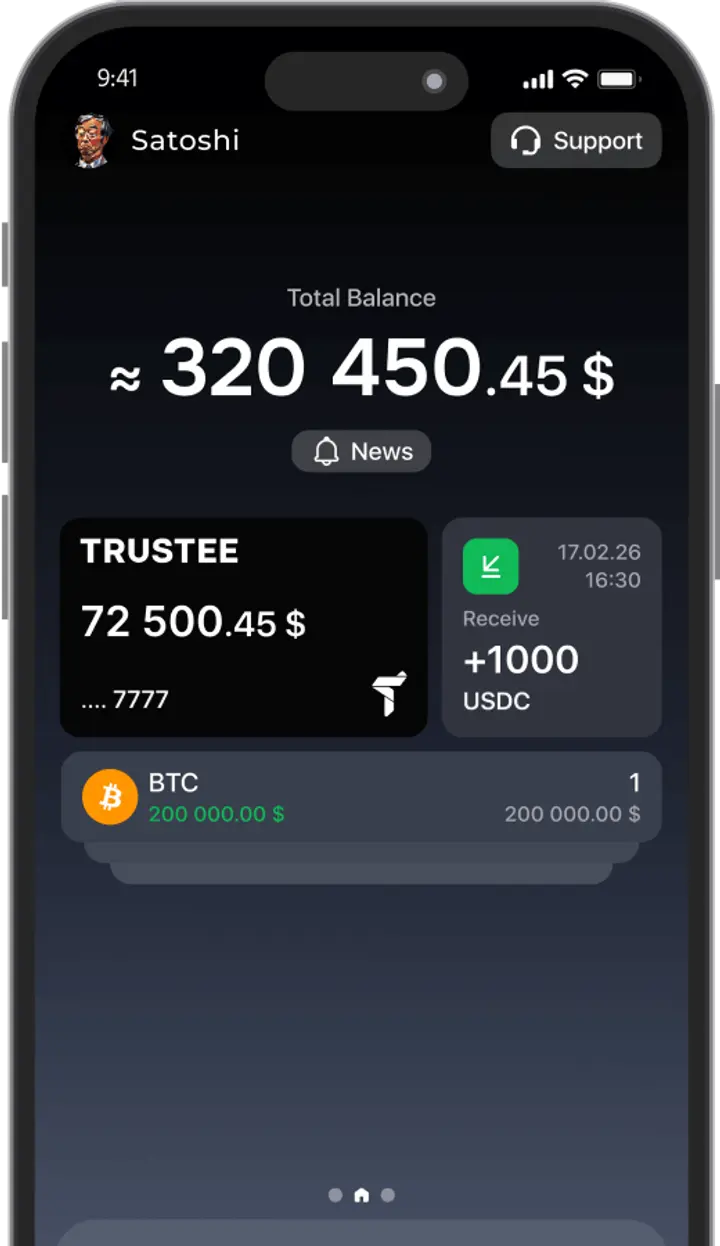
For beginners, the HODL strategy — buying and holding Bitcoin for the long term — is more suitable. For long‑term investment and storage, a mobile crypto wallet like Trustee Plus is optimal.
How do futures affect the crypto market?
Overall, futures and Bitcoin ETFs allow institutional investors (large firms and funds) to enter the crypto market and bring in capital.
Following futures ETFs, spot Bitcoin ETFs were approved by the SEC on January 11, 2024, driving BTC to new all-time highs.