





















In early May 2021, a new cryptocurrency called Chia began trading on crypto exchanges. The launch of the Chia Network mainnet had previously caused a shortage and significant price hike in HDD and SSD drives in China and several other countries, which also affected retail markets in Europe.
Experts at Trustee Wallet explain why this new cryptocurrency sparked such market turbulence and what its future might hold. Learn how Chia works, where to buy it, and how to mine it in our detailed review!
What is the CHIA cryptocurrency?
American developer Bram Cohen, known for creating the BitTorrent file-sharing protocol, founded Chia Network in 2017 as an "improved blockchain and smart transaction platform."
Chia Network raised $3 million in seed funding in 2018 and secured an additional $28 million in subsequent funding rounds.
The main difference between Chia and more traditional cryptocurrencies is that it’s mined not with processing power or graphics cards, but with hard drives and solid-state drives — HDDs and SSDs.
Essentially, Chia Network is a decentralized data storage network that leverages unused disk space as computing power.
How Chia Cryptocurrency Works
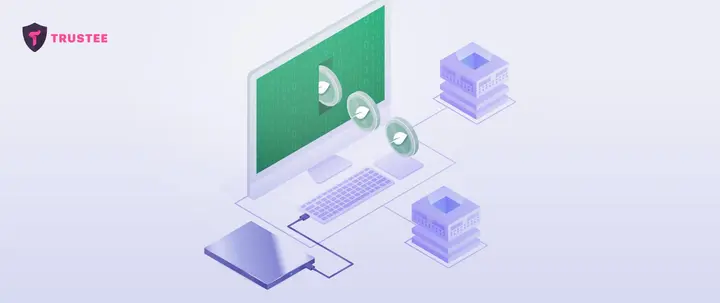
Instead of a proof-of-work consensus algorithm, Chia uses Proof-of-Space-and-Time, claiming this to be the first new Nakamoto consensus algorithm since Bitcoin. Disk space acts as the validator of transactions. Users are rewarded for providing disk space to support the network — the more space provided, the higher the potential earnings.
The Proof-of-Space-and-Time model uses storage space to hold a set of cryptographic numbers called "plots." The blockchain sends a request for the next block, and farmers scan their plots for the closest matching hash.
Where to Buy: Chia Cryptocurrency on the Exchange
- On April 20, Chia was listed on HotBit. Trading started at $5,000 but dropped to $1,600 on the first day.
- On May 3, Chia began trading on the OKEx crypto exchange, significantly increasing mentions in media and social networks.
You can also buy Chia cryptocurrency on exchanges such as Gate.io, XT.com, MXC.COM, Bibox, Dcoin, Lbank, BKEX, AOFEX, and DigiFinex.
Chia: Cryptocurrency Price and Rate
A week after trading began, the coin was priced around $1,000 — approximately 35% lower than its initial OKEx listing price of $1,700. Prices ranged between $2,500 and $450, indicating high volatility.
The Chia cryptocurrency price is expected to rise as major venture funds reportedly invest in the project. Such news tends to attract marketers, bloggers, and media influencers, fueling public interest. However, some predict the price could fall to $20–30.
How to Mine Chia — Farming
The main feature of Chia is its alternative mining method, which does not rely on graphics cards or ASICs. Disk space is used for mining. The minimum required disk space for mining Chia is 100 GB. The entry barrier is relatively low, with no need to build or maintain nodes.
The primary marketing message for users is eco-friendly mining or "farming," which requires significantly less energy than Bitcoin or Ethereum mining:
- SSD — up to 6 watts;
- HDD — up to 12 watts;
- GPU — up to 450 watts;
- ASIC — up to 3,300 watts.
The mainnet was launched on March 19, and within two months, the total disk space used for Chia mining increased more than 30-fold — reaching 3.1 exabytes (1 exabyte = 1,048,576 terabytes).
To begin mining, users must create a "plot" — a 109 GB section of hard disk space. The more plots one has, the higher the farming productivity. These plots contain tables with hashes. Before forming a block, the blockchain sends a request to search for a specific hash, and rewards the user who has it — a simple number that meets difficulty and space criteria.
How to Get Chia for Free
As of now, there is no information available about upcoming airdrops or giveaways.
Chia Forecast and Outlook
First, it’s important to remember that hype can be artificially generated. The buzz around this coin may well be a marketing strategy by hard drive manufacturers. However, assuming this isn’t a conspiracy, the coin has potential. Farming eliminates the need for specialized equipment and high electricity bills.
The project expresses hopes that its cryptocurrency will be easier to use than fiat money in the future, harder to lose, and almost impossible to steal.