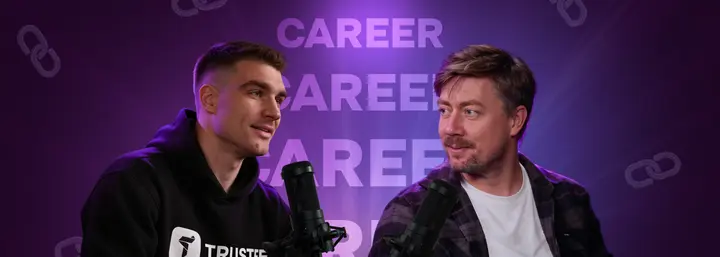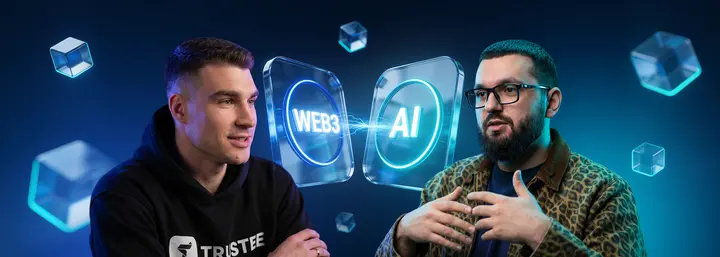

























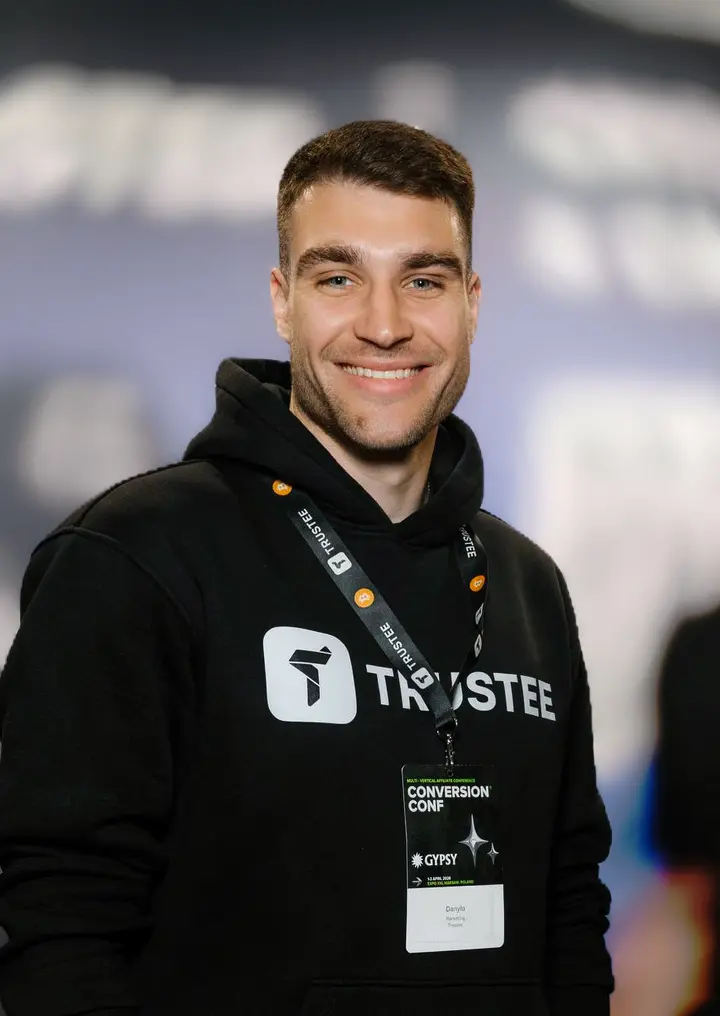

Ivan Paskar, currently the Head of Markets Expansion at Kraken, has spent more than a decade building his career in the cryptocurrency industry, starting as an intern with a salary lower than a McDonald's wage and eventually leading crypto marketing initiatives across Eastern Europe, the CIS, and Africa at Binance. In this interview, he shares his perspective on the evolution of crypto marketing, the latest crypto market trends, and the factors driving long-term growth in the digital asset space. We also discuss why trust outweighs innovation and how AI is already transforming the work of industry professionals.


Starting from the Bottom: Why Patience is the Ultimate Asset
Danylo: Your journey didn't start in high-level offices. You began with chat moderation, ambassador programs, and community work. How did starting from the bottom shape your career?
Ivan Paskar: I started at the absolute bottom, serving as an intern multiple times. Crypto rewards those who are patient and work hard; I was lucky to join the industry 10 years ago and have never pivoted away from it. The most underrated skill I learned during those early stages was emotional control. When I was young, I was impatient and emotional, but I eventually realized that if you aren't the CEO or co-founder, you have to let go of the stress regarding every company action. Once I stopped carrying the entire regional weight on my shoulders, my performance actually improved.
The Binance Phenomenon: Brand Power vs. Innovation
Danylo: You spent over five years at Binance. What makes such a giant resilient, and what could potentially bring it down?
Ivan Paskar: The answer is simple: users trust. Trust is everything. When a company of that size claims to be community-driven, it isn’t a bluff; they must constantly monitor sentiment and act on feedback. There is also a "Lindy effect" — once people get used to a platform, it is psychologically complicated to switch to another.
Danylo: Does Binance’s complexity — the "WeChat of finance" model — ever work against it?
Ivan Paskar: Binance integrated everything possible, which is an Asian model, but it can be a disaster because users typically only stick to a maximum of three products. When I led regional marketing, one of our KPIs was the "cross-sell metric" to push users beyond three products to increase loyalty and revenue, but eventually, users can become defocused.
Web3 Infrastructure and Altius Labs: The End of the TPS Era
Danylo: After Binance, you joined Altus Labs, an infrastructure-focused project. Why take this path?
Ivan Paskar: I wanted to witness the early-stage experience: raising VC money, setting up operations from scratch, and working with a highly technical team. I delved deep into the fundamentals: Merkle trees, VM agnosticism, and oracles. We moved away from the obsession with TPS (transactions per second) because the industry has shifted. Now, the focus is on "gigas" — how much gas can be put into a block to allow for higher throughput.
Danylo: Why should a marketer care about these technical details?
Ivan Paskar: Because you cannot run a decentralized exchange (DEX) or a settlement company without a solid foundation, zero-latency matching engines, and secure oracles. On-chain is the only solution for a world where finance slows down while everything else moves faster.
A New Chapter at Kraken: Global Strategic Expansion
Danylo: Your new challenge is Head of Markets Expansion at Kraken. How does this differ from your previous roles?
Ivan Paskar: Kraken is one of the oldest exchanges, having survived Mt. Gox and FTX because it was built compliance-first. Interestingly, Kraken didn't even have a marketing department a few years ago; their growth was entirely organic. My goal is to find the next markets where Kraken can operate legally, obtain licenses, and scale.
Danylo: What does "market expansion" mean in practice?
Ivan Paskar: It’s like being an 18th-century sailor arriving at a new market. You have to discover the culture, psychology, and financial literacy of the local people. We won't force users aggressively; instead, we provide new value propositions that make sense for their region, recognizing that it takes multiple "touches" to convert a user in today's noisy environment.
AI as a Personal Research Analyst

Danylo: You use AI tools daily. Which ones are your favorites for staying ahead of the market?
Ivan Paskar: I use Fish Audio for audio generation and Claude Code for automating tasks and coding. I built a Telegram bot that parses data for specific assets — reporting EMA, MACD, RSI, and ETF flows — to eliminate the noise of "Crypto Twitter".
Market Outlook: The "Arabic Funeral" and Future Predictions
Danylo: If you remove the social media noise, what is the actual state of the market?
Ivan Paskar: At some point, it looks like a funeral. However, in Arabic culture, a funeral is more positive than a tragedy — it's about recovery. I personally suffered significantly due to current market conditions, which is a good lesson. We only learn when we suffer; if everyone earned 10x easily, we wouldn't fix profits or grow smarter.
Danylo: What is your prediction for the coming years?
Ivan Paskar: I predicted a slow correction during the 2022 World Cup, as we often see stagnation during major global sporting events. I don't expect a V-shaped recovery. Instead, I believe fundamental assets like Bitcoin will persist, closing the gap with Gold.
Final Advice for Crypto Survivors
- Ask Deep Questions: Don't follow random exchange advice. Realize what affects the price: circulating supply, unlock schedules, and on-chain data. Use DeFiLlama and Dune to verify information.
- Stick to DCA: The "Dollar Cost Averaging" strategy remains relevant. Don't count your future profits until they are fixed.
- Diversify Your Assets: Don't focus only on crypto. Once you reach financial stability, diversify into stocks, commodities, and gold.
- Work Hard, Don't Just Hustle: The best results in my career were achieved through hard work, not by "getting rich overnight" from a virtual asset. This industry rewards those who stick to their plan.