

























The cryptocurrency market in 2026 is no longer an experimental industry, but a fully fledged financial and technology segment with its own leaders, infrastructure, and rules of the game. More and more users and investors view digital assets not as short-term speculation, but as part of a long-term strategy alongside traditional instruments.
That is why, when building a portfolio, it is important to understand the context of each project and its place in the ecosystem. We have compiled the top 10 cryptocurrencies and tokens to invest in 2026 with the greatest potential and genuine real-world utility.
Promising cryptocurrencies for 2026

Bitcoin (BTC)
For many years, the top spot in the rankings has been held by Bitcoin. For most people, it is their first introduction to cryptocurrencies, and in 2026 it continues to serve as the core asset of the entire market.
Bitcoin maintains its leadership thanks to a combination of several factors:
- it is the world’s first cryptocurrency, launched in 2009;
- an asset with a limited supply — no more than 21 million BTC;
- the most recognisable coin among investors, traders, and companies.
- Institutional interest plays an important role in building trust in BTC. Large companies and funds are gradually adding Bitcoin to their balance sheets, strengthening its position as a long-term investment asset.
Ethereum (ETH)
Ethereum consistently holds second place among cryptocurrencies and serves as the foundation for most decentralised services. The vast majority of DeFi protocols, NFT projects, and stablecoins operate on its blockchain.
Its key advantage is versatility. Ethereum давно ceased to be just a cryptocurrency and has become a global infrastructure for launching digital products. More than 90% of popular tokens were issued on Ethereum. After the switch to Proof-of-Stake, the network became more energy-efficient, and the coin itself became deflationary.
BNB (BNB)
BNB holds a special place among cryptocurrencies because it is closely tied to one of the largest ecosystems in the industry — Binance.
BNB is used for:
- paying fees;
- participating in token sales;
- working with DeFi products;
- internal operations in BNB Chain.
Solana (SOL)
Solana is a blockchain that has prioritised speed and scalability. Combining Proof-of-Stake with the Proof-of-History algorithm enables the network to process tens of thousands of transactions per second, opening up opportunities for mass adoption.
In 2026, Solana is actively used in NFT, gaming, and payment solutions. The project team regularly introduces new tools and partnerships, expanding the network’s practical use cases.
Aptos (APT)
In fifth place is Aptos: a relatively new but ambitious Layer 1 blockchain, built with a focus on security and scalability. The project was developed by a team with experience building large technology products, which is evident in the network architecture.
What sets Aptos apart:
- the use of the Move language;
- high throughput;
- a focus on complex financial scenarios.
Arbitrum (ARB)
Arbitrum is one of the key Layer 2 solutions for Ethereum. Its main task is to reduce the load on the main network and make working with DeFi protocols more accessible.
Thanks to compatibility with Ethereum, Arbitrum quickly gained support from popular decentralised applications.
Dogecoin (DOGE)
Dogecoin is an example of how a joke project can grow into a fully fledged market asset. Created as a meme, it has gained a huge community over time and real usage scenarios.
DOGE’s popularity was largely driven by media attention and support from public figures, including Elon Musk. However, over the years the coin has established itself as a simple tool for micropayments and charitable fundraising.
Tron (TRX)
Tron is often called a “workhorse” network for payments. Its advantages:
- minimal fees;
- high speed;
- smart contract support.
A significant share of USDT today operates specifically on the Tron network, highlighting its practical value. In addition, the ecosystem supports smart contracts and decentralised applications.
Ripple (XRP)
Ripple was designed from the outset for financial institutions and international transfers. Its technology enables fast transactions with minimal fees.
XRP is often seen as a tool for integrating blockchain into the traditional financial system.
Stellar (XLM)
Rounding out the list is Stellar, a project focused on simple and affordable international payments, especially in regions with limited access to banking services. Its model is aimed at financial inclusion and collaboration with payment services.
XLM is often used as a bridge between different currencies, making it a convenient tool for transfers and conversions. This practicality is exactly what allows Stellar to remain among the top cryptocurrencies to invest in 2026.
How to choose a cryptocurrency for long-term investing

Despite the abundance of analysis and forecasts, no expert can say with certainty how a particular digital asset will behave in the future. The crypto market remains dynamic and sensitive to external factors. At the same time, there are basic reference points that help you make more considered decisions if you are looking at long-term crypto investment.
- Market capitalisation. This reflects the total value of all coins in circulation and helps assess a project’s scale. Large-cap assets are usually easier to buy or sell and are less sensitive to sharp market swings. That is why this metric is often used as a baseline when building an investment portfolio.
- The asset’s economic potential. This is not only about possible price growth, but also about how the cryptocurrency is used: network fee levels, staking opportunities, and the token’s role within the ecosystem. The more use cases an asset has, the higher its practical value. For example, ETH benefited from news about ETF adoption in 2024.
- The project’s use case. Cryptocurrencies used in payments, financial services, or integrated into products from well-known companies typically have a clearer demand model. News about partnerships, integrations, and real-world adoption can be an important signal for an investor.
- Views of analysts and industry experts. While this factor is subjective, for beginners it can serve as an additional reference point and help better understand the broader market context.
It is worth remembering that this list is not exhaustive. Digital asset markets are influenced by technological, economic, and regulatory factors. However, these criteria are most often used as the basis for lists such as the top 10 promising cryptocurrencies.
How to buy cryptocurrency using Trustee Plus
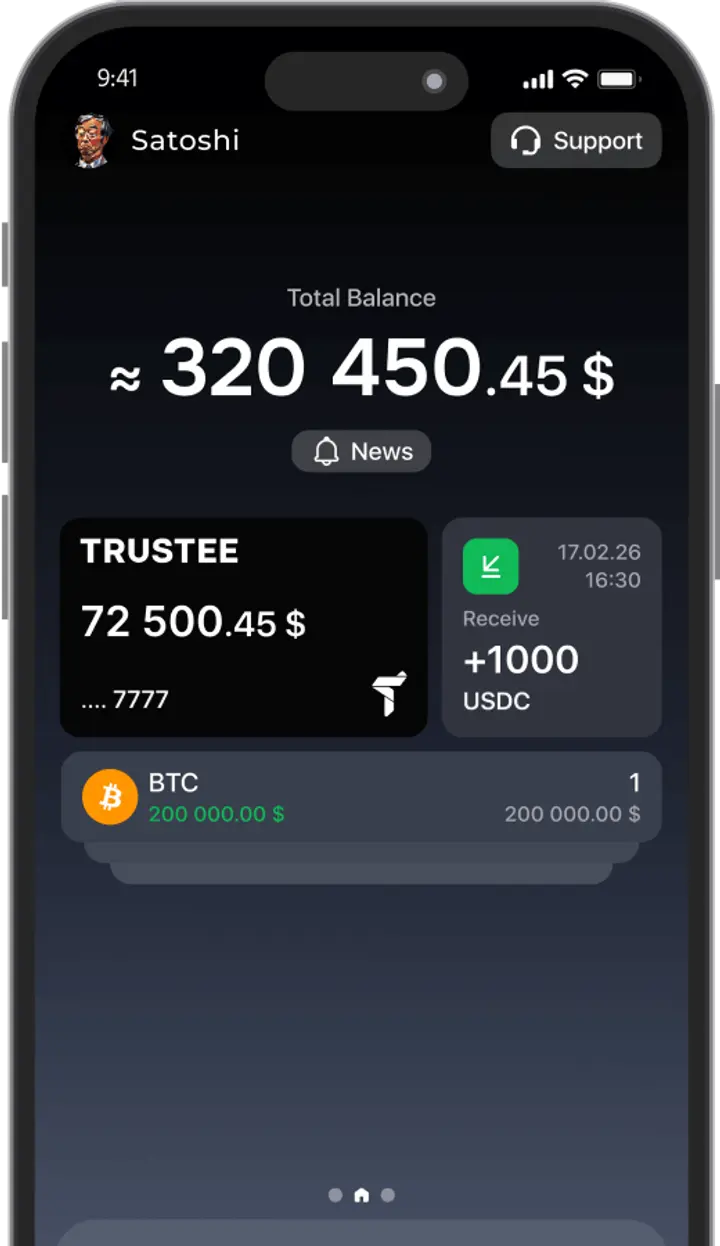
You can buy cryptocurrency in different ways: via exchanges, P2P services, or online exchangers. However, the simplest and, most importantly, safest option remains the Trustee Plus mobile app, which combines wallet, buying, and crypto exchange features in one interface.
Step 1. Create a Trustee Plus wallet.
To start using cryptocurrencies, you need to create a personal wallet in the Trustee Plus app. The process takes just a few minutes and does not require any special knowledge.
Instructions: “How to create and set up a Trustee Plus wallet in 5 minutes” — link here.
Step 2. Buy USDC
The next step is to top up your wallet with the USDC stablecoin. This is a convenient intermediate asset that is widely used for subsequent exchanges into other cryptocurrencies.
A detailed step-by-step guide on how to do this is available via the link
Step 3. Exchange USDC for a promising cryptocurrency
Once USDC has been credited to your balance, you can exchange it for any cryptocurrency from the top 10 promising assets available in the app.
To do this:
- open the exchange section in Trustee Plus;
- select the pair USDC → the cryptocurrency you need (BTC, ETH, SOL, BNB, etc.);
- check the transaction details and confirm the exchange.
Everything happens directly in the app and takes just a few minutes. A detailed crypto exchange guide is also available separately.
Possible risks and potential prospects
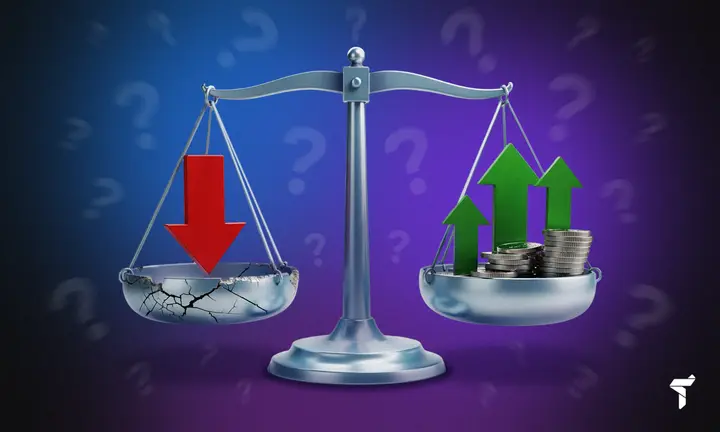
The world of digital assets is a space of extraordinary opportunities alongside serious challenges. Every step here requires a balance between clear-headed calculation and an understanding of global trends.
Possible risks
- Market volatility. Cryptocurrency prices can change quickly and without warning, affecting the short-term value of assets.
- Regulatory factors. Changes in legislation in certain countries can affect the availability or use of digital assets.
- Technological risks. Even major blockchain networks depend on code security and infrastructure stability.
- Market cycles. Growth periods can be followed by correction phases or prolonged consolidation.
Potential prospects
- Web3 and DeFi growth. The expansion of decentralised services supports demand for core crypto assets.
- Wider payment adoption. Cryptocurrencies are increasingly used for payments and transfers.
- Institutional interest. Participation by large companies and funds gradually forms a more mature market infrastructure.
- Technological progress. Network upgrades and new solutions expand digital assets’ use cases.
Conclusion
The digital asset market in 2026 offers a wide range of opportunities for users and investors. The top 10 cryptocurrencies and tokens to invest in is a guide that helps you understand the market’s overall structure and the role of each asset within it. Combining basic selection criteria, diversification, and convenient financial tools makes it possible to build a more flexible strategy for working with cryptocurrencies.
In addition to ease of use, Trustee Plus enables you not only to buy, but also to store and transfer digital assets. The service also offers the option to order a crypto card that can be used to pay for goods and services worldwide. This allows you to work with digital assets without constantly needing to convert them manually into fiat currencies.