





























Bitcoin dominance is Bitcoin’s share of the total cryptocurrency market capitalisation. For example, if the entire crypto market is valued at $4 trillion and Bitcoin’s market capitalisation is $2 trillion, BTC dominance is 50%.
A rising index means that Bitcoin is gaining market share relative to other crypto assets. A decline indicates that altcoins, stablecoins or other tokens account for a larger part of the market. However, dominance alone does not show whether the BTC price is rising or falling, so it should be analysed together with market performance, trading volume and altcoin capitalisation.
In this article, we explain how Bitcoin dominance is calculated, what affects the index, how to interpret its movements and why it should not be used as the only signal for buying or selling cryptocurrency.
How to interpret Bitcoin dominance
Bitcoin dominance should be analysed together with the BTC price. The same movement in the index can have different meanings depending on broader market conditions.
| Market movement | What it may indicate |
|---|---|
| BTC price rises and dominance rises | Bitcoin is outperforming most altcoins and gaining market share |
| BTC price rises and dominance falls | Altcoins are generally rising faster than Bitcoin |
| BTC price falls and dominance rises | Altcoins may be losing value faster than BTC |
| BTC price falls and dominance falls | Bitcoin is losing market share, but this does not necessarily indicate an altcoin season |
What Does the Bitcoin Dominance Index Help With?

The Bitcoin Dominance Index is a key tool for analyzing the cryptocurrency market as it helps determine how capital is distributed between BTC and other coins. Its main functions include:
-
Identifying market trends
-
Assessing investor interest in BTC
-
Forecasting potential altcoin growth or decline
-
Analyzing market phases (e.g., transitioning from a “Bitcoin season” to an “altcoin season”)
-
Assisting in strategy development for traders and investors
Factors Influencing Bitcoin Dominance
Bitcoin dominance fluctuates under the influence of various market and external factors, including:
-
Rise or fall in altcoin market capitalization
-
Popularity of new cryptocurrencies and blockchain projects
-
Growth of decentralized finance (DeFi) and NFT sectors
-
Regulatory developments in the crypto space
-
Investor trust in Bitcoin as “digital gold”
-
Global macroeconomic factors such as inflation or financial instability
How to Use the Bitcoin Dominance Indicator for Trading and Investing
The Bitcoin Dominance Index is a valuable tool for strategic decision-making. When dominance rises, it signals that investors are focusing on BTC as a more stable asset during uncertain market periods.
On the other hand, falling dominance reflects increased interest in altcoins. This often corresponds with an “altseason,” when capital flows into alternative cryptocurrencies, pushing their prices higher. Traders may then shift their portfolios toward leading altcoins such as Ethereum, Solana, and others.
This indicator also helps identify market trends. During a period of rising BTC dominance, long-term holding strategies may be more suitable. Meanwhile, falling dominance often calls for more active altcoin trading.
How and Where to Trade Bitcoin Based on the Dominance Index
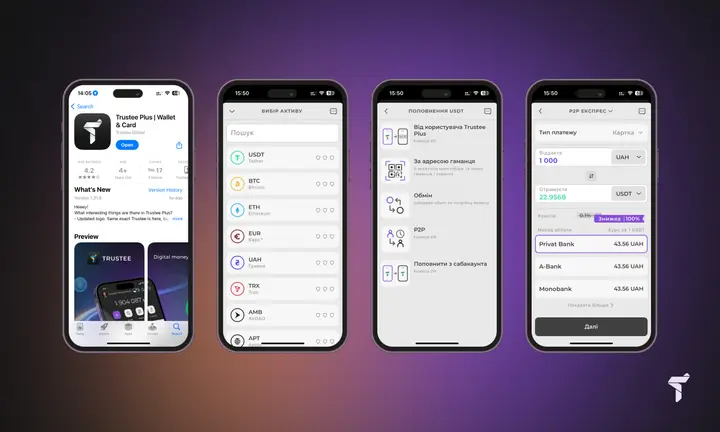
If you’ve analyzed the Bitcoin Dominance Index and developed a trading strategy, you can use the Trustee Plus app for convenient BTC transactions.
Trustee Plus allows you to easily buy and sell BTC directly from your bank card, which is especially useful for trading or long-term investing in cryptocurrency.
Here’s how to get started:
-
Download the Trustee Plus app from the App Store or Google Play.
-
Register and create your wallet. You’ll receive a unique address for BTC operations.
-
To buy Bitcoin, choose the “Top Up” option and select USDC as the stablecoin.
-
Exchange USDC for BTC in the app at the best available rate.
You can also receive Bitcoin from any other wallet using your Trustee Plus wallet address. The platform ensures convenience and security for working with crypto and offers competitive rates for effective trading.
Pros and Cons of the Bitcoin Dominance Index
The Bitcoin Dominance Index is a popular tool for analyzing the crypto market, but like any indicator, it has its strengths and weaknesses.
Pros:
-
Market trend indicator – helps identify whether we’re in a “Bitcoin season” or “altcoin season”
-
Ease of use – requires no deep technical knowledge
-
Risk assessment – high dominance implies greater market stability; a drop signals increased volatility
-
Strategy integration – can effectively complement other technical indicators
Cons:
-
Ignores trading volume – it doesn’t reflect actual trading activity
-
Sensitive to new tokens – the launch of popular altcoins can artificially lower Bitcoin dominance
-
Doesn’t account for market activity – a drop in dominance might result from BTC price declines, not altcoin growth
-
Limited predictive power – it informs about market state but doesn’t guarantee accurate forecasts
This indicator is best used for comprehensive market analysis and should be combined with other data to make significant decisions.