


























Altseason is a period in the cryptocurrency market when significant growth is shown not by BTC, but by other cryptocurrencies, known as altcoins.
Now, in 2025, many experts are discussing the potential for a new altseason. In this article, we'll explore what altseason is, how to invest in altcoins, and whether another major rally for these assets is likely in the coming years.
What Is Altseason in Crypto?
Altseason is a term derived from the English word "altcoins," where "alt" stands for "alternative" and "coin" for "coins." In this context, the term refers to a season of altcoins - a period of rapid growth for them.
Altseason occurs when investor capital starts flowing from Bitcoin into other cryptocurrencies, triggering a sharp increase in altcoin prices. This often happens after significant BTC growth or stabilization, as investors seek higher-risk assets with potentially greater returns.
During an altseason, it's common to see many altcoins rise by dozens or even hundreds of percent, making this period extremely profitable for those who invest in altcoins early in their growth cycle.
When Have Altseasons Occurred?
Altseasons generally take place when Bitcoin stabilizes or reaches new all-time highs, prompting investors to search for new profit opportunities among lesser-known cryptocurrencies.
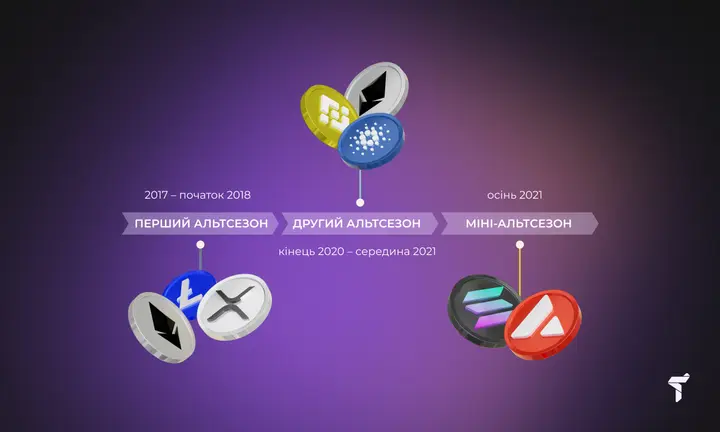
The First Altseason (2017 - Early 2018)
This period was a landmark for the crypto market, with many altcoins experiencing explosive growth. Ethereum (ETH) surged from $8 at the start of 2017 to $1,400 by January 2018, delivering over 17,000% in returns. Other cryptocurrencies like Ripple (XRP) and Litecoin (LTC) also saw incredible growth: XRP rose from $0.006 to $3, and LTC from $4 to $360.
The Second Altseason (Late 2020 - Mid 2021)
After a long period of stagnation, the crypto market came back to life during the early stages of the COVID-19 pandemic. This altseason began in late 2020 and peaked in May 2021. Ethereum (ETH) grew from $120 in March 2020 to $4,300 in May 2021. Binance Coin (BNB) soared from $15 to $690. Cardano (ADA) also posted impressive gains, rising from $0.03 to $2.40.
Mini-Altseason (Fall 2021)
Following a summer correction in 2021, the market revived briefly in the fall. This was a short but vivid period during which some altcoins reached new highs. Solana (SOL) climbed from $30 in August 2021 to $260 in November, while Avalanche (AVAX) jumped from $10 to $140 during the same time.
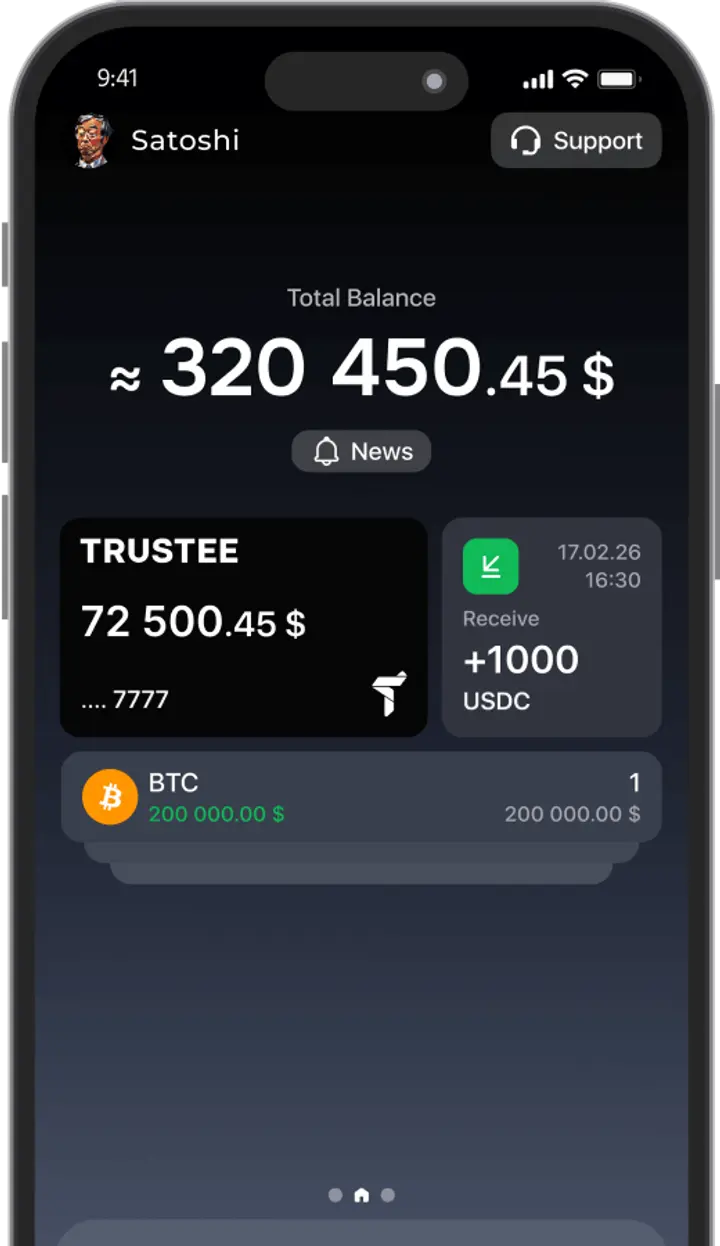
How to Invest in Altcoins with Trustee Plus
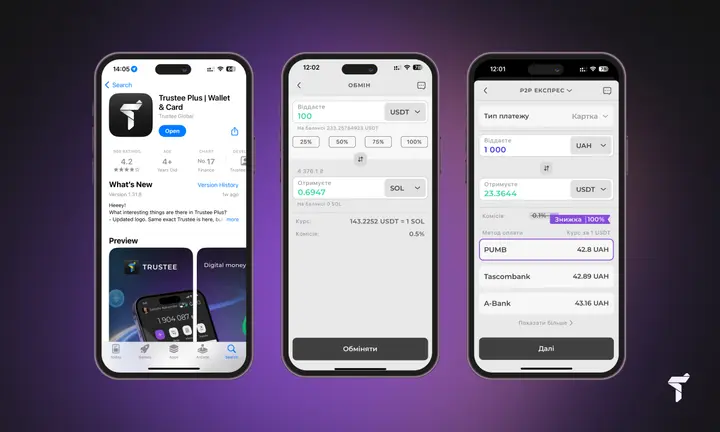
To start investing in altcoins with Trustee Plus, follow this simple guide:
-
Download the Trustee Plus app from the App Store or Google Play and register.
-
Top up your USDT balance using a card in euros or by transferring from another wallet.
To do this:
-
Select the "Buy Cryptocurrency" option.
-
Enter the amount in euros you want to invest and choose USDC.
-
Complete the transaction using a card or transfer.
-
Exchange USDC for altcoins in the main app menu:
-
Go to the "Exchange" section.
-
Choose USDC as the currency to exchange and select the desired altcoin (e.g., Ethereum, Litecoin, or Solana).
-
Confirm the exchange, and the selected coin will appear in your balance.
Will There Be an Altseason in 2025?
It's impossible to predict with certainty whether there will be an altseason in 2025, as the cryptocurrency market remains highly volatile and influenced by many factors.
Despite previous positive events like the Bitcoin halving, new all-time highs for BTC, ETF approvals for BTC and Ethereum in the US, and growing institutional capital, the altcoin market has remained sluggish.
All of this reduces liquidity and investor interest in high-risk assets such as cryptocurrencies and altcoins in particular. That’s why it's difficult to say when altseason 2025 might begin. But there is hope for next year.
Will There Be an Altseason in 2026?
An altseason in 2026 looks much more likely than in 2025.
- First, there is already increased activity in the crypto industry.
- Second, new crypto assets and projects are expected to emerge, attracting more capital and investor attention.
Additional factors that could contribute to an altseason include declining returns from traditional assets like bonds and stocks, and the gradual rise in available capital from large institutional investors and crypto whales.
This would create favorable conditions for capital to flow into higher-risk assets like altcoins.
Conclusion
Now you know what an altseason is in crypto. It's an important phase in the cryptocurrency market that offers significant opportunities for investors due to the rapid growth of altcoin prices.
Monitor market developments, adapt your investment strategy according to market cycles, and consider both the positive and negative factors that influence crypto prices.
FAQ
-
When does altseason begin in the crypto market?
Altseason starts when altcoin prices begin rising faster than Bitcoin. This typically occurs after BTC stabilizes or hits new highs. To determine when altseason begins, you can use special indicators or analyze altcoin market cap charts.
-
When will the 2025 altseason happen?
As of now, the likelihood of a major altseason in 2025 is low. Despite some positive developments, altcoin growth in 2025 may be held back by regulatory pressure and macroeconomic conditions. Most analysts expect altseason no earlier than 2026.
-
How long does altseason last?
The duration of altseason can range from several weeks to a few months. On average, altseasons last 2-3 months, but this depends on the overall market state and investor sentiment. Since timing is hard to predict, close monitoring of market trends is essential.
-
Where can I find the altseason chart?
You can find altseason charts on crypto analytics websites like CoinMarketCap or CoinGecko. These charts display the ratio of BTC to altcoin market capitalization, helping identify when capital starts shifting toward altcoins.