























As the crypto space continues to evolve, so too does the utility of digital assets. One of the most prominent innovations is the ability for any user to receive a crypto-backed loan through simplified lending platforms.
In this article, you'll learn what a crypto loan is, why collateral is necessary, and why unsecured crypto loans may pose significant risks.
What Is a Crypto Loan and Collateral?

A crypto loan is a form of borrowing where one party lends funds to another in exchange for digital assets used as collateral. This model differs from traditional bank loans in several ways:
-
Cryptocurrency collateral is mandatory
-
No formal loan contract is involved
-
Both the loan and the collateral are provided exclusively in crypto assets
-
Transactions are executed without intermediaries (via P2P platforms)
The rise of the Ethereum platform and smart contracts made it possible to build automated lending platforms backed by digital assets. These are known as peer-to-peer (P2P) platforms.
Microloans in Crypto – Flash Loans
With the growth of the DeFi (Decentralized Finance) ecosystem, users discovered a new loan type called flash loans. These are also P2P loans but do not require any collateral as long as the borrowed funds are returned to the liquidity pool within a single transaction block.
Flash loans are the only type of crypto loan without collateral.
How Crypto Loans Work
Let’s walk through an example. Alice owns 10 ETH. She doesn’t want to sell her crypto, but she needs Tether (USDT). Instead of selling her ETH, she can get a loan in USDT using her ETH as collateral by choosing a P2P platform. But why is a platform necessary?
-
Most banks do not support crypto services
-
Alice doesn't need a high credit score when using decentralized platforms
-
Alice might not have access to traditional financial services. According to the World Bank, 1.7 billion people remain unbanked.
To get a loan, Alice:
-
Connects her wallet to a crypto P2P lending platform
-
Selects the token to borrow – USDT
-
Provides collateral in ETH
The collateral must cover interest rates and market volatility. Therefore, Alice deposits 150% of the loan value in ETH at current market prices. Different platforms may require between 150% and 200%, depending on their policies.
Is an Unsecured Crypto Loan Possible?
As we’ve learned, unsecured crypto loans only exist in the form of flash loans—extremely short-term borrowing. But is it possible to get a Bitcoin loan without collateral for a longer period?
Most often, these "too good to be true" deals are scams designed to steal funds or personal data. Collateral is what protects the lender—it replaces the need for identity or credit checks while maintaining security and anonymity.
Risks of unsecured loans include:
-
Data theft scams – Without collateral, the lender may have ulterior motives such as harvesting private data or keys. Always verify what information is being requested and cross-check platforms via community sources and aggregators
-
High-interest rates – The absence of collateral might be "compensated" by high interest, short repayment windows, or low loan amounts. Always review the terms carefully
Can You Borrow USDT Without Collateral?
Lending platforms don’t require personal data, credit history, or ratings. Their only guarantee is collateral. Therefore, unsecured loans in USDT are not possible. Any such offer should be examined carefully and verified through reputable sources.
How to Get a Bitcoin Loan?
Bitcoin's blockchain doesn’t support smart contracts, meaning you can't take a decentralized loan directly in BTC. However, this is made possible through tokenized Bitcoin.
You can use platforms that exchange original BTC for tokenized Bitcoin on smart contract-compatible blockchains.
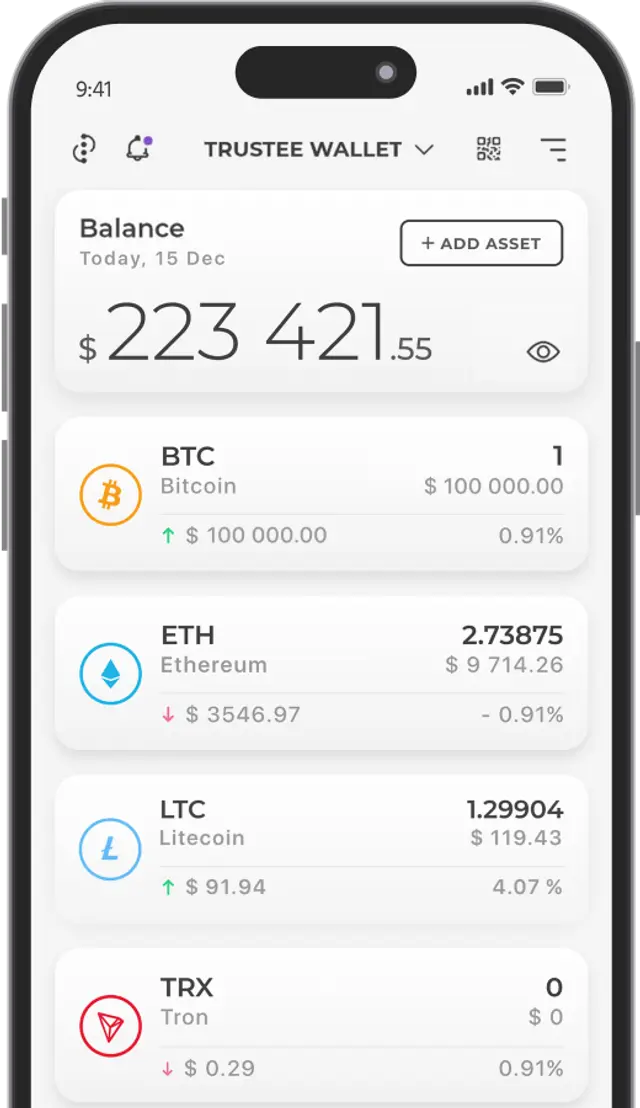
You’ll need a wallet that supports the appropriate blockchain. For example, tokenized BTC is available on Ethereum and Tron. The Trustee Wallet is ideal for storing ERC-20 and TRC-20 tokens and offers a full suite of crypto services.
How to Get a Loan in Bitcoin - Step-by-Step
-
Create a wallet that supports ERC-20, TRC-20, or BEP-20 tokens
-
Swap BTC for a tokenized version like Wrapped Bitcoin (WBTC) on a token-issuing platform. Other examples include BTCB, RenBTC, and tBTC
-
Get a loan on any P2P platform by providing tokenized BTC as collateral
Where to Borrow Crypto with Collateral
You can find lending platforms using directories like DeFi Prime. The DeFi Llama analytics service offers real-time statistics and compares interest rates across platforms.

You can borrow crypto from any lending platform listed on these sites. Note that each operates on a specific blockchain—Ethereum, Tron, or Binance Smart Chain (BSC), for example.
List of Crypto P2P Lending Platforms
Here are some of the top platforms for crypto-backed loans:
-
Maker – A leading DeFi lending platform with low interest rates. You can borrow DAI stablecoins at just 5% APR using ETH, stETH, rETH, and others as collateral
-
Aave – A popular Ethereum-based DeFi platform with crypto loans at 4% APR
-
Compound – Another major player with a 3.7% interest rate
-
C.R.E.A.M. Finance – Known for high-yield lending opportunities, offering rates up to 55%
-
dYdX – A hybrid platform combining decentralized lending and crypto exchange, with 6.1% APR
-
DeFiner – A non-custodial aggregator helping users optimize returns on DeFi lending, with loans starting at 2.8% APR
-
Drops – Offers loans not only against crypto but also NFTs—up to 75% of token value. Accepts collections like CryptoPunks, Bored Ape Yacht Club, and more
What You Need to Get a Crypto Loan
To borrow crypto online, you only need:
-
A secure crypto wallet for storing and managing your assets
-
Crypto assets to use as collateral
Benefits of Crypto Lending:
-
No credit score or financial history required
-
No paperwork or formal agreements
-
No restrictions other than collateral
By borrowing against your assets, you maintain the liquidity of your deposit. You don’t need to sell your crypto and risk missing out on potential gains.
Risks of Crypto Loans
The primary risk is high volatility. If the value of your collateral drops and becomes equal to the loan amount plus interest, your assets may be liquidated automatically and transferred to the lender.
Another risk comes from potential vulnerabilities in smart contracts. A hacked contract may expose and drain user funds.
Conclusion
This article explained how crypto lending works, its benefits, and the risks of unsecured crypto loans.
Use only trusted wallets and verified lending platforms to safely borrow or lend crypto, protect your assets, and reduce risk while participating in the growing world of decentralized finance.