


























According to CoinGecko, there are over 17,000 different cryptocurrencies and tokens in the crypto industry. This sheer number can be confusing for beginners who don't yet understand the difference between them.
Let’s break down what a token is in simple terms and how it differs from coins like Bitcoin (BTC) or Ethereum (ETH).
What Is a Token in Cryptocurrency
Traditional companies issue securities to raise capital for business development. Shares give owners certain privileges, such as the right to receive dividends or participate in voting. Tokens play a similar role, but instead of being issued on a centralized exchange, they are created on a blockchain.
Why Tokens Are Needed and How They Are Used
Within a project ecosystem, tokens act as virtual payment units that serve as the main driver of the network. For example, Binance Coin (BNB) was initially launched as a token on Ethereum to pay for trading fees. It was only after the launch of its own blockchain that BNB gained coin status.
Another example is the Worldcoin (WLD) token, used in a global digital identity system. Users receive WLD after biometric verification through an Orb device, and the token acts as both a reward and access tool for ecosystem services.
The well-known cryptocurrency TRX was also launched as a token on Ethereum during the project’s funding stage (marketed at the time as the "Ethereum killer"). Nine months after the ICO, the TRON blockchain was launched and all tokens were converted to coins at a 1:1 ratio.
How Much Is a Token Worth
Token prices, like cryptocurrencies, are determined by market demand and supply and are not pegged to any asset. Exceptions include stablecoins and non-fungible tokens (NFTs):
-
Stablecoins are pegged to the value of a specific currency. For instance, USDT is pegged to the US dollar, meaning one token always equals 1 USD. The same applies to USDC by Circle, PYUSD by PayPal, and others.
-
NFT prices depend on the value of the real-world assets they represent, or a mix of market factors—such as the creator’s reputation, rarity level, and more.
Difference Between a Token and a Cryptocurrency (Coin)
But what exactly is a token?
A cryptocurrency has its own blockchain, whereas a token is issued on another platform’s blockchain—it’s a kind of “parasite” riding on the coin’s infrastructure.
Popular and widely used token issuance protocols include:
-
Ethereum (ETH) — ERC-20, ERC-721, ERC-1155
-
BNB Smart Chain (BSC) — BEP-20
-
TRON (TRX) — TRC-20
-
Solana (SOL) — SPL Token
-
Base (Ethereum L2) — ERC-20 support
A key feature of tokens is that transaction fees are paid in the blockchain’s native coin. For example, when sending USDT on Ethereum, you pay the gas fee in ETH—not in USDT.
Tokens can act as debt instruments, offering rights to dividends or compensation, or even function as company shares. They are managed by smart contracts that enforce code-defined obligations.
Types of Tokens
In the crypto space, tokens come in various types. To help you better understand what a token is, here are the main categories:
-
Utility Tokens
A utility token is used to pay for products or services provided by the issuing project. They may also be used to reward users and incentivize platform engagement.
-
Security Tokens
Security tokens, also known as equity tokens, are digital equivalents of shares and grant holders similar rights: dividend payments, DAO voting, and more. They are often referred to as share tokens due to their similarity with traditional securities.
-
Debt Tokens
Debt tokens were virtually unknown just a few years ago. Today, they serve as digital analogs of short-term loans that investors offer to blockchain projects. In return, investors receive debt tokens that guarantee interest payments.
Some bankrupt companies even offer tokenized creditor claims to new investors as a way to repay debt obligations.
-
Asset-Backed Tokens
These tokens are backed by real-world assets such as stocks, gold, or real estate. They grant holders ownership rights to physical items. Even cryptocurrencies can be tokenized.
Stablecoins backed by traditional assets are prime examples of asset-backed tokens.
-
Governance Tokens
Governance tokens allow users to participate in the management of decentralized blockchain projects and vote on their future direction. Their main goal is to decentralize key decision-making.
-
Non-Fungible Tokens (NFTs)
NFTs are digital representations of unique items like sports collectibles or works of art. These can be real-world (real estate, paintings) or digital (virtual land, in-game items, images, music tracks).
Popular Tokens in Crypto
-
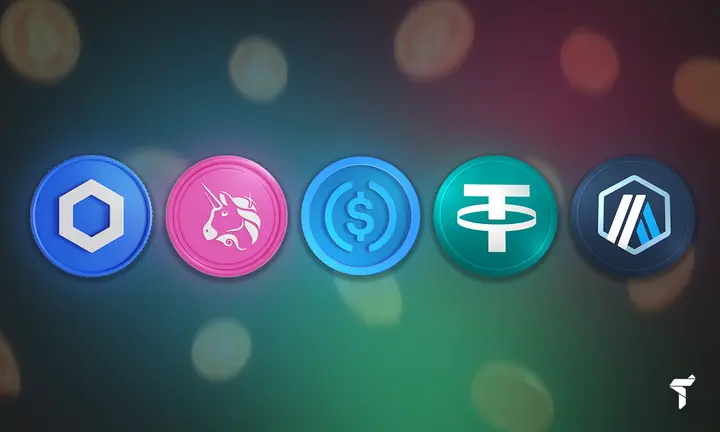
Tether (USDT) — the largest stablecoin pegged to the US dollar, widely used for trading and transfers across networks like Ethereum, TRON, and Solana.
-
USD Coin (USDC) — the second most popular stablecoin known for its transparency, often used in DeFi and corporate settlements.
-
Uniswap (UNI) — a governance token for the largest decentralized exchange, also used for DAO voting.
-
Chainlink (LINK) — a token for the decentralized oracle network that connects smart contracts to external data sources.
-
Arbitrum (ARB) — the governance token of the most widely adopted Ethereum Layer 2 solution, actively used in decentralized voting.
How to Become a Token Holder
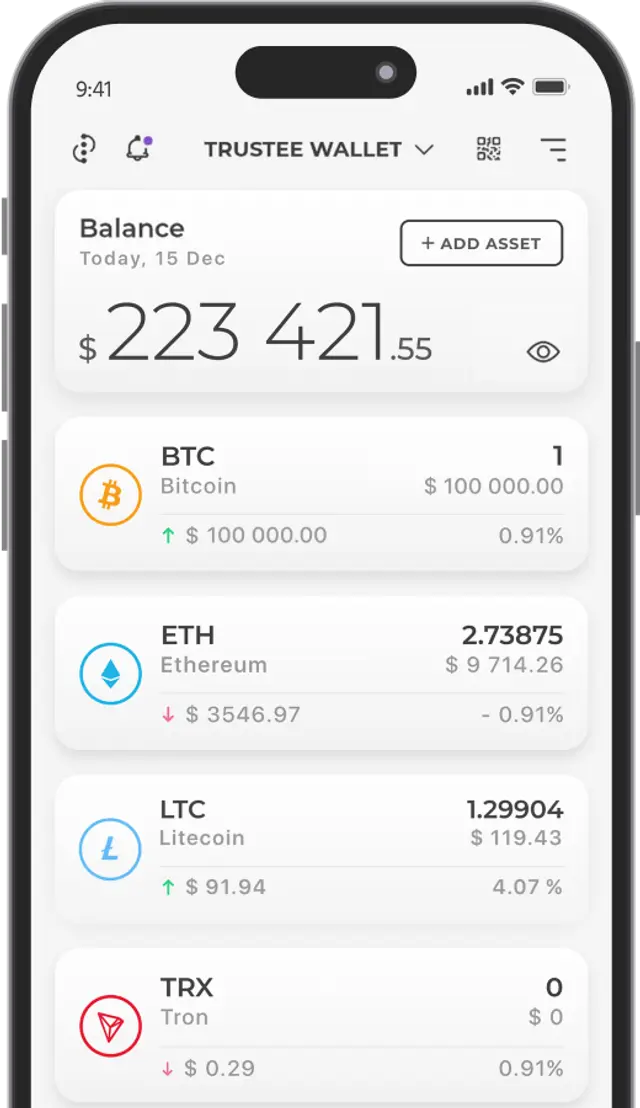
Tokens can be bought on centralized (CEX) and decentralized (DEX) exchanges, as well as through crypto services like Trustee Wallet.
With Trustee Wallet, you can purchase hundreds of tokens by selecting from a list or adding them via smart contract address.
How to Buy Tokens in Trustee Wallet: Step-by-Step
Trustee Wallet allows you to easily swap one cryptocurrency for another—such as BTC for DAI or ETH for USDT. Here’s how:
-
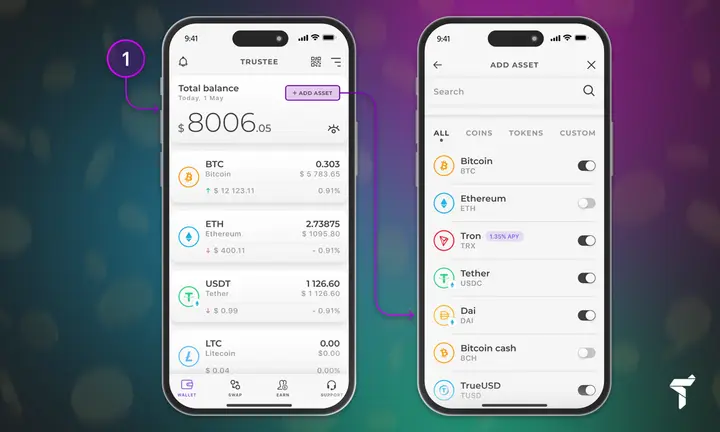
Ensure the necessary tokens are added to your wallet. If a token is missing, tap “Add Asset” and choose the required one.
-
Maintain a balance in the native coin for network fees:
-
ERC-20 — ETH
-
TRC-20 — TRX (at least 30 TRX)
-
BEP-20 — BNB
-
-
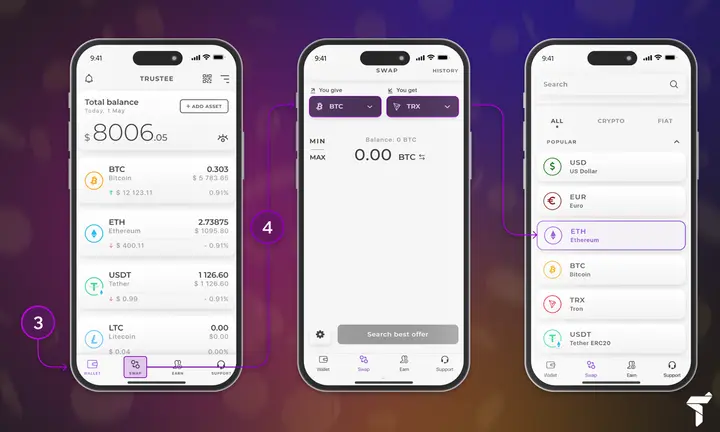
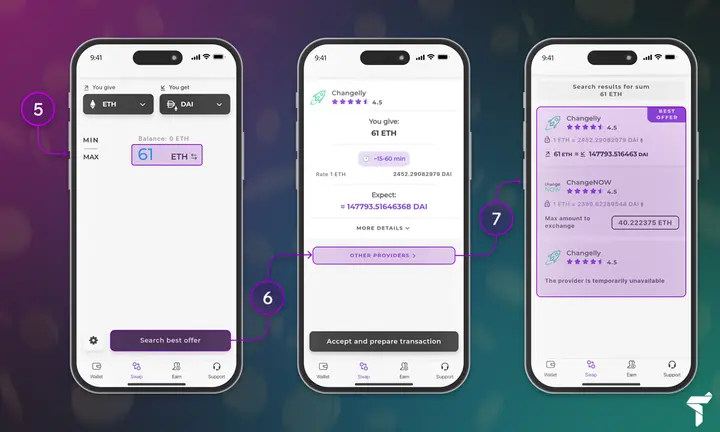
Go to the “Exchange” section.
-
Select the cryptocurrency to send (e.g., ETH) and the one to receive (e.g., DAI).
-
Enter the swap amount.
-
Tap “Find Best Offer.” The Smart Swap engine will find the best rates across providers.
-
Choose a provider from the list.
-
Review transaction details (rate, fee, addresses). If all looks good, tap “Accept and Prepare Transaction.”
-
Check the final details and tap “Send” to complete the exchange.
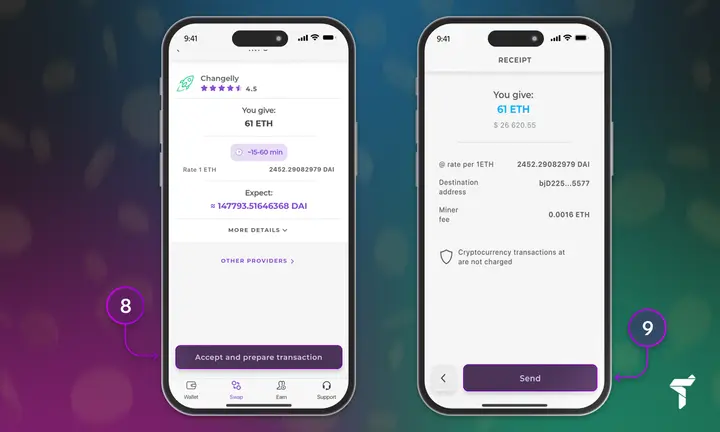
After funds are sent, the provider will complete the trade and deposit the new currency into your wallet. You can track the status in your exchange history.
How to Earn with Tokens
Investing in tokens comes with high risk.
Here are some common ways to earn with crypto assets:
-
Investing
The simplest way to profit is to buy tokens and hold them until their value increases. However, price growth could take days or years.
In terms of performance, tokens can match or exceed cryptocurrencies.
-
Trading
If you're confident in your technical analysis skills, trading is another option. While experience helps, some strategies are beginner-friendly.
Available tools include futures, day trading, inter-exchange and intra-exchange arbitrage, and more.
-
Staking
Token holders can earn passive income by staking—delegating tokens to validators who secure the network. This method is beginner-friendly but requires initial capital. Depending on the token, yields can reach 20%.
-
Lending
Tokens can be lent to other users or projects in return for interest. Borrowers provide collateral in other tokens or cryptocurrencies.
-
Airdrops
Projects often reward users with free tokens for activity on their platforms. For instance, in 2024, EigenLayer held a major airdrop—Stakedrop Season 1—distributing over 113 million EIGEN tokens to users staking ETH or using DeFi protocols by March 15.
-
Liquidity Mining
On DEX platforms, liquidity is provided by users. Anyone holding tokens can participate. For example, in 2025, PancakeSwap offered the CAKE–USDC pair on Ethereum.
Profits come from trading fees and bonus rewards for participating in the liquidity pool.
Conclusion
There are numerous ways to use tokens. They allow users to purchase tokenized shares or artwork, vote on project developments, acquire corporate debt, invest, or pay for services.
Tokenization continues to grow—companies are tokenizing gold, and banks are tokenizing their shares.