






















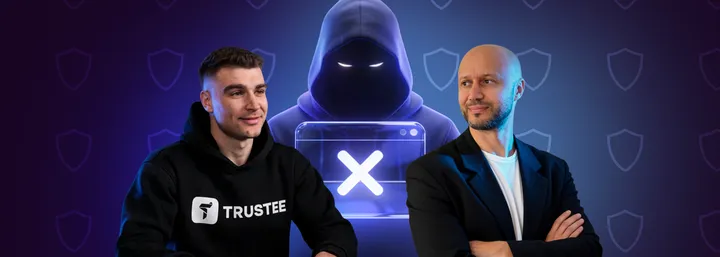

Slava Demchuk, CEO of AMLbot, shares an insider’s perspective on the evolution of crypto security, explains what the term “dirty crypto” really means, and discusses why the ideal model of crypto compliance often collides with the harsh realities of today’s digital asset market. Is it possible to remain anonymous in a system where every transaction is permanently recorded on the blockchain?
Why do legitimate users sometimes face account restrictions or frozen funds despite following the rules? In this interview, Demchuk also sheds light on the challenges and misconceptions surrounding crypto AML and the growing role of blockchain analytics in the industry.


From a Vinnytsia Startup to Global Enterprise API
Danylo: To start simply, for those who aren't tech experts, what is AMLbot at its core?
Slava Demchuk: AMLbot is primarily a B2B solution for compliance. We provide KYT (Know Your Transaction), KYC (Know Your Customer), and blockchain intelligence services. While we have a B2C legacy with about 600,000 registered users, we now primarily serve over 200 small-to-medium businesses and thousands of large enterprises through our API.
Danylo: Your journey started in Vinnytsia, much like the team at Trustee. How did you land in this specific niche?
Slava Demchuk: We both come from a software development background in Vinnytsia. Around 2017–2019, as crypto gained popularity, we faced issues with our own funds being blocked on a centralized exchange. We built a simple Telegram bot to solve this problem for ourselves, and once we saw the demand in the community, we established the company. Today, that "bot" is just one of 20 modules, including transaction monitoring and complex on-chain investigation tools.
The Myth of "Dirty" Crypto and the Black Mark
Danylo: What defines "dirty" crypto, and how does a wallet get "marked"?
Slava Demchuk: Dirty crypto includes funds from thefts, scams, dark markets, child abuse, and terrorist organizations. It is crucial to understand that these "black marks" are labels in a specific provider's database, not on the blockchain itself. This means a label can be erased or corrected, and different providers (like AMLbot vs. Chainalysis) might assign different risk scores to the same wallet.
Danylo: If a suspicious address sends me $1, am I "infected"?
Slava Demchuk: Technically, yes, but analytical companies generally ignore small amounts like $1 because no one launders such tiny sums. However, if you receive a larger amount — say, over $1,000 — from a suspicious source, your wallet will be labeled as suspicious.
Mixers, Privacy, and the Future of Anonymity
Danylo: Are mixers like Tornado Cash truly effective, or is it an illusion?
Slava Demchuk: It’s a real tool, but its effectiveness depends on popularity. If a pool is large, de-anonymizing is nearly impossible; if it's small, a good analyst can trace the funds. However, the moment your assets pass through a mixer, they are instantly labeled as high-risk, which creates problems for retail users.
Danylo: Does AML kill decentralization?
Slava Demchuk: To some extent, you could argue that, but analytics actually help us avoid bad actors. Most people don't want to interact with terrorist funds or child abuse. I believe privacy can coexist with AML; we want "clean" privacy pools where we can transact privately without being contaminated by criminals.
Practical Defense: How to Avoid Blocks and Scams
Danylo: What are the top recommendations for a regular crypto user to reduce risk?
Slava Demchuk:
- Use Legitimate Services: Buy crypto through reputable, licensed services like Trustee Plus to ensure your entry point is clean.
- Practice Crypto Hygiene: Never use your main wallet for airdrops or connecting to websites you don't fully trust; use a secondary "burner" wallet instead.
- Keep Documentation: Have your working contracts, invoices, or source of funds papers ready. In a "perfect world," providing these will get your funds released.
Danylo: What about common scams? You mentioned that even experts can be deceived.
Slava Demchuk: "Clicking and misclicking" is the most popular scheme. If a friend sends a link on Telegram, always suspect they’ve been hacked. AI can now mimic voices and texting styles so realistically that it’s becoming a disaster. If a friend from Ukraine suddenly texts you in perfect English, that's a red flag.
The Global Regulatory Landscape

Danylo: Where is the regulatory pressure strongest today?
Slava Demchuk: Europe is the most regulated, with many strict rules. The US gives more freedom for capital but imposes much harsher penalties for violations. In regions like Asia or Latam, regulation is historically "lossier," though many businesses there are now seeking licenses to work with the US and European markets.
Danylo: Finally, who makes the ultimate decision to block a user?
Slava Demchuk: It is not just an algorithm. In Europe and the US, an AML Officer — a real human — is personally responsible for the final decision and can even face court cases for mismanagement.
Danylo: Slava, thank you for clarifying that security in crypto isn't about fear, but about responsibility.
Slava Demchuk: My pleasure. Stay safe and stay suspicious