




























Despite the rapidly developing DeFi infrastructure, many platforms still rely on centralized service providers and remain dependent on them. Crypto projects continue to use solutions from Google, Amazon, Apple, Facebook, IBM, and Microsoft for data storage and computation.
ICP and "the censorship-free internet"
The monopolization of internet platforms and services allows corporations to dictate the terms of engagement with users and other businesses—ultimately at the expense of end consumers.
This happened to the leading social gaming company Zynga, which lost 85% of its share value ($15 billion) within three months after Facebook changed its platform policies.
Internet Computer addresses this issue by offering technology that enables the creation of ownerless, open internet services. This allows developers to create immutable APIs that cannot be shut down or restricted by any single company.
Such applications can compete with monopoly services, giving both users and developers alternative choices, which in turn drives further development of the internet.
What is Internet Computer (ICP)?
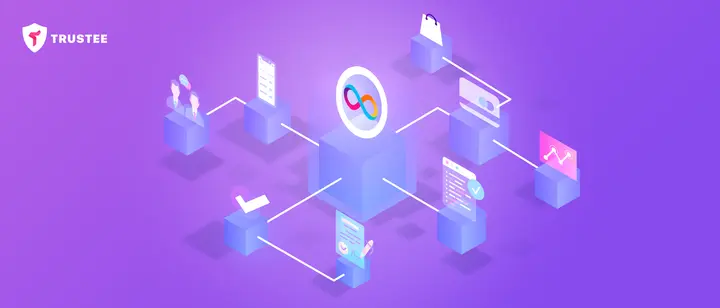
Internet Computer is a next-generation open decentralized blockchain project designed to provide a digital environment for smart contracts and the development of censorship-resistant blockchain applications.
Officially launched in 2021 by the Swiss-based DFINITY Foundation, its goal is to create an autonomous internet and prevent its monopolization.
ICP is built to scale smart contracts, computational systems, and decentralized architecture, enabling the development of secure, open, and efficient blockchain apps with community-governed autonomy and tokenization. These can include social and media platforms, e-commerce services, DeFi platforms, and enterprise systems.
Problems Internet Computer aims to solve:
-
Centralization: One of the main issues of modern online services. Distributed storage and data processing eliminate risks of corruption and tampering caused by single points of failure.
-
Monopolization: Tech industry monopolies allow companies to impose their own rules and terms on users and organizations.
-
Censorship: Sometimes companies are forced to follow government orders and filter information upon request, often disregarding user interests. Non-compliance can result in sanctions that disrupt service operations.
-
Lack of autonomy: App developers must comply with corporate rules to publish their software in app stores like the App Store or Google Play.
While a decentralized ecosystem may open more avenues for hackers, it also allows creators of valuable apps to reach broader audiences.
Features of Internet Computer and its token
Internet Computer technology is designed to make decentralized services both high-performing and secure, capable of processing data at high speeds without increasing vulnerability risks.
Internet Computer Consensus (ICC)
The ICP network does not use Proof-of-Work (PoW) or Proof-of-Stake (PoS) consensus mechanisms. Instead, it introduces a new mining node algorithm called Internet Computer Consensus (ICC)—a collection of atomic broadcast protocols for data transmission on the blockchain. ICC includes three protocols:
-
ICC0: a simplified version of the protocol.
-
ICC1: a simulated version of ICC0.
-
ICC2: a protocol employing functions not yet deployed in Internet Computer.
Thanks to this architecture, replicas (containers) in the ICP network can be distributed across subnets and used independently from the main network, improving the platform’s scalability. This process of splitting ICP into subnets is known as replication.
Key Chain Technology
Internet Computer employs Key Chain Technology (KCT), a set of cryptographic protocols for organizing nodes within the ICP network. KCT allows any device—PCs, smartphones, or smartwatches—to verify the authenticity of replicas.
Non-Interactive Distributed Key Generation (NIDKG)
This cryptographic method allows multiple network nodes to collaboratively generate sets of private and public keys. The process is based on Shamir’s Secret Sharing scheme, developed by Adi Shamir, using polynomial interpolation over finite fields.
Network Nervous System (NNS)
NNS is the decentralized governance system (DAO) behind the Internet Computer protocol, powered by tokenization. It keeps track of which nodes belong to which subnets on the ICP blockchain and updates node information accordingly.
Internet Identity
User identification has become a major issue for centralized services, as server breaches can lead to data leaks. Additionally, users have little control over the information they share with organizations.
Smart Contracts and the Motoko Language
Motoko is a new smart contract programming language developed by the Internet Computer team. It provides an extended toolkit for building scalable, high-performance decentralized applications (DApps) and services. Motoko is versatile and compatible with the WebAssembly (WASM) environment.
ICP Cryptocurrency
ICP is a modern asset and the native token of the Internet Computer platform. It allows holders to govern the protocol through decentralized autonomous organization principles and is also used to pay for transactions. Tokens can be converted into cycles, which serve as computational fuel for running websites, applications, and containerized resources.
Functions of the ICP Token
-
Network Governance: Holders lock their ICP tokens to generate neurons, which participate in network governance through voting. Users earn rewards, incentivizing active involvement in platform development.
-
Cycle Generation: ICP tokens can be converted into cycles, which act as fuel for the Internet Computer ecosystem, providing computational resources for DApp operations based on NNS technology.
-
Participant Rewards: Holders are rewarded through minting. Users can assume different roles to earn rewards—such as voting or running their own nodes as block producers and network validators.
Internet Computer Network Speed
Thanks to Key Chain Technology (KCT), Internet Computer operates at internet speed, with requests executing in milliseconds. Initially, new blocks were created in 2.5 seconds, but developers have now achieved a rate of 22.5 blocks per second—exceeding expectations (the goal for late 2021 was 10.3 blocks per second).
How to Store ICP (Crypto Wallet)
The safest way to store ICP is through a hardware or software cryptocurrency wallet. Here are wallets currently supporting ICP storage:
-
Network Nervous System (NNS): The original DApp developed by Internet Computer’s creators, allowing users to manage balances, vote, stake, and convert tokens to cycles.
-
Ledger Nano S/Nano X or Trezor T/One: Hardware wallets are the most secure, offering cold storage of tokens.
-
Plug Wallet: A simple browser extension and authenticator for the Internet Computer network.
-
DFinance: A DEX platform and DeFi protocol with a built-in crypto wallet. The platform is still in testing, and user tokens currently have no real value.
How to Earn and Convert ICP to Fiat Currency
ICP trading pairs are currently available only on centralized crypto exchanges. You need to create an account and fund it. A list of platforms supporting ICP purchases and fiat withdrawals can be found on CoinMarketCap.
Ways to earn with ICP:
-
Investing: Buy ICP tokens on an exchange and hold them until their value increases.
-
Staking or Voting: Holders can boost their earnings by staking tokens on the platform.
-
Trading: Profit from price fluctuations—but this requires the ability to analyze charts and market data. It's one of the riskiest methods.
Conclusion
At first glance, Internet Computer may seem like just another smart contract platform similar to Ethereum, Cardano, or Solana. However, it employs unique technologies with a wide range of applications.
The ICP network simultaneously offers decentralized web hosting, data centers, browsers, and containers for DApps—setting it apart from competitors.