





























Cryptocurrencies are becoming increasingly popular among users worldwide, and their growing adoption demands efficient methods for storing and managing digital assets. According to research, in 2024 the number of cryptocurrency holders globally exceeded 560 million people – and this number continues to rise. But to securely store assets like Bitcoin, Ethereum, or USDT, a reliable cryptowallet is essential.
In this article, we’ll explore what a cryptowallet is, how to create one, the different types available, and how to choose the best option for your needs.
What Is a Cryptowallet?
A cryptowallet is a special type of software, online service, or device that allows you to store, send, and receive cryptocurrency (such as Bitcoin, Ethereum, USD Tether, etc.). However, unlike a traditional wallet that holds physical cash, a cryptowallet doesn't store the cryptocurrency itself. Instead, it manages private keys – unique digital signatures that provide access to your crypto assets on the blockchain.
These private keys are the most critical element, and their security directly determines how protected your funds are.
Cryptowallets come in various forms: mobile or web applications, desktop software, or even physical hardware devices. Their main task is to ensure secure management and access to your cryptocurrency at any time.
How to Create a Cryptowallet on Your Phone Online

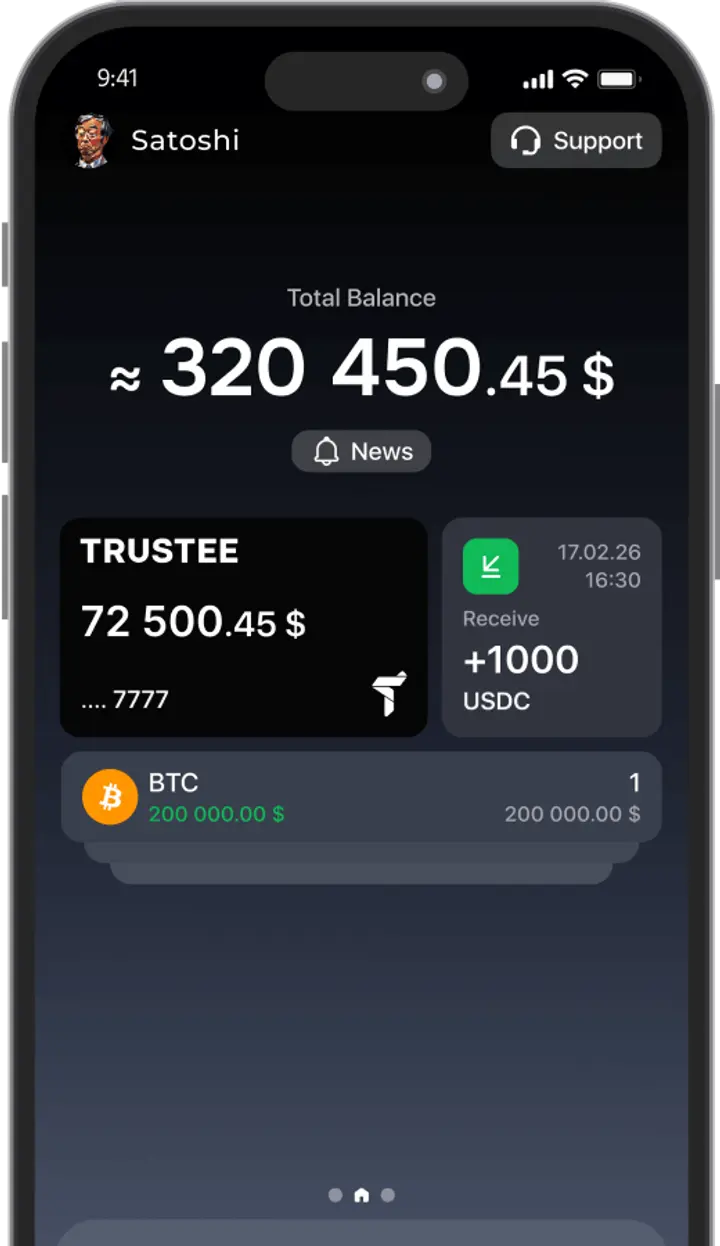
Creating a cryptowallet on your phone is a simple and fast process that doesn't require any special technical skills. Today, there are many different platforms available for creating cryptowallets, but one of the most popular and secure options is Trustee Plus. This platform offers a high level of security, supports a wide range of cryptocurrencies, and is completely free to use.
Here’s a step-by-step guide to creating a free cryptowallet using Trustee Plus:
1. Download and install Trustee Plus on your smartphone
Go to the Play Market or App Store and search for the Trustee Plus app. Then download the wallet to your phone – the process only takes a few minutes. This is the first step to setting up a secure cryptowallet.
2. Enter and confirm your phone number
To register with Trustee Plus, you'll need to enter your phone number. You’ll then receive a confirmation code, which you’ll need to input in the app to complete the registration.
3. You’re all set!
After registration, wallets for the most popular cryptocurrencies like Bitcoin, Ethereum, USDT, and others will be automatically activated. In the main menu, you can easily select the required online cryptowallet, where you'll immediately see your deposit address. The app also allows you to send, receive, and exchange cryptocurrency directly.
Types of Cryptowallets and Their Main Functions

There are several main types of cryptowallets, each offering a different level of convenience and security for users.
-
Mobile wallets – These are smartphone applications that provide easy access to cryptocurrency and allow fast transactions anytime.
-
Desktop wallets – Software for computers that provides users with a wide range of functionalities for managing crypto and executing transactions.
-
Hardware wallets – Physical devices that store private keys offline, offering the highest level of security for large volumes of cryptocurrency.
-
Online wallets (web wallets) – Cloud-based services that allow users to store cryptocurrency online and access it from any device. However, they are less secure due to constant internet connectivity.
-
Paper wallets – Physical printouts of private and public keys that enable offline crypto storage. These require caution since losing the paper means losing access to your assets.
Which Cryptowallet to Choose

Choosing a cryptowallet depends on several important criteria that you should consider to ensure both the security and ease of managing your digital assets.
Another key factor is support for different cryptocurrencies. If you plan to work with multiple assets, choose a wallet that supports a broad range.
Convenience is also important. Mobile wallets like Trustee Plus allow you to make transactions easily from your phone, making them ideal for users who frequently interact with crypto. Another factor is transaction fees. Make sure the wallet offers transparent and competitive terms with minimal fees for transfers and conversions.
Equally important is the availability of deposit and withdrawal functions. A good wallet should support various deposit methods and enable cash withdrawals, making it a versatile tool for daily use. Finally, the availability of technical support is crucial so you can quickly resolve any issues or questions related to using the wallet.
Conclusion
Cryptowallets are becoming an essential part of the modern financial landscape as cryptocurrencies gain increasing importance in the global economy. They provide security and control over digital assets, allowing users to store, transfer, and use them with minimal costs and without intermediaries.