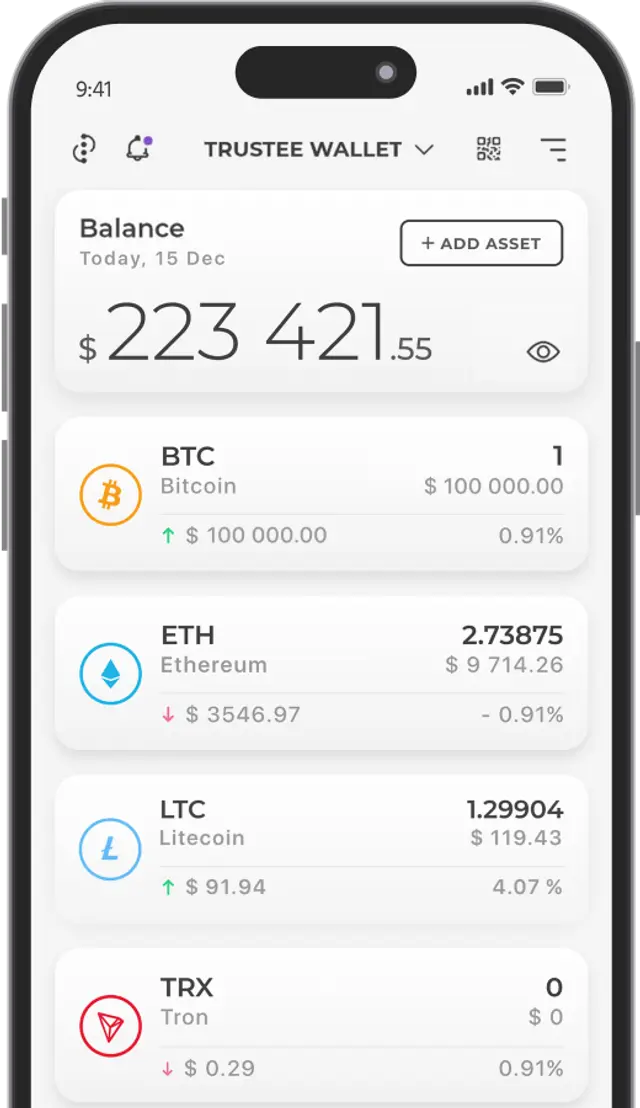






























Decentralized blockchain-based technologies have introduced new income opportunities accessible to any user.
Let’s dive into the world of yield farming to understand how it works, how you can earn, and what risks exist.
What is yield farming?

In simple terms, yield farming combines tools and methods that allow profit on digital assets using decentralized protocols. In essence, DeFi users rent out their coins or tokens to earn rewards determined by the protocol.
DeFi platforms emerged in 2015 on Ethereum, which introduced smart contracts and enabled autonomous decentralized applications such as DEXs, lending, and AMM protocols.
By 2020, DeFi reached a market capitalization of $10 billion. By March 2024, total value locked (TVL) across protocols exceeded $94 billion.
How yield farming works in DeFi
Yield farming relies on smart contracts and involves two main strategies: lending and liquidity mining. Lending allows holders to loan crypto to others for interest. Liquidity mining involves providing liquidity to traders in exchange for rewards. These methods let crypto work for users instead of idling in wallets.
Holders become liquidity providers by locking assets in contracts to earn passive income. Initially, income came from interest paid by borrowers or fees from DEX swaps, and yields were known upfront, determined by demand and supply, expressed as APY.
Lending
Lending protocols enable loans collateralized by crypto:
-
Providers lock coins into smart contracts to create a liquidity pool.
-
Borrowers supply collateral and receive interest-bearing tokens.
-
If collateral value drops, liquidation occurs and collateral goes to lenders.
-
If repaid, collateral is unlocked. Rewards depend on TVL: higher TVL leads to higher yields.

Liquidity Mining
Liquidity mining, or farming, shook the crypto world by offering early-stage yields up to thousands of percent annually:
-
Holders add assets to liquidity pools for traders to swap.
-
They receive LP tokens representing their share.
-
Trading fees are distributed to providers proportionally.
-
Yields come from swap fees and protocol-issued tokens.
Yield depends on two factors:
-
Demand: more swaps = higher yield.
-
Supply: more liquidity = lower yield.
How to earn with yield farming
-
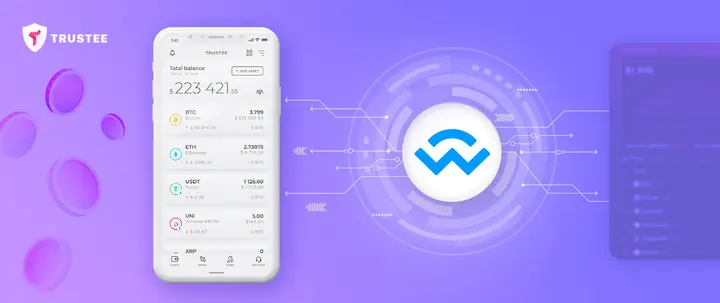
Choose a crypto wallet—preferably multi‑currency mobile wallets like Trustee.
-
Fund the wallet, connect via WalletConnect, and add liquidity to earn from lending or liquidity mining.
-
Explore passive income strategies in yield farming.
Calculating yield
DeFi protocols use:
-
APY (annual percentage yield) — considers compound interest.
-
APR (annual percentage rate) — does not include compounding.
Protocols may distribute native tokens to boost yields, increasing volatility.

Yield farming strategies
Yield farming offers various strategies with different yields and risks—the higher the yield, the greater the risk:
-
Single‑asset farming
Example: convert ETH to wrapped tokens like sETH, add ETH/sETH pair in a pool to earn yield. -
Lending plus farming
Borrow tokens to provide liquidity, earning from both staking and asset price appreciation. Complex but potentially profitable—risky due to liquidation. -
Farming + staking
Provide liquidity (e.g., BNB-USDT) to earn LP tokens, then stake those to earn governance tokens (e.g., CAKE). -
Borrow to lend
Borrow one asset like USDC, then lend it again to earn interest rate spread—similar to arbitrage.
Risks and benefits of yield farming

Risks:
-
Protocol hacks: In 2023, 600+ major hacks stole $2.61 billion; 67% targeted DeFi.
-
Volatility: Crypto prices can swing drastically, even wiping out investments.
-
Liquidation risk: Loans can be liquidated if collateral falls below thresholds.
-
Impermanent loss: Liquidity providers may suffer if token prices diverge significantly.
Benefits:
-
High yields—stablecoins yield up to 20% annually.
-
APYs often exceed traditional bank rates.
-
Crypto holders can earn passive income beyond simple holding.
Popular yield farming platforms
DeFi has over 1,000 farming protocols, with top seven each having a TVL over $1 billion. Though high yields attract beginners, platform audits and reputation matter. Notable platforms include:
-
Lido – Ethereum staking protocol, now over $34 billion TVL.
-
EigenLayer – Re‑stakes ETH for additional yield (from $2 b to $12 b TVL in 2024).
-
Aave – Lending protocol with ~15% yield, $10.3 b TVL.
-
Maker DAO – Pioneer with DAI, $8 b+ TVL.
-
JustLend – Tron‑based lending, $7.4 b TVL.
-
Uniswap – Leading Ethereum DEX, now supports multiple chains.
-
Instadapp – A DeFi management SDK platform.
-
Compound – Lending protocol issuing COMP; rates 0.08–5.40%.
-
Curve Finance – Stablecoin AMM with low slippage.
-
PancakeSwap – BNB Chain AMM offering farming, NFTs, lotteries.

Conclusion
Yield farming offers lucrative opportunities for crypto investors but carries significant risks—including hacks, volatility, platform failures, and regulatory gaps. Yet DeFi opens financial access and may deliver higher returns than traditional finance.