


























In the world of cryptocurrencies, where decentralized projects like Bitcoin and Ethereum dominate, Ripple stands out for its pragmatic approach to integration with traditional financial systems.
This article explores the key aspects of Ripple — from its technology to its investment potential — providing clear facts and figures to help understand its role in the market.
Overview of Ripple and Its Position in the Cryptocurrency Market
Ripple (XRP) is a cryptocurrency and ecosystem designed to accelerate and reduce the cost of international payments. As of early 2025, XRP ranks among the top 5 cryptocurrencies by market capitalization, trailing only Bitcoin, Ethereum, and a few others.
Its popularity stems from its high transaction speed and low fees. Major financial institutions like Santander, Standard Chartered, and American Express are already partnering with Ripple, using its solutions to process cross-border transfers.
History of Ripple (XRP)
Ripple was launched in 2012 when Ripple Labs (initially Opencoin) was founded by Chris Larsen and Jed McCaleb in San Francisco. The project's goal is to speed up and reduce the cost of international money transfers by replacing the slow and expensive SWIFT system.
Unlike Bitcoin, which was designed as a decentralized alternative to fiat currencies with a focus on anonymity, or Ethereum, which supports smart contracts and decentralized apps, Ripple targets financial institutions.
XRP, the system's native token, is not mined like Bitcoin (where annual energy consumption reaches 130 TWh). Instead, 100 billion coins were pre-issued, with 55% controlled by Ripple Labs for gradual market release.
This centralization and focus on banking integration make Ripple unique among its competitors.
Ripple Technology

RippleNet is a global payment network that connects banks and payment systems using the XRP Ledger (XRPL) — an open-source distributed ledger. The protocol is based on consensus among a majority of validators from a predefined Unique Node List (UNL), which eliminates the need for high computational power and makes the system faster, albeit less decentralized in governance.
Transaction Speed and Low Fees
The XRP Ledger can process up to 1,500 transactions per second, far outpacing Bitcoin (7 TPS) and approaching Visa’s capacity (1,700 TPS). Confirmations take only 3–5 seconds, and the average fee is just 0.00001 XRP (less than $0.00001 as of March 2025).
Using XRP as a Bridge Currency
XRP serves as a bridge currency to simplify exchanges between fiat currencies, especially in low-liquidity pairs. For instance, instead of converting directly from Thai baht (THB) to Mexican peso (MXN), banks can convert THB to XRP, then XRP to MXN within seconds.
Investment Appeal
Historically, XRP has shown high volatility: from $0.01 in 2012 to a peak of $3.84 in January 2018, followed by a drop to $0.17 in 2020 due to the SEC lawsuit. In 2024, the average price ranged between $2.5–$3, with potential growth to $5 depending on broader bank adoption and regulatory clarity.
The SEC lawsuit against Ripple Labs, initiated in December 2020, accuses the company of selling $1.3 billion worth of unregistered securities. While a 2023 court ruling stated that XRP is not a security in secondary sales, a final decision has yet to be made, limiting institutional investor participation.
Advantages of XRP as an Investment Asset
-
Liquidity: XRP ranks in the top 10 for trading volume, with an average daily turnover of $2–3 billion in 2024.
-
Partnerships: Collaborations with over 300 financial institutions, including Santander and MoneyGram, enhance credibility.
-
Cost-efficiency: Low transaction costs attract investors seeking practical, utility-focused assets.
-
Growth Potential: Analysts predict XRP could rise to $7–$10 by 2030 if regulatory hurdles are overcome.
How to Buy and Sell XRP
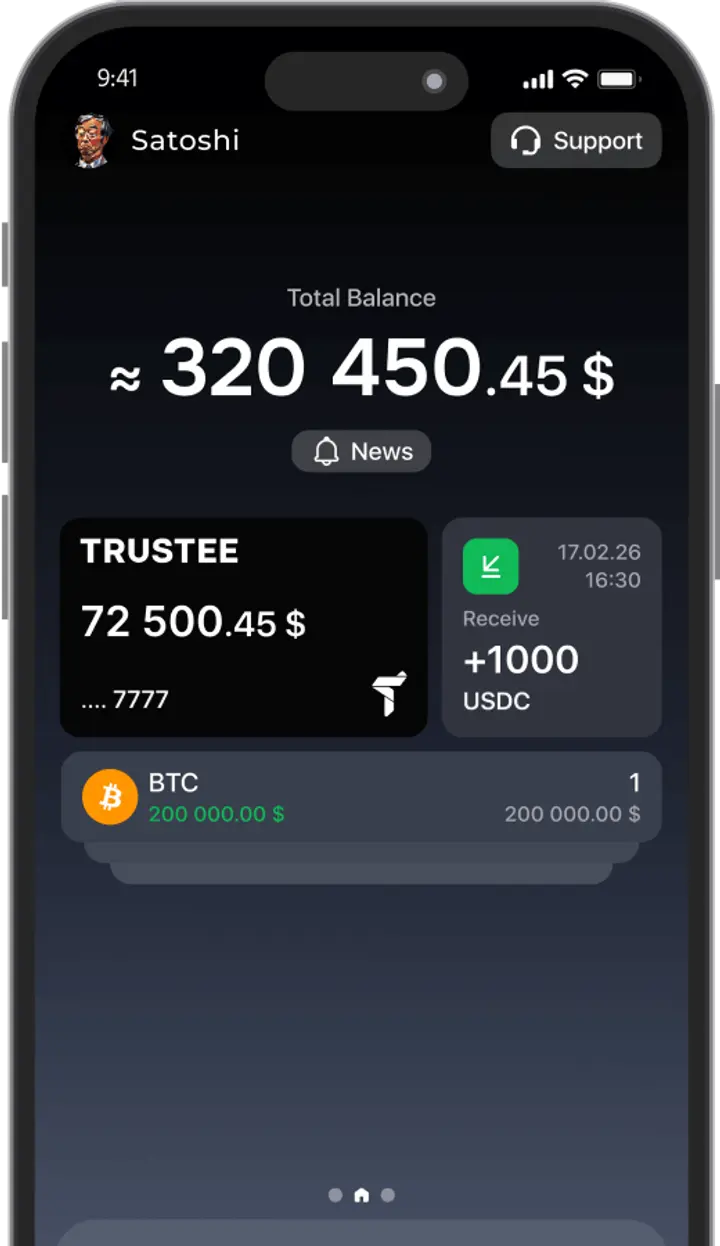
To benefit from XRP, you'll need to purchase and store the coin in a crypto wallet. One of the best tools for this is the Trustee Plus digital finance platform. It offers:
-
A mobile app for iOS and Android with an intuitive interface;
-
The option to order a payment card for contactless crypto and euro transactions;
-
Free account opening with support for over 30 currencies (crypto and fiat);
-
0% commission on stablecoin exchanges and account maintenance;
-
24/7 multilingual customer support, including in European languages.
How to Buy XRP in Trustee Plus
-
Download the Trustee Plus app from the App Store or Google Play.
-
Create an account and complete verification (usually by entering your phone number and verifying your identity).
-
Top up your account in fiat currency (e.g., EUR) via the "Top Up" menu. Use your VISA or MasterCard, selecting your currency and payment method.
-
Go to the "Exchange" section, choose the EUR/XRP pair, enter the amount, and confirm the transaction. XRP will appear in your wallet instantly.
How to Sell XRP in Trustee Plus
To make a sale of XRP to your bank card, use our step-by-step instructions at this link.
Conclusion
Ripple stands out as a cryptocurrency tailored to real-world financial needs:
- fast transactions (3–5 seconds),
- ultra-low fees (0.00001 XRP), and
- strong partnerships with banks.
Unlike Bitcoin (a store of value) or Ethereum (a platform for smart contracts), XRP is designed as a tool for optimizing international payments.
For investors, XRP offers high liquidity and practical utility but comes with regulatory risks. For businesses, it's an ideal solution for cost-efficient cross-border transfers.