






















In this article, we'll examine what Binance Coin is, how the BNB cryptocurrency operates within BNB Chain, what makes Binance's blockchain unique, and whether BNB staking is profitable. You'll also learn whether BNB is worth investing.
What is BNB cryptocurrency and its origin
Binance Coin (BNB) — Binance exchange's native cryptocurrency, created in 2017 for paying fees within the platform. Initially operating as an ERC-20 token on Ethereum, BNB migrated to its own blockchain in 2019 following Binance Chain's launch.
Simultaneously, BNB became the primary currency across Binance's ecosystem, including Binance Smart Chain and BNB Chain, powering thousands of projects in the Web3 space.
How Binance Smart Chain works and BNB's role
Binance Smart Chain (BSC) — an independent blockchain launched in September 2020 as a complement to the original Binance Chain. BSC's primary purpose is supporting smart contracts and decentralised applications (dApps) while maintaining high transaction speeds and low fees. BSC's compatibility with Ethereum Virtual Machine (EVM) enables easy migration of dApps from Ethereum.
Within BSC's structure, the BNB token plays a pivotal role. It's used for paying gas fees, similar to ETH on Ethereum. This creates constant demand among users, developers and traders, directly impacting its liquidity and price.
BNB Chain: The evolution of Binance's blockchain
BNB Chain — a blockchain ecosystem community-driven and developed under BNB Foundation's guidance.
Currently comprising several key components:
-
BNB Smart Chain (BSC) — the ecosystem's main blockchain with EVM and smart contract support;
-
opBNB — an Optimism-based Layer 2 solution for scaling and reducing transaction costs;
-
BNB Greenfield — decentralised data storage enabling direct blockchain data management and monetisation;
-
BNB Beacon Chain — previously handling staking and governance until its official decommissioning on 13 June 2024. All functionalities have now migrated to BNB Smart Chain.
BNB Tokenomics: Emission, burning, use cases
BNB's initial supply was 200 million tokens. Binance implemented a regular token burn mechanism to reduce circulating supply to 100 million, creating deflationary pressure that may theoretically stimulate price growth.
Burning occurs through two methods: quarterly automatic BNB Auto-Burn based on price and trading volumes; and Real-Time Burn — where portions of BNB Chain transaction fees are immediately destroyed.
Primary BNB use cases
The BNB token serves clear utility functions within and beyond Binance's ecosystem:
-
Discounted fee payments on Binance exchange
-
Participation in initial token offerings via Binance Launchpad
-
BNB staking on platforms including Binance Earn
-
Transaction fee payments on Binance Smart Chain
-
Usage in DeFi projects, NFT marketplaces, and gaming
BNB advantages for users and investors
-
Low fees: BNB offers up to 25% discount on Binance trading fees, particularly beneficial for active traders.
-
Fast, inexpensive transactions: BSC network fees typically remain under a few cents.
-
Broad utility: Used across Launchpad, DeFi, NFT, staking, gaming, and payments.
-
Regular burns: Auto-Burn mechanism reduces circulating supply, positively impacting price.
-
Sustained demand: The token remains essential for accessing Binance's core services.
BNB drawbacks and risks
-
Centralisation: Despite decentralisation claims, Binance retains significant network control.
-
Single-company dependence: Binance-related issues or sanctions could directly impact BNB's value.
-
Regulatory risks: Some jurisdictions have scrutinised BNB as a potential security.
-
Competition: Growth of alternative EVM-compatible chains like Avalanche or Arbitrum increases market pressure.
Where to buy and how to store BNB

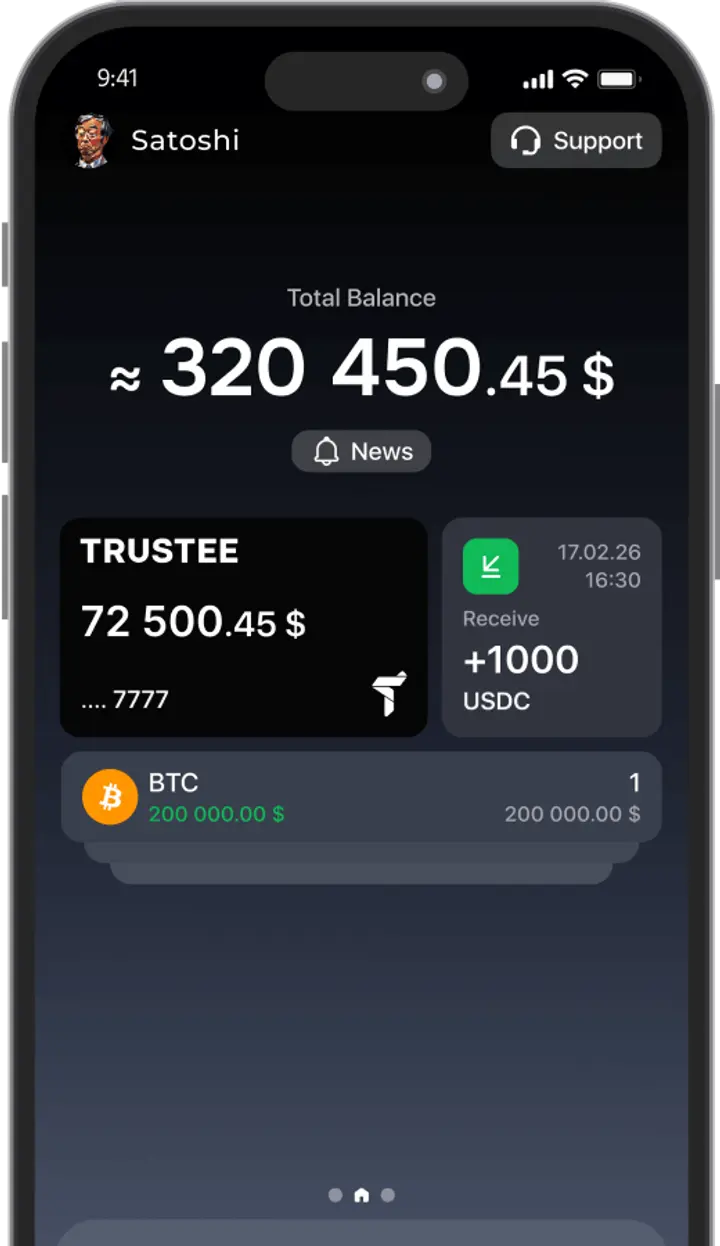
BNB cryptocurrency is available on most major exchanges. Binance offers the most convenient option with maximum liquidity and trading pairs. Other supporting platforms include Bybit, OKX, WhiteBIT, Bitget, Trustee Wallet, and Trustee Plus. Purchases can be made with USDT, BTC, or via bank cards through fiat gateways.
Two primary options exist — exchange wallets and non-custodial solutions. For secure long-term storage, the latter is preferable. For instance, Trustee Wallet — a mobile wallet providing full private key control with BNB and BEP-20 token support. Ideal for DeFi operations and staking.
Alternative solution Trustee Plus — a hybrid wallet featuring additional financial tools including exchanges, cash-outs, and bank card integration. Suits users combining crypto with fiat transactions while partially relinquishing asset control.
Conclusion
BNB cryptocurrency — more than just a Binance exchange discount tool. Through its robust ecosystem, tokenomics, extensive DeFi and NFT functionalities, plus deflationary model, BNB remains among crypto's most promising assets.
However, like any financial instrument, it requires careful investment and storage strategies.