

























Mobile mining with a smartphone seemed like a joke just a few years ago. But this is exactly the idea proposed by Pi Network, which has gathered millions of users in over 200 countries.
But what is happening with Pi now? Does the PI coin have real value? And most importantly—is it worth joining the community today? Read our Pi Network review to the end to understand everything point by point.
How Pi Network Works
In Pi Network, users mine coins through a mobile app. To start mining, simply open the app and press the lightning button. This action activates mining for the next 24 hours.
The entire system operates in the cloud, and mining is more about confirming your participation than a computational process. The more often you log into the app, the more Pi you accumulate.
Roles: Pioneer, Contributor, Node
In the Pi Network, each user has a specific role.
After registration, everyone becomes a Pioneer. A Pioneer simply activates mining daily.
After three days of activity, the Contributor role unlocks. A Contributor adds up to five acquaintances to their Security Circle, earning a mining speed bonus.
Another role is Ambassador. If you invite new people, your mining speed increases.
The most active users can become Nodes. A Node runs the Pi Node software on a computer and participates in transaction verification.
The Trust Graph
In Pi Network, security is ensured not by device power but by connections between real people. Each user creates a Security Circle by adding trusted acquaintances. When these circles intersect, they form a trust network. This network helps achieve consensus. The algorithm verifies transactions only when they are confirmed by users connected through trusted circles. This prevents fraud without complex computations.
Pi Network’s Development Stages
The Pi Network project has evolved gradually. The team did not launch the blockchain immediately but went through several phases to prepare the system for large-scale use.
First, in 2019, a beta version of the mobile app appeared. Users began mining Pi, even though there was no real blockchain yet. This was the community-building phase.
Next, the team launched a testnet. It served as a trial run before the mainnet. During this time, they tested node operations, consensus mechanisms, and prepared the system for real transactions.
In December 2021, the closed Mainnet phase began. The blockchain was already operational, but users could not withdraw Pi from the app. The team focused on account verification to prevent duplicates and bots. Only after completing KYC could a user transfer their coins to the mainnet.
The open Mainnet launched on February 20, 2025. Since then, users can transfer Pi to others and withdraw coins from the ecosystem. Trading Pi on exchanges also became possible. The project moved from the promise phase to real operation.
As of mid-2025, the Pi blockchain operates in open mode. The coin is already trading, though not on all exchanges. The community continues to undergo verification, and developers are rolling out new services.
Pi Coin: Tokenomics
The Pi token is the native currency of the Pi Network. It is used for transactions, payments in apps, and interactions within the ecosystem.
Unlike most cryptocurrencies, Pi was not sold in an ICO. It could not be bought on exchanges before 2025. Users only obtained coins through mobile mining. This made Pi unique: most tokens belong not to investors but to active community members.
The total supply is capped. The distribution plan is as follows:
-
80% is allocated to the community (miners, referrals, active users);
-
20% is reserved for the team, developers, and long-term development.
Before the Mainnet launch, the coin existed only within the app. It had no market price, and any "trades" outside the app were prohibited.
In February 2025, Pi became available on exchanges. The price initially spiked, then sharply dropped. Demand was high, but many users rushed to sell their coins. Currently, Pi is trading on several platforms, but the price remains volatile.
The team does not aim to artificially inflate Pi’s value. They focus on utility. The more people actually use Pi—in apps, stores, and services—the more sustainable its market price will be.
Thus, today Pi is not so much a ready-made investment asset as a "coin with potential." Its success depends on ecosystem growth.
Pros and Risks
Pi Network attracts many due to its low entry barrier. However, debates around the project persist. It is important to consider both the advantages and potential risks.
What’s Attractive:
-
No initial investment required. No need to buy equipment or deposit money.
-
The mining process is simple. Press a button in the app—coins accumulate.
-
The app does not overload the phone or drain the battery.
-
The community is large and active—millions worldwide.
What Raises Concerns:
-
The project repeatedly delayed the open Mainnet launch. Many promises were not fulfilled on time.
-
The team has not published the full code, and some processes remain opaque.
-
The coin still lacks stable value. On exchanges, Pi behaves unpredictably.
-
Some analysts suspect possible manipulation by the developers.
Users do not risk money but may spend a lot of time without guaranteed results. Pi is an experiment that will either succeed or fail. For now, it relies on community enthusiasm. Whether this evolves into something bigger—only time will tell.
How to Register and Start Mining Pi
Anyone can join Pi Network. The process is simple and requires no special knowledge.
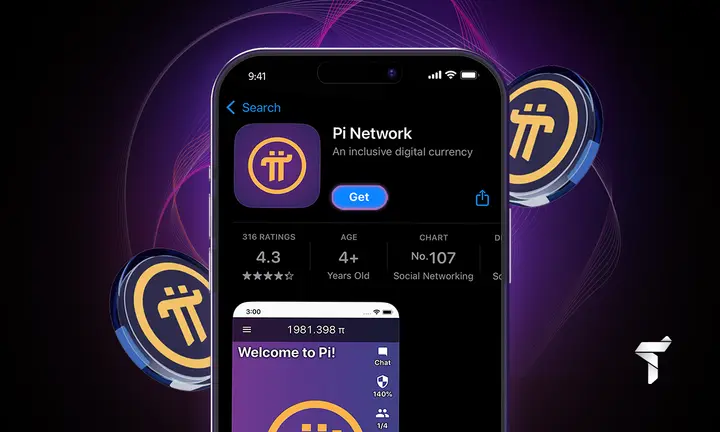
All you need is a smartphone, a few minutes, and some patience.
-
Download the app.
Install Pi Network from the App Store or Google Play. Ensure the developer is "SocialChain." -
Register.
Create an account via phone number, email, or Facebook. You’ll need an invite code—the username of the person who referred you. Registration is impossible without it. -
Activate mining.
After registration, open the app and press the lightning button. This starts a 24-hour mining session. Repeat daily. -
Build your Security Circle.
After three days of activity, you can add up to five trusted contacts. This improves network security and your mining speed. -
Complete verification (KYC).
KYC is mandatory in Pi Network. To transfer mined coins to a blockchain wallet, you must verify your identity. Submit a document (e.g., passport) and complete a selfie check. Without this, you cannot withdraw Pi. -
Create a wallet.
Generate a Mainnet wallet in the app and write down your secret phrase. It is essential for accessing your coins. Never share it.
Does Pi Network Have a Future?
In 2025, Pi Network finally launched its open network. Users gained the ability to withdraw coins, conduct transactions, and trade on exchanges. This was a major milestone for the project. However, reality proved more complex than expectations.
Many users have not yet completed verification. Some coins remain locked in the app. Exchanges have started trading Pi, but the price fluctuates constantly. In the first days, the price surged, then plummeted. The main reason is the lack of real-world utility.
Community Trust
Pi Network has united tens of millions of people. This community is the project’s greatest asset. Many believe in the idea, participate actively, and await further development. But trust is not constant.
Delays, lack of public information, price volatility, and suspicions about the team’s actions have weakened some users’ confidence.
Pi still has a chance. But the community expects results, not new promises. If the project shows real progress—trust will return. If not—even loyal users may become disillusioned.
Alternatives for Beginners
If you are new to cryptocurrencies, Pi can be a good starting point. No money is required. You simply observe, learn, and experiment. But don’t pin all hopes on this project alone.
Other ways to enter the crypto market without investment include:
-
Airdrops—new projects often distribute tokens for registration or simple tasks;
-
Learn & Earn—exchange-based educational programs with rewards;
-
Reward browsers—e.g., Brave pays tokens for ad views;
-
Testnet activity—participating in blockchain beta tests.
Conclusion
Now you know what Pi cryptocurrency is and how Pi Network works. It is an ambitious experiment that gathered a massive community without a single ICO. The project long promised a launch—and in 2025, it finally went open. Now, Pi is traded on exchanges, and users can freely manage their assets.
Today, Pi is not a finished cryptocurrency but a tool that will either evolve into something significant or remain in history as crypto’s largest social experiment. It’s worth watching—but with a critical eye.