





























Imagine a simple real-life situation: you need to send $1,000 to family or a partner in another country. It sounds like it should be easy, doesn’t it?
At first glance — yes. But just think about the fact that, in 2026, the SWIFT system, created all the way back in 1973, still remains one of the key global networks for interbank messaging and international payments. Because of that, a bank transfer via SWIFT takes 1 to 5 business days, and users often pay $20–50 in fees: correspondent bank fees, the receiving bank’s fee, currency conversion fees, and an investigation fee if the payment is delayed or you made a mistake in the details.
Now let’s look at the same transfer, but using stablecoins (for example, USDC) via a blockchain network (for example, Solana). It is almost instant (3–10 seconds) with a tiny fee of $0.001. There are no banks between the sender and the recipient, which means there is no bureaucratic red tape either.
The difference is not just in the numbers. The difference is in the architecture.
SWIFT is a messaging system between banks that has barely changed since the seventies and today looks like a clumsy dinosaur. Stablecoins are a new layer of global settlement where an intermediary is simply not required.
In this article, we’ll break down how stablecoins work, why they are objectively faster and cheaper than Visa and SWIFT, what barriers still remain, and what to expect over the next few years.
Key takeaways
- The stablecoin market has surpassed $300bn and continues to grow.
- A blockchain transaction finalises in seconds — versus several days in traditional systems.
- Fees of around $0.01–1 on most networks versus 2–3% on Visa or $20–50 on SWIFT.
- PayPal, Visa, Bank of America and other giants are already integrating stablecoins into their infrastructure.
- Regulation is catching up: in 2025 the US Senate passed the GENIUS Act, and MiCA is in force in the EU.
- Mass adoption is slowed by UX barriers and regulatory uncertainty — but both are solvable.
What are stablecoins and how do they work?

A stablecoin is a cryptocurrency whose price is pegged to a real-world asset, most often the US dollar. There are also stablecoins pegged to other national currencies, for example: EURC to the euro, XSGD to the Singapore dollar, or GYEN to the Japanese yen.
Unlike Bitcoin or Ether, a stablecoin doesn’t “jump” 20% overnight — it holds the rate $1 = $1. That is why stablecoins have become popular for payments and international transfers: they combine the stability of fiat money with the speed of blockchain.
Three main models
1. Fiat-backed: USDT or USDC
The most common model. Each token is backed by real dollars or their equivalents — Treasury bills, deposits, and similar assets. USDT by Tether is the largest by market cap ($175bn+), and USDC by Circle is second ($73bn+). They are simple and intuitive, but centralised: the issuer can freeze an address at a regulator’s request.
2. Crypto-backed: DAI
A decentralised alternative. DAI by MakerDAO is backed by cryptoassets — with overcollateralisation to offset volatility. It is more complex to use, but more resistant to censorship. It suits those who value financial sovereignty.
3. Algorithmic: UST
UST was the best-known algorithmic stablecoin from Terra/LUNA and is tied to the biggest collapse of 2022. It maintained its peg purely through an algorithmic mechanism and arbitrage. When confidence broke — the system collapsed within days, wiping out around $40bn in market value. The conclusion: without real backing, algorithmic stability is an illusion.
Payments infrastructure today: why SWIFT and Visa belong to the last century
To understand why stablecoins are changing the rules of the game, you first need to understand how the systems they are displacing actually work.
SWIFT
First, it is important to understand: SWIFT is not a transfer system, but rather a “postal service for banks” — a messaging network between banks. Your bank sends an instruction to an intermediary bank, which sends it to the next one, and so on until it reaches the recipient bank. The money itself “moves” through interbank settlements via correspondent accounts, often through 3–5 banks in the chain.
The problems with this architecture are systemic:
- Time: 1–5 business days for international settlement. Not “up to 5 days” in the worst case — it is the norm.
- Fees: $20–50 per transfer, plus hidden FX conversion spreads. For a $200 transfer, that can be 15–25%.
- Weekends and holidays: the system runs on banking hours.
- Transparency: tracking a transfer status can be an adventure of its own.
- Restrictions: some banks simply refuse to process payments to certain countries.
Visa / Mastercard
Things are slightly better here, but still far from painless. Card networks like Visa and Mastercard are more modern, yet their architecture also comes at a cost.
The classic flow is: you pay → issuing bank → payment network → acquiring bank → merchant.
Each step adds fees.
- For businesses: 2–3% plus a fixed fee per transaction.
- Chargebacks: a merchant can lose money even after a successful payment.
- Freezes: PayPal, Stripe, Wise regularly block accounts — with no explanation or minimal justification.
- Country access: parts of the world still have limited access to card products.
Comparison: a SWIFT transfer vs a stablecoin payment
|
Parameter |
SWIFT transfer |
USDC on blockchain |
|
Speed |
1–5 business days |
3–30 seconds |
|
Fee ($1,000) |
$20–50 + conversion |
$0.01–$2 depending on the network |
|
Weekends/holidays |
Banks are closed |
24/7, 365 days |
|
Minimum amount |
Typically from $100–500 |
Any amount, even $0.01 |
|
Transparency |
Closed chain of banks |
Public blockchain |
|
Feedback |
Days waiting for status |
Instant finality |
How stablecoins are changing the rules of the game

Stablecoin transaction speed
Modern networks such as Solana, BNB Chain, Tron and Avalanche have already made 3–30 second transfers feel normal. But Ethereum delivered the biggest surprise: in recent years it has made a major leap forward and now offers transaction finality in around 12 seconds, with low fees even on mainnet — without the need for Layer 2 solutions. And it runs 24/7, with no weekends or holidays. The speed of stablecoin transfers (USDC/USDT) is not marketing — it is technical reality.
Stablecoin transfer fees
Blockchain fees today look like this: Solana is around $0.001–0.01 per transaction; Ethereum, once expensive, now offers transfers costing just a few cents. Even on Tron, with its $1–2 range, the cost is nowhere near SWIFT’s $20–50 fees. For large amounts, it is especially attractive: sending $100,000 costs about the same as sending $100.
Accessibility: you don’t need a bank account
For decentralised payments, all you need is a smartphone with internet access and a non-custodial wallet. That is critical for around 1.4bn people worldwide who do not have a bank account — especially across Africa, Latin America and South-East Asia.
Transparency and programmability
Every transaction is visible on a public blockchain — you can verify it at any time. And stablecoins plug into smart contracts: automated payments, conditional escrow, streaming payouts by the second — all without a bank or a нотариус.
Use cases and real numbers
International transfers and B2B settlement
IT companies, agencies and exporters already widely use USDC and USDT to pay freelancers and contractors around the world. Fee savings compared with bank transfers are estimated at up to 80–90%. The difference is most noticeable when paying into expensive banking corridors: Pakistan, Nigeria, Bangladesh.
Remittances: migrant workers are switching to crypto
Traditional remittance providers — Western Union and MoneyGram — charge 5–10% fees. Cross-border crypto payments via stablecoins cost under 1%. In Latin America, 71% of stablecoin activity is already tied to cross-border transfers (Chainalysis data, 2025).
Inflation hedging
In Argentina, Turkey and Nigeria, people hold savings in USDT to bypass currency restrictions and local currency devaluation. For millions, a stablecoin is not “crypto” — it is simply a digital dollar.
Big players are already in
The corporate world is no longer watching from the sidelines:
- PayPal PYUSD: a payments giant with 430m+ users and 36m merchants expanded access to its PayPal stablecoin across 70 markets. PayPal already uses PYUSD for cross-border settlement via Xoom.
- Visa and stablecoins: in July 2025, Visa expanded stablecoin settlement support — now including USDC, PYUSD, USDG and EURC, across Ethereum, Solana, Stellar and Avalanche.
- Bank of America and stablecoins: BoA announced plans to launch its own dollar stablecoin as soon as the regulatory framework becomes clearer.
- Stripe, Revolut, MoneyGram — all are adding stablecoin-based crypto payment support.
Monthly transaction volume in September 2025 exceeded $1tn for the first time. For comparison, Visa’s annual payment volume in fiscal 2025 was $16.7tn (or about $13.2tn in payments alone, excluding cash operations).
Stablecoins are no longer a niche tool.
Barriers and risks to mass adoption

The picture looks appealing — but it would be dishonest not to talk about the issues:
1. Regulatory uncertainty
Stablecoin regulation differs across jurisdictions. In the US, the Senate passed the GENIUS Act in 2025 — the first federal law regulating payment stablecoins: mandatory 1:1 reserves, monthly disclosures, and a two-tier supervisory model. MiCA is in force in the EU. But there are countries where crypto payments are banned or not recognised at all. Stablecoin regulation is one of the most active news streams in 2025–2026.
2. Centralisation and trust risks
Some users do not fully realise the centralisation risk of stablecoins — specifically, the ability of issuers to freeze USDT or USDC held on user balances. Tether and Circle have repeatedly frozen addresses at the request of regulators and law enforcement. In today’s geopolitical climate, the risk of asset freezes due to sanctions is high. If censorship resistance matters to you, centralised stablecoins carry this risk.
3. UX and onboarding are still a barrier
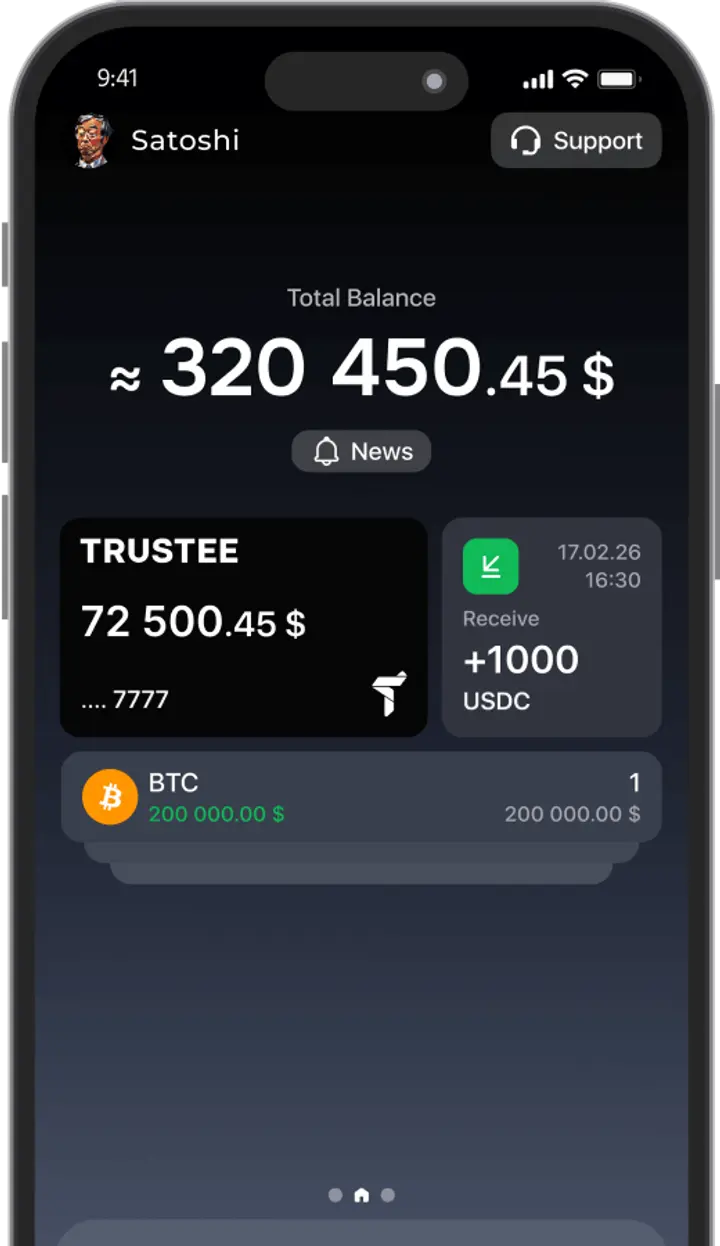
To send USDC, you need to: buy crypto → choose the correct network → pay a fee in the network’s native coin → avoid mistyping the address. For everyday users, that is a serious cognitive barrier. The good news is that interfaces are improving quickly. Trustee Plus, PayPal, Coinbase and Revolut make it almost invisible. New secure issuer solutions are also emerging, such as Circle’s cross-chain bridge — Bridge Kit — an SDK that simplifies USDC transfers between blockchains via its Cross-Chain Transfer Protocol (CCTP).
4. Security: you can’t undo a mistake
If you send funds to the wrong address, recovery is impossible. There is no chargeback and no support team that can reverse a transaction. Phishing and address substitution are real threats. One rule: always verify the first and last 4–6 characters of the address before sending.
5. Scalability
Ethereum can become expensive under peak load. But there are solutions: L2 networks (Arbitrum, Base, Optimism), as well as Solana, Tron and BNB Chain process millions of transactions a day with micro-fees. For international transfers today, these networks matter most — not base-layer Ethereum.
Conclusion and what comes next
Stablecoins are not an “improved SWIFT”. They represent a completely different paradigm: an open, global, programmable payments infrastructure where intermediaries are not a necessity, but an option. And this infrastructure is already processing a trillion dollars per month.
Yes, there are barriers. Regulation is still forming. UX is not perfect. But look at the pace: Visa stablecoin settlement is a 2025 reality. PayPal PYUSD is already available in 70 countries. A Bank of America stablecoin is on the horizon. SWIFT itself is running pilots with digital currencies.
The next 3–5 years will be decisive. The most likely scenario is not “blockchain replacing SWIFT” as a total substitution, but gradual integration: traditional players adopt stablecoins as new payment rails alongside existing ones. For end users, it means one thing: faster, cheaper, more accessible — regardless of where you live or which bank you use.
FAQ: common questions about stablecoins and payments
-
What is a stablecoin, and how is it different from Bitcoin?
A stablecoin is a cryptocurrency pegged to a stable asset, usually the US dollar. Bitcoin has no peg and can lose or gain 30–50% in a week. USDC is designed to remain at $1. That is why stablecoins are used for payments and transfers, not Bitcoin.
-
Which crypto is best for international transfers?
It depends on your priorities. If the lowest fees matter most, USDT on Tron is often the choice. If reliability and transparency matter, USDC on Solana or Ethereum is a strong option. If you need broad support across exchanges and services, USDT or USDC on Ethereum is common. For B2B cross-border payments, USDC is increasingly becoming the de facto standard thanks to regulatory transparency.
-
Can businesses accept crypto payments?
Yes. There are several approaches: a non-custodial wallet such as Trustee Wallet (full control, but manual processing), payment processors like Coinbase Commerce, or direct integrations via Circle’s APIs. Accepting crypto payments today is no harder than integrating Stripe — if you choose the right tool.
-
How safe are stablecoin payments?
Blockchain transactions are cryptographically secured and cannot be forged. However, risks exist: sending to the wrong address, phishing, and clipboard address substitution. The key rule is to always verify the recipient address. A hardware wallet (Ledger, Trezor) significantly improves security for larger amounts.
-
What is USDC, and how is it different from USDT?
USDC is issued by Circle Internet Group, Inc (US), which regularly publishes reserve attestations and is considered more transparent. This supports USDC’s stability around $1.
USDT by Tether is issued by Tether Limited, registered in the British Virgin Islands with offices in Hong Kong. It also has deep liquidity and broad adoption, but its audits are viewed as less transparent.
Both are widely used for payments and transfers, but 2025–2026 trends suggest growing institutional confidence in Circle.
-
How does stablecoin regulation affect their use?
Regulatory updates in 2025 — the GENIUS Act in the US and MiCA in the EU — are broadly positive for the market. They increase institutional trust, push issuers towards greater transparency, and create clear rules of the game. For everyday users, it generally means fewer grey areas and more reliable products. The risk is over-bureaucratisation that could slow innovation.