




























MiCA (Markets in Crypto-Assets Regulation) is a regulation introduced by the European Union that establishes unified rules for the cryptocurrency market. It was adopted in 2023, with its provisions coming into force gradually throughout 2024:
-
As of June 30, 2024, requirements for stablecoin issuers (ARTs and EMTs) came into effect.
-
As of December 30, 2024, rules for crypto-asset service providers (CASPs) began to apply.
As of March 2025, the regulation is fully in force, and all companies operating within the EU are required to comply with the new standards.
The primary goal of MiCA is to make the market more transparent and safer for users. Previously, cryptocurrencies in Europe operated in a legal “grey zone” — laws differed between countries, and companies often operated without clear rules. This exposed investors to financial losses and allowed fraud to go unpunished.
Key MiCA Rules: How the Market Works Now

MiCA (Regulation (EU) 2023/1114) introduces clear definitions for key concepts in the crypto market. It classifies crypto-assets into several categories:
-
Asset-referenced tokens (ARTs)
-
E-money tokens (EMTs)
-
Other crypto-assets not covered by existing regulations
For example, Bitcoin falls under the third category. Meanwhile, NFTs are mostly excluded from MiCA, as long as they are not used as financial instruments or means of payment.
MiCA pays particular attention to stablecoins. It clearly distinguishes between:
-
ARTs (asset-referenced tokens): Tokens whose value is linked to one or several official currencies, or to other values or rights, excluding commodities.
-
EMTs (e-money tokens): Tokens whose value is pegged to a single official currency, such as the euro or U.S. dollar.
Tokens like USDT (Tether) qualify as EMTs because they are pegged to the U.S. dollar. Although Tether, the issuer of USDT, is not based in the EU, platforms that operate with USDT in the European market must comply with MiCA. For example, Article 48 of MiCA states that EMTs cannot be issued unless the issuer is a credit institution or has special authorization to issue electronic money.
What This Means in Practice
By December 31, 2024, Tether was expected to obtain a license under MiCA requirements — but this has not happened. As a result, European exchanges are no longer allowed to offer USDT and are already switching to licensed stablecoins — such as USDC, EURS, EURR, and other EMTs authorized in the EU.
MiCA also introduces requirements for crypto-asset service providers (CASPs) — exchanges, wallets, brokers, etc. They must be licensed in one of the EU member states. The regulation includes provisions on user protection (Article 59), asset custody (Article 66), prevention of conflicts of interest, and more.
Additionally, crypto-asset issuers must publish a white paper in line with MiCA requirements (Articles 5–16), which must include a project description, risks, technical data, and investment warnings — to help users make informed decisions.
How MiCA Will Impact the Crypto Market in Europe and Globally
Companies operating within the EU must now go through authorization, meet transparency and reporting requirements, and manage risks effectively. This results in higher compliance costs, but also enables them to legally offer services across the EU via the passporting mechanism (Article 60 MiCA).
On a global scale, MiCA may serve as a model for non-EU countries. If similar regulations are introduced in the U.S. or Asia, it would strengthen international alignment, market stability, and oversight of stablecoins.
What Will Change for Trustee Plus Users
Since Tether has not obtained the necessary authorization under MiCA, its use has been restricted on many licensed platforms in Europe.
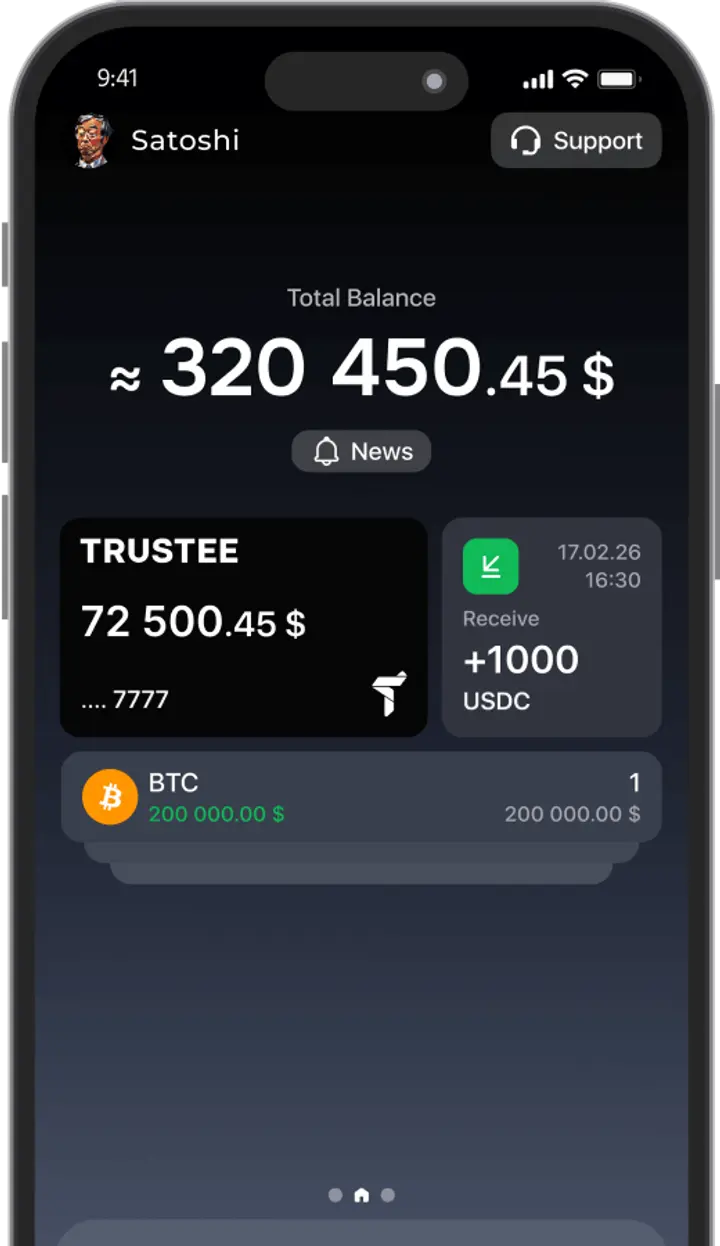
In Trustee Plus, this means that access to USDT is restricted in accordance with MiCA requirements for users within the EEA. However, in jurisdictions not subject to EU regulation, some USDT features may remain available. Meanwhile, the platform continues to fully support alternative tokens that comply with the new rules, including USDC and others.
How MiCA Affects Trustee Wallet
Trustee Wallet is a non-custodial crypto wallet, meaning all private keys and assets are stored exclusively on the user’s side. The company does not manage or access user funds and therefore does not fall under the definition of a crypto-asset service provider (CASP) according to MiCA.
As a result, all wallet features remain fully available — including operations with USDT.
Pros and Cons of MiCA: What to Expect
Pros of MiCA:
-
Better user protection through clear rules for tokens and platforms
-
Increased market transparency
-
Fewer fraudulent projects
-
Potential to attract large institutional investors
Challenges and Downsides:
-
High compliance costs for companies
-
Risk of limited access to popular tokens (e.g., USDT)
-
Some startups may leave the EU due to strict regulation
-
Some aspects remain unresolved — further changes may follow post-launch
Summary & Tips for Users
MiCA introduces new rules for the EU crypto market — offering greater protection, but also more restrictions. The main changes concern stablecoins and platform licensing.
Users should:
-
Monitor which tokens are licensed in the EU
-
Check exchange or withdrawal availability in their region
-
Consider switching to USDC, EURI, or other supported assets when possible