




























In 2025, users of crypto platforms in the European Union faced a major change — the gradual delisting of USDT (Tether) across the region. At first glance, this might seem like a technical update, but in reality, it represents a systemic transformation of the stablecoin market triggered by the new MiCA regulation.
Its provisions affect both crypto service providers and digital asset issuers. Due to these changes, USDT — one of the most popular stablecoins in the world — has come under regulatory pressure and started disappearing from European platforms.
What is MiCA?

MiCA, adopted by the European Parliament, is aimed to create uniform rules for crypto-assets across the EU, enhancing consumer protection and market integrity. The regulation encompasses various aspects of the crypto market, including the issuance and operation of stablecoins.
MiCA Requirements for Stablecoins
MiCA establishes separate rules for two types of stablecoins, each with a clear legal definition.
The first type is Asset-Referenced Tokens (ARTs). These are crypto-assets whose value is intended to remain stable by referencing one or more official currencies, commodities, or other values or rights.
The second type is Electronic Money Tokens (EMTs). These tokens are pegged solely to a single official currency, such as the euro or the US dollar. According to MiCA, stablecoins like USDT or USDC would fall under this category — but only if their issuers obtain the appropriate authorization.
According to Article 48 of MiCA, only two types of entities are permitted to issue EMTs (such as USDT):
-
Credit institutions (banks) registered under Directive 2013/36/EU (CRD IV);
-
Electronic money institutions authorized under Directive 2009/110/EC.
Issuers must also meet a range of requirements regarding capital adequacy, corporate governance, internal controls, reporting, and transparency.
Key provisions include:
-
Mandatory publication of a white paper disclosing all risks (Article 17);
-
Reserves must be held in secure assets (primarily fiat currencies or government bonds), separated from the issuer’s own capital (Article 36 for ARTs, Article 53 for EMTs);
-
Daily updates on reserve information, including the amount of assets and liabilities (Article 36.1(b));
-
Reporting to the national regulator and the possibility of regulatory standards.
Reasons for the Delisting of USDT
The delisting of USDT is directly related to the fact that Tether, its issuer, does not hold the status of a credit institution or an electronic money institution in the EU and has not obtained authorization under MiCA. This means that platforms licensed in the EU are not permitted to offer USDT to users within the European Economic Area (Article 58 of MiCA).
The first companies to announce the delisting of USDT in Europe included Uphold, Bitstamp, and Kraken. Some limited only deposits and withdrawals, while others restricted trading entirely.
Market Impact

The delisting of USDT in Europe has a significant impact on liquidity. This token has long been the most popular stablecoin among traders and investors. Its restriction is shifting the dynamics of trading and exchange across the region.
Exchanges are being forced to urgently integrate licensed alternatives. Currently, the most popular replacements are:
-
USDC — a stablecoin whose issuer has been authorized for public offering in the EU;
-
EURS and EURR — tokens pegged to the euro.
Investors should revise their strategies in advance to align with the new regulations. In the case of USDT, delisting is not just a technical formality — it represents the actual removal of the token from circulation on licensed platforms in the EU.
USDT Delisting on Trustee Plus
Due to updated regulatory requirements in several regions, Trustee Plus has implemented partial restrictions on certain USDT operations. The token has not been completely removed, but its functionality varies depending on the user’s jurisdiction.
Specifically, starting from the second half of March 2025, the ability to exchange USDT for EUR became unavailable, which was previously used for automatic conversion when paying with a crypto card. At the same time, essential actions such as transfers, receiving funds, and P2P operations remain active in regions not affected by these restrictions.
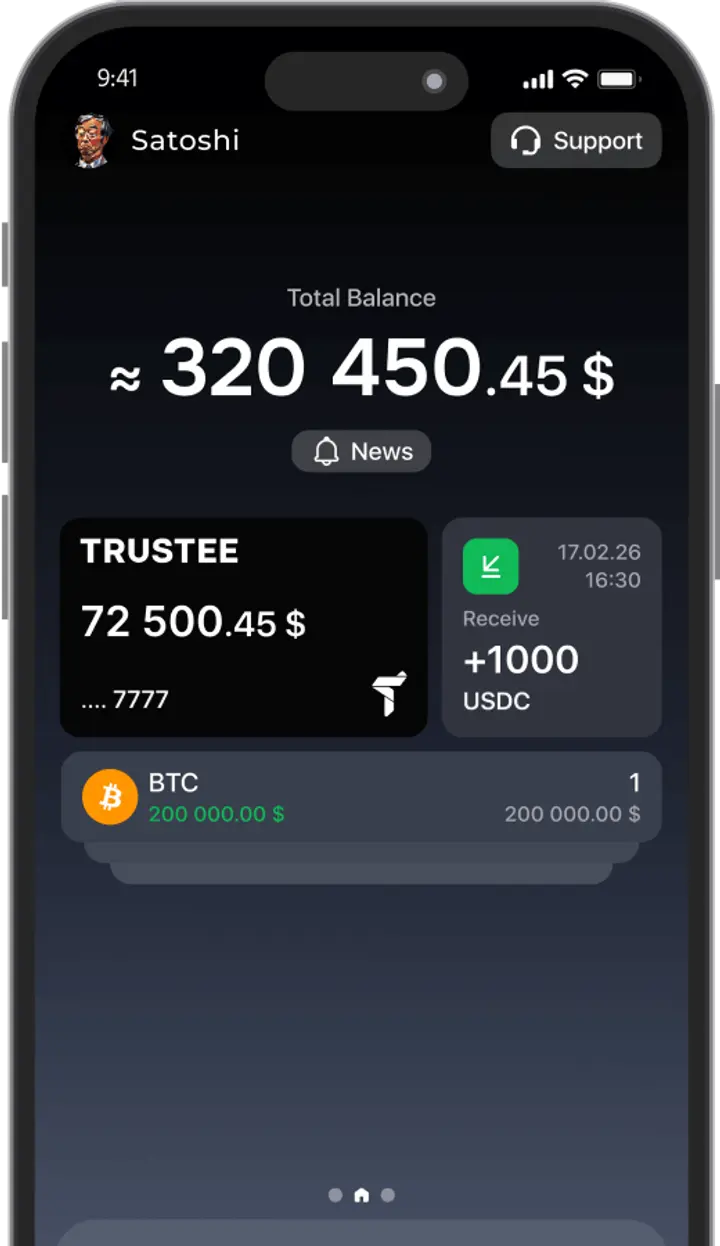
To maintain full service functionality, we recommend switching to USDC — a stablecoin that has already received the necessary authorization and complies with the new European regulatory framework.
How to Exchange USDT for USDC
On the main screen of the app, go to the “Exchange” tab, select USDT as the currency you are giving, and USDC as the one you are receiving. The whole process takes just a few seconds, and the fee is 0%

The delisting of USDT will not affect the safety of your assets — we keep all available tools in place to ensure the transition is smooth and secure.
Conclusion
Tether has not yet obtained a license in accordance with MiCA requirements and has not announced any clear plans for compliance. In official statements, Tether representatives have expressed skepticism about the new rules, but the situation remains open.
In the short term, the delisting of USDT across EU countries is expected to continue. If Tether does not bring its operations into compliance with MiCA, the token will remain unavailable on licensed platforms in Europe. In the long term, the company may change its stance; however, investors should already consider alternatives to USDT — such as USDC or EURS — which fully meet the new regulatory standards.