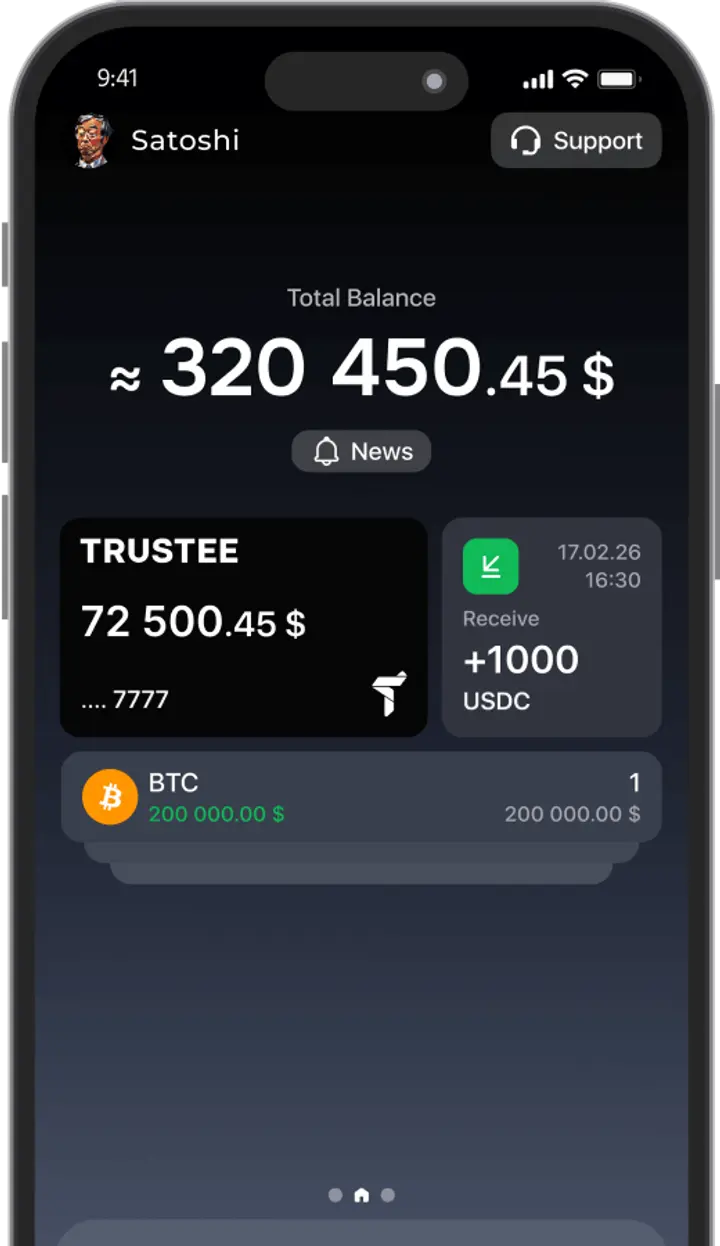






























In the world of cryptocurrency — where every percentage of profit counts — investors are constantly seeking ways to maximize their returns. One such method is multi-accounting, a practice that involves creating multiple accounts for various purposes.
Why is this relevant? Due to increasing competition, complex regulatory requirements, and the desire to manage risk more effectively. But is it always safe? And are there legal alternatives, such as sub-accounts in Trustee Plus?
In this article, we’ll explore what multi-accounting is, its pros and cons, and how sub-accounts can offer a modern solution for crypto investors.
What is Multi-Accounting?

In the context of cryptocurrencies, multi-accounting typically refers to registering multiple accounts on an exchange to benefit from referral programs, registration bonuses, or to bypass withdrawal or transaction limits.
For example, some exchanges limit the number of free transactions per day for a single account. Users may create additional accounts to get around these restrictions.
One of the clearest examples of when multi-accounting can be profitable is participation in so-called airdrops — free token distributions by new projects designed to attract users and promote the product.
Imagine this scenario: A new blockchain project announces an airdrop where each participant can earn 100 tokens by completing simple tasks. If a user creates 10 accounts, they could potentially receive 1,000 tokens instead of 100. If the value of these tokens increases, the profit can be substantial. For instance, in 2020, the Uniswap (UNI) airdrop rewarded each participant with 400 tokens, which were worth thousands of dollars just months later.
Many projects implement mechanisms to detect multi-accounting, such as IP analysis, KYC verification, or monitoring user activity. If a user is caught, their accounts may be blocked, and tokens forfeited.
Pros and Risks of Multi-Accounting
On the one hand, multi-accounting allows users to optimize operations, earn additional rewards, and manage risk more effectively.
On the other hand, violating platform rules may lead to account suspension and loss of funds.
| Advantages | Risks |
| Distributing assets across multiple accounts helps reduce the impact of potential losses. | Platforms actively detect multi-accounting, which can lead to the suspension of all accounts. |
| Participation in multiple referral programs or sign-up bonuses. | When accounts are blocked, access to funds can be permanently lost. |
| Using multiple accounts to bypass transaction or withdrawal limits. | Multi-accounting violates the terms of use of most crypto platforms. |
| The ability to experiment with different trading strategies on separate accounts. | Having multiple accounts makes it harder to track assets and transactions. |
Methods of Preventing Multi-Accounting in the Crypto Industry
Multi-accounting on cryptocurrency platforms creates risks such as fraud, money laundering, and market manipulation. To mitigate these threats, crypto exchanges, DeFi platforms, and wallets implement comprehensive verification and monitoring mechanisms.
-
Identity Verification (KYC – Know Your Customer)
-
Mandatory user verification through documents (passport, ID card, driver’s license).
-
Address verification (utility bill, bank statement).
-
Biometric identification (Face ID) to verify the uniqueness of the user.
-
User Device Fingerprinting
-
Tracking unique device parameters: IP address, MAC address, cookies, user-agent.
-
Using browser fingerprinting to detect attempts to log in from different accounts using the same browser.
-
Monitoring changes in users’ device software and hardware.
-
IP Address, VPN, and TOR Network Monitoring
-
Detecting suspicious IP address changes and frequent country switches.
-
Limiting access through VPNs, proxies, and anonymous browsers (e.g., Tor).
-
Utilizing global IP address blacklists to combat bots and fraudsters.
-
Linking Accounts to Unique Payment Methods
-
Detecting identical crypto withdrawal addresses between different accounts.
-
Analyzing transactions for circular transfers between accounts (wash trading).
-
Monitoring the use of the same bank cards and wallets for deposits.
-
Transaction Monitoring and Behavioral Analysis
-
Detecting abnormal transfer volumes between suspicious accounts.
-
Analyzing user activity time patterns to identify automated bots.
-
Using graph analysis for tracing money laundering schemes (AML compliance).
-
Two-Factor Authentication (2FA) and Hardware Keys
-
Using Google Authenticator, Authy, SMS codes for login verification.
-
Supporting hardware keys (YubiKey, Ledger, Trezor) as an additional security layer.
-
Limiting automated bots with CAPTCHA and requiring confirmation for every withdrawal transaction.
-
Device and Geolocation-Based Registration Limits
-
Using unique device tokens to prevent multiple registrations.
-
Blocking multiple accounts from being created from the same device or network.
-
Monitoring account access from different countries within short time intervals.
-
AI and Machine Learning for Multi-Accounting Detection
-
Using algorithms that analyze large amounts of data to predict fraudulent actions.
-
Detecting linked accounts based on similar financial transactions.
-
Automatically blocking suspicious accounts through advanced AML and KYT (Know Your Transaction) algorithms.
What is a Subaccount in Trustee Plus?
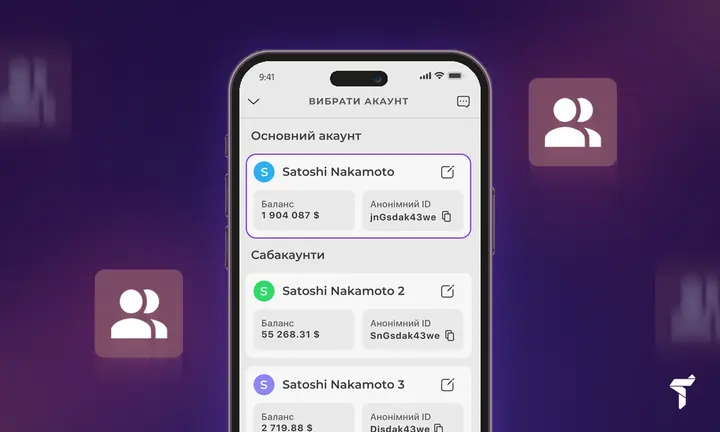
A subaccount in Trustee Plus is an additional account created under the user’s main account. This feature allows users to manage multiple crypto wallets and cards within a single application.
Trustee Plus is a modern financial service that combines the functionality of a cryptocurrency wallet with built-in payment solutions. The platform allows for the easy exchange, storage, and management of virtual assets, as well as issuing crypto cards for global payments.
Benefits of Subaccounts in Trustee Plus
Subaccounts in Trustee Plus offer several advantages that make them indispensable, especially for arbitrage traders and business owners.
- Increased Transaction Limits: Each subaccount allows issuing a separate crypto card with a monthly limit of €50,000. With three cards (one main account + two subaccounts), the total monthly limit reaches €150,000, significantly expanding the capacity for handling large sums.
- Financial Segmentation: Subaccounts make it easy to separate finances for different purposes, such as paying for advertising, withdrawing profits, or personal expenses.
- Bulk Transfers: Trustee Plus allows bulk transfers, which is especially useful for team projects.
For step-by-step instructions on how to create a subaccount with Trustee Plus, click here.
Conclusion
Trustee Plus, with its subaccounts and payment cards, becomes a powerful tool for those working with cryptocurrencies. It is not only a convenient way to manage assets but also a legal means to use crypto for everyday expenses.