




























Exit scam — is a fraudulent scheme in which a crypto project team collects funds from investors and then disappears with the money. This most commonly happens through the launch of a fake ICO, DeFi platform, or NFT collection that creates the illusion of profitability and then suddenly shuts down.
In this article, we will break down what an exit scam is, how it works, examples of the most notorious cases, how to identify them, and how to protect yourself from financial loss.
What is this scheme and how does it differ from others
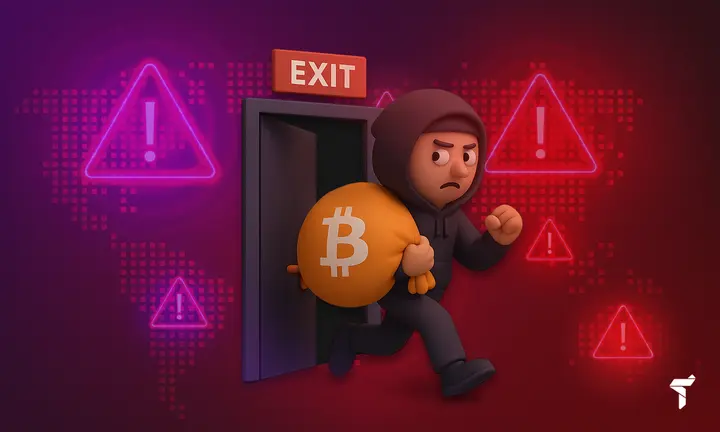
This type of scam involves creating a fake crypto project with a single goal — to collect as much money from investors as possible and vanish without a trace. On the surface, everything looks legitimate: there’s a website, a roadmap, even a token. The team may promise innovative solutions, massive profits, and a quick platform launch. But as soon as the money is transferred to the organizers, the project gets "frozen" and the developers disappear.
Unlike a rug pull, another popular scam, this is not about suddenly draining liquidity from a decentralized platform. In a rug pull, scammers usually create a token or liquidity pool on a DeFi exchange and pull all the funds right after peak interest.
How an exit scam works
Despite the variety of forms, these scams usually follow a common structure. Their success relies not just on technical execution but also on psychological manipulation, novelty effects, and aggressive marketing.
Stages of the scheme
- Launch and brand creation
A website appears, along with a concept, often pseudo-technical documentation (whitepaper), and promises of revolutionary technology. Everything is presented as professionally as possible to build trust.
- Fundraising
The project launches an ICO, crowdsale, or staking program. It promises high returns, exclusive early-entry bonuses, and other incentives that create a sense of urgency.
- Disappearance
Once the financial goal is reached, the platform goes silent. Social media accounts are deleted or frozen, the website disappears, and all communication with the team ceases. Users are left with no access to their funds.
Tools used in the scam
- ICO (Initial Coin Offering): the most popular method for raising money. Easy to execute and hard to regulate.
- Fake tokens: created on existing blockchains (e.g., Ethereum or BNB Chain), but with no real use.
- DeFi platforms: promise yield farming or staking, but don’t conduct any actual financial activity.
- NFT collections: attract investors with "uniqueness," though they offer no real value or business potential.
The role of social media and marketing
Social media is the main weapon of such projects. Platforms like Twitter, Telegram, and Discord are used to spread updates on "achievements" and future plans. Influencers, bloggers, and sometimes even actors posing as team members are hired. Paid ads, fake reviews, and aggressive spam create the illusion of a big, promising startup on the verge of a breakthrough.
Examples of well-known exit scams

The history of the crypto market already includes dozens of large-scale scams in which investors lost millions or even billions of dollars. Here are just a few:
-
BitConnect
A classic Ponzi scheme, where the platform promised massive trading returns, followed by a token crash that caused huge investor losses.
-
OneCoin
A fake cryptocurrency with a global network of sales centers, resulting in billions of dollars in losses for investors worldwide.
-
PlusToken
A wallet that operated from 2018 to 2019 and "extracted" over $2 billion. Investors never recovered their funds.
-
ZKasino (2024)
A DeFi betting platform that raised over $30 million in a presale but never launched a product. The team disappeared, and the funds were laundered through multiple blockchains. Arrests followed — the founder of WhiteRock Finance, linked to the project, was detained in the UAE with an extradition request to the Netherlands.
On Reddit, one influencer explained:
-
BitForex (February 2024)
A Hong Kong-based crypto exchange unexpectedly ceased operations, during which around $56.5 million in crypto was withdrawn. The team gave no explanations, sparking suspicions of an exit scam.
-
LIBRA (2025)
A meme coin that plummeted in value after public support from Argentine president Javier Milei. The bubble grew to a $4.6 billion market cap, but around $87 million was withdrawn by insiders within hours — a textbook case of a rug pull/exit scam.
Signs of a potential exit scam

Successful scams often look convincing — at least at first glance. But several red flags should raise investor concerns.
The first is a lack of transparency about the team. If developers remain anonymous, don’t have verified LinkedIn profiles, or cannot be identified — that’s a serious risk. Even if names are listed on the site, you must verify that they belong to real people with relevant experience.
Another hallmark is overly attractive promises. If a project guarantees returns of tens or hundreds of percent in a short time — think twice. While crypto can offer high yields, it always comes with risk. No legitimate company will promise guaranteed profits.
Another sign is unnaturally positive reviews duplicated across multiple sources or written in a templated manner. These are often fabricated to create an illusion of trust. Alongside them — aggressive marketing on social platforms and forums designed to build pressure and FOMO, encouraging users to invest quickly.
Lastly — check the documentation. If the project lacks clear tokenomics, a proper whitepaper, or technical explanation — it likely indicates poor quality or intentional lack of transparency.
How to protect yourself
Before investing in any project, do your research. Read the whitepaper, check the team, monitor social media and GitHub activity. Look for mentions on Reddit, forums, and crypto news outlets.
If the available information is scarce or contradictory — it’s better to walk away. Shallow research is one of the most common reasons people fall victim to crypto exit scams.
Check the project’s reputation
Pay attention to what crypto communities say. Reputation takes years to build and can vanish overnight. If a project is only featured in paid promotions — that’s a red flag. Also, check if the team has a history of successful ventures or public experience in the industry.
Use trusted platforms
Buy tokens or invest only through reputable exchanges and DeFi protocols with proven track records. Avoid anonymous websites with questionable interfaces — especially if they ask you to send funds manually to unknown wallets.
Be skeptical of "too good to be true" offers
If a project promises 10–20% daily returns or risk-free profits — it’s a scam. Yes, high yields exist in crypto, but they always come with volatility and risk. Professional investors analyze revenue logic — not flashy marketing.
Conclusion
Scam projects won’t disappear. They evolve, adapt to trends, and use every tool available to deceive you. Exit scams are a real threat to anyone interested in cryptocurrencies.