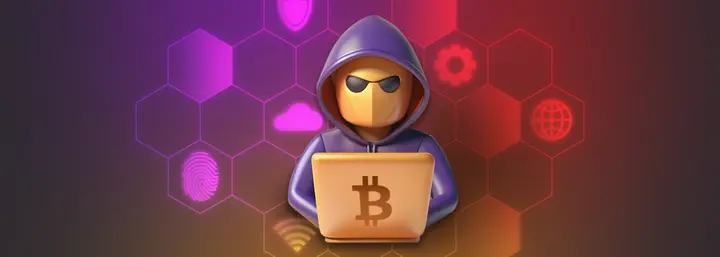






















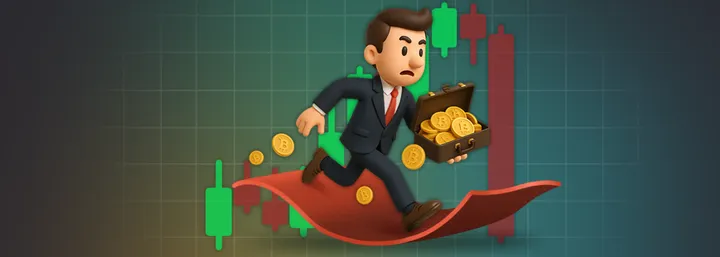

One of the most common fraud schemes in cryptocurrency is the rug pull. It happens when the creators of a crypto project suddenly disappear with investors’ funds, leaving the token worthless.
In this article, we explain what a rug pull is, how it works, what forms it can take, and how to protect yourself from losses.
What is a rug pull in cryptocurrency
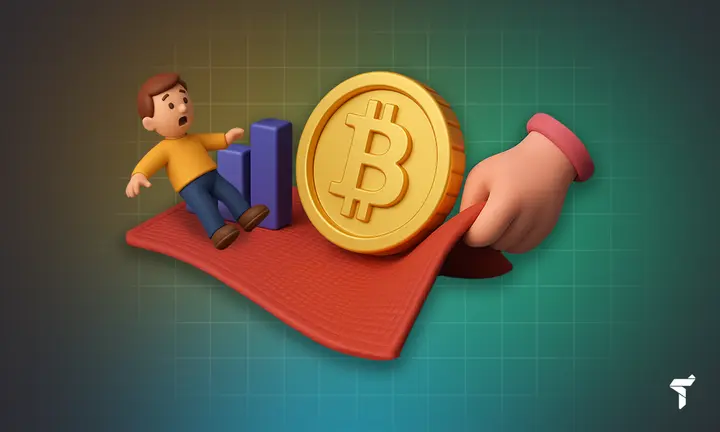
Rug pull is a fraudulent scheme in crypto projects where developers create a token or platform, attract investors, then withdraw all funds and vanish. The name comes from the idiom "pull the rug out"—to suddenly remove support and security.
Most rug pulls occur in decentralized finance (DeFi), where there is no centralized oversight. Investors lock in funds by buying tokens or providing liquidity, then developers exploit vulnerable smart contracts to rapidly extract assets.
Key signs of a rug pull:
-
Withdrawal of liquidity from a DEX without notice;
-
Inability to sell the token after purchase;
-
Full project control held by an anonymous or undisclosed team;
-
No code audit or a counterfeit audit.
How a rug pull works
The essence of a rug pull is creating an illusion of project trust, then using technical access to drain assets. In DeFi this is typically done via smart contracts that immediately block token sales or withdraw liquidity.
Main steps of the scheme:
-
Token or platform creation. The team launches a project with their own token—usually on Ethereum or BNB Chain.
-
Marketing and investor attraction. They use social media, influencers, airdrop campaigns, big promises of high yields.
-
Artificial price growth. Users buy the token, its price increases, creating a success illusion.
-
Liquidity drain or sale blocking. Once funds accumulate in the pool, the team withdraws them or alters the contract to prevent sales.
-
Disappearance. The project stops all activity, and the token collapses in value.
Mechanisms for implementing rug pulls
Rug pulls are mostly carried out using smart contracts with built-in backdoors for developers.
Common technical tactics:
-
Full control over liquidity. A pool is created on a DEX (like Uniswap) with project tokens and ETH/BNB. If liquidity isn’t locked in the contract, developers can withdraw it at any time.
-
Sale-blocking function. Token code includes a sale ban or whitelist allowing only the team to sell tokens.
-
Logic mutability. If the smart contract allows updates without multi-signature, developers can change its functionality after launch.
Examples across project types
-
DeFi platforms. Classic case—fraudulent farming or staking with subsequent liquidity withdrawal (e.g., Meerkat Finance on BNB Chain withdrew $31 million).
-
NFT collections. Funds raised under the pretense of NFT sales, then the site disappears and the collection is removed from marketplaces.
-
Meme tokens. A burst of interest, sharp price rise, followed by a drastic collapse—often without a team or documentation.
Consequences for investors and the market
-
Financial losses. Investors often lose 100 % of their funds.
-
Loss of trust in DeFi. Widespread fraud slows industry growth and deters institutional investors.
-
Capital outflow. After major rug pulls, users often move to stablecoins or exit the market.
Examples of successful and failed rug pulls
One of the most famous was the Squid Game Token (SQUID). In 2021, the token soared amid the popularity of the TV series, reaching over $2800, then crashed almost to zero. Investors couldn’t sell due to built-in restrictions, and the developers vanished with $3.4 million. The project had no official connection to Netflix.
Another example is $LIBRA, speculating in 2025 on the image of Argentine President Javier Milei. Despite no official status, the project amassed huge liquidity, and the developers withdrew around $87 million. Total user losses are estimated at over $250 million.
There are also failed attempts. In the Build Finance DAO project, one participant seized control and withdrew $470,000, but the community intervened quickly and partially stopped the scheme.
Risks and precautions
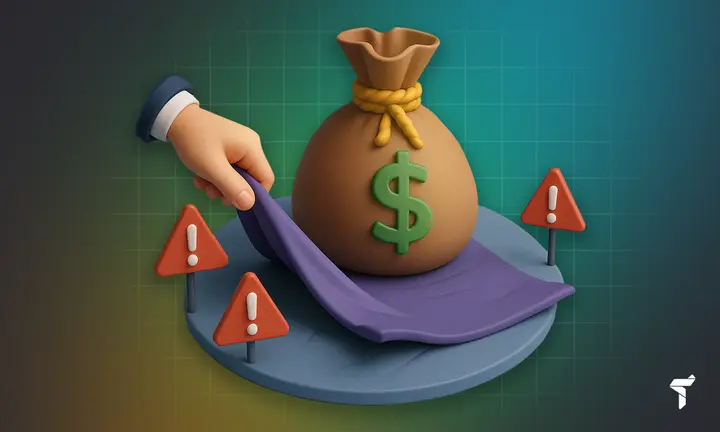
The main risk of a rug pull is total loss of funds. Investors rarely have legal or technical means to recover stolen assets. Beginners—relying on marketing and high-return promises without verifying code or team—are especially vulnerable.
Tips to assess project safety
Before investing, it’s vital to:
-
Verify team transparency;
-
Check if the smart contract was audited;
-
Evaluate the ability to modify the contract or withdraw liquidity;
-
Analyze token distribution—if most tokens are held by one address, that’s a red flag.
How to minimize rug pull risks when interacting with projects
-
Invest only what you can afford to lose;
-
Avoid projects with aggressive marketing and no documentation;
-
Don’t jump in when the token price spikes—that often precedes liquidity withdrawal;
-
Use tools like rug pull checkers or smart contract auditors;
-
Diversify investments—don’t put everything into one project, especially if it lacks reputation or registration.
Conclusion
Rug pull is one of the most dangerous fraud schemes in crypto, capable of erasing capital in minutes. In a world where anyone can launch a token or DeFi protocol, it’s essential to identify risks and avoid traps.