


























How often do you get emails from crypto exchanges? With near 100% certainty, it’s fair to say you regularly receive all sorts of promotional offers. Marketing spam is annoying, but it’s not the real problem, and it can usually be switched off easily in your account settings.
The trader, slightly worried (after all, half a million is at stake), clicks the link in the email and lands on a website that looks identical to the real Binance — the same interface, the same colours. He enters his login, password, and the 2FA code from his phone. The system “processes the request” for a few seconds… and everything seems fine — “access restored”. The trader exhales with relief and calmly closes the browser tab.
He has no idea his crypto wallet is already empty.
Over $500,000 disappears overnight. Dozens of transactions go to unfamiliar addresses, which then send funds onwards to crypto mixer addresses. Of course, there will be a report to cyber police, a criminal case, a hunt for the cybercriminals… but the money is gone. Irretrievably. Forever.
Fortunately, this is a fictional story. But similar situations happen in real life almost every day, and cyber police investigators have thousands of genuine cases of crypto phishing fraud on their files.
Crypto phishing fraud: what is it and how does it work? Let’s look at our fictional trader. In the email he received supposedly from the “Binance security team”, there was one tiny difference between the real Binance site and the fake one. A single extra letter in the domain: binanncе.com instead of binance.com cost him half a million dollars.
Just imagine: in 2024, more than 330,000 users were affected by phishing attacks in the crypto space, losing around $500 million, and total losses from crypto scams (including cryptocurrency phishing) in 2024 are estimated at $12 billion. In reality, the figure could be much higher, because many people simply don’t want to admit they were scammed or assume nothing can be done.
The worst part is that crypto phishing is still the leading cause of lost cryptocurrency. It has even overtaken exchange hacks and vulnerable smart contracts. Scammers don’t need to wrestle with the blockchain — they just hunt you: your inattention, your trust, your hunger for quick profit, or your fear of losing something.
So it turns out simple psychological tricks work better than any hacker “tools”. While the entire crypto industry builds ultra-complex security systems, scammers simply write: “enter your seed phrase here for verification” — and people believe them.
In this article, we’ll take a detailed look at what crypto phishing is, how people are being tricked right now, how not to bite the bait, how to protect your cryptocurrency and crypto wallet, and what to do if you’ve already been scammed.
What is crypto phishing and why is it so effective?
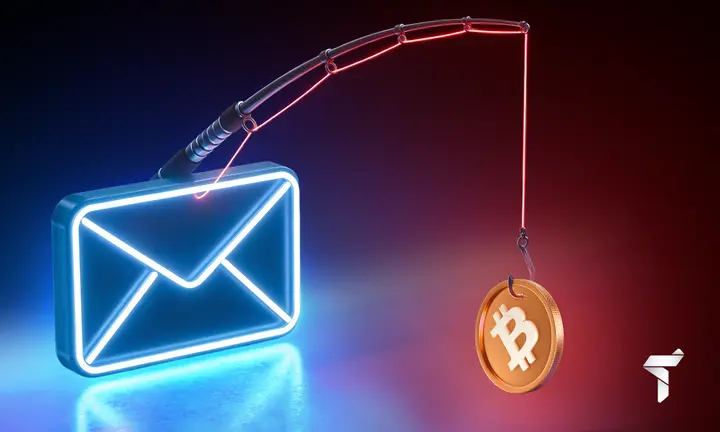
Crypto phishing is when attackers pretend to be trusted crypto services to steal your secret keys and passwords, or to trick you into signing something “harmless” that actually gives them control of your funds.
It might sound like nothing special — similar to traditional bank-card phishing. But there’s something that makes it far more dangerous.
Why is phishing in crypto especially dangerous?
- Irreversible transactions
If your crypto is stolen, that’s it. There’s no one to call and say: “Give my money back!” The blockchain simply does what it’s told.
- Anonymity works against the victim
The privacy people love in crypto helps scammers hide. You can trace a transaction, but finding who is behind it is almost impossible.
- Lack of regulation
Most crypto projects don’t insure users’ funds. If you hand over access to your exchange account or crypto wallet, you’re the only one responsible.
- Complexity for newcomers
Crypto is like a jungle of unfamiliar terms, strange apps, and different networks. Beginners often get lost and don’t understand what they’re doing: what they’re signing and who they’re granting access to. Scammers are counting on exactly that.
- Greed and FOMO
“Free $1,000 for signing up!” “Staking at 125 % APR!” “Only today: a top NFT with a massive discount!” — we see messages like these constantly on social media, because many users have absorbed the stereotype that money supposedly falls from the sky in crypto. And where there’s big money, scammers are always close by, hunting for their next victim.
Who becomes a victim?
Who said only beginners fall for cryptocurrency phishing? Not at all.
Anyone can get hooked:
- Experienced investors with large portfolios (like in the opening story)
- Developers and other technical users (even their work tools get compromised)
- NFT owners and collectors (through fake marketplaces)
- Traders (via fake bots and “signals”)
- Even employees of crypto companies (via LinkedIn phishing)
What do attackers want?
What exactly do crypto phishing scammers try to steal?
- Seed phrase (12/24 words) — the master key to your crypto wallet. Whoever has it, takes the money.
- Private keys — another way to access a specific wallet as an alternative to the seed phrase.
- Exchange passwords — like the key to a safe holding your crypto assets across platforms.
- Signing a suspicious transaction — you must be careful here. It may look like you’re signing something simple, like minting an NFT, but in reality you might be granting unlimited permission to drain all tokens from your wallet.
How to spot a crypto phishing attack
The best defence is the ability to recognise an attack before it’s too late. Here are the key signs that you’re looking at crypto phishing.
Crypto phishing warning signs
A suspicious URL
This is the most common and the easiest sign to check. Scammers register domains that look almost identical to the real ones:
- unisvvap.com instead of uniswap.com (double “v” instead of “w”)
- metamask-wallet.io instead of metamask.io (an extra word added)
- binancе.io instead of binance.com (a different domain)
- trust-wallet.com instead of trustwallet.com (a hyphen added)
- binace.com instead of binance.com (a missing “n”)
How to recognise crypto phishing scams
Urgency and pressure
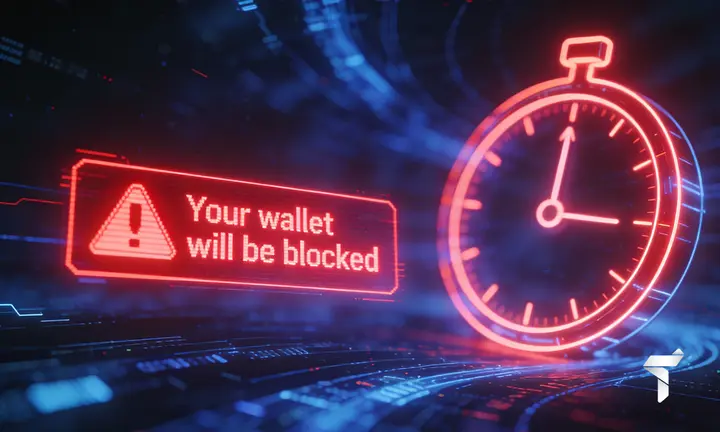
Scammers create artificial urgency or panic so you act emotionally without checking anything:
- your wallet will be blocked in two hours!
- Today is the last day to claim a free airdrop!
- Suspicious activity detected — confirm your details immediately!
- Only 50 spots left for the presale!
Real teams give you time to think.
Offers that seem too good to be true
If something sounds unbelievably profitable, it’s most likely a scam:
- We’ll double your Ethereum in 24 hours!
- Get a free airdrop worth $10,000 — just connect your wallet!
- Elon Musk is giving away Bitcoin — click here!
In crypto, there is no such thing as easy money from strangers.
Unsolicited messages
MetaMask Support suddenly messages you in Telegram even though you never contacted them? Or the “Binance Security Team” emails you about issues you don’t have? Or a “project admin” in Discord DMs you with something “interesting”?
Real services don’t start private conversations first. If something is serious, you’ll see a notification in the app or your account dashboard.
Asking for your seed phrase or private keys
Remember this once and for all: no legitimate platform will ever ask for your seed phrase.
Forget about:
- “identity verification”
- “account recovery”
- “version update”
- “participation bonus”
If someone is trying to extract your seed phrase, it’s a 100 % scam. No exceptions.
Grammar mistakes and odd design
Even if a phishing site looks polished, a few details can give it away:
- Spelling or grammar errors.
- Broken or nonsensical translation (if the site has multiple languages).
- Cheap-looking logos and images.
- Unfamiliar colours or fonts.
- No links to social pages or contact details.
Always pay attention to the site’s styling and overall presentation. Flaws can indicate a fake website.
Suspicious permissions when connecting a wallet
When you connect your crypto wallet to DeFi or NFT sites, be extra cautious:
- Is the site asking for too much? Maybe it wants access to everything, not just one token.
- Does it try to move funds immediately after connection?
- Is the smart contract address definitely the correct one?
Always check exactly what you are signing in your wallet.
How to prevent and avoid crypto phishing
Double-check everything
Before you enter or sign anything:
- Make sure the site is genuine by comparing the address with the official site.
- Search Google for: [project name] scam or [project name] phishing.
- Check official social channels — there may be a warning.
- Carefully verify wallet addresses for transfers. Scammers often hijack clipboard data and replace it with fraudulent recipient addresses.
Use official sources
Only take links from:
- the project’s official Twitter/X (check the verification badge)
- CoinMarketCap or CoinGecko (they list official websites)
- your browser bookmarks
Don’t rush
If someone pressures you to act fast, it may be a scam.
- Verify the information first.
- Confirm details via official project channels.
- Speak to someone experienced if you’re unsure.
Use a separate wallet for experiments
Create a “test” wallet with a small balance for connecting to new DeFi protocols, minting NFTs, and so on. If something goes wrong, you won’t lose much.
Review permissions regularly
Want to make sure your tokens are safe? Check Revoke.cash. It shows which smart contracts you’ve previously granted access to, and lets you revoke permissions quickly if needed. You might have forgotten a site, but it may still have rights to your tokens. Better to check than regret it later.
Common crypto phishing schemes
You’ve got the basics — now let’s move on to specific scam schemes you may encounter. New tricks appear constantly, but these are old, proven methods, so stay alert.
Clone phishing websites for exchanges and wallets
Scammers create fake copies of popular crypto sites like Binance or MetaMask. Everything looks exactly like the original. Then they spread links to these fakes via Google ads, fake news, social media comments, as well as SMS and email. You open the phishing site, enter your login and password (or a seed phrase to “restore” a wallet) — and those details instantly go to the scammers. That’s it: your data is in their hands. They quickly log in to the real service and withdraw all your funds. Stay vigilant.
Bot attacks on websites and OTP systems
Even if a website address or sender email looks genuine and belongs to a well-known service, that’s not a reason to relax. The platform may be under a hacking attempt or a bot attack right now. A vivid example is phishing email activity around crypto.com. In 2025, there was a large-scale attack on Crypto.com’s one-time password (OTP) system. People received messages from [email protected] with verification codes even though they had never registered there. The email said: “Wasn’t you? Then contact us” and provided a link to chat.crypto.com. This is how scammers attempted to create fake accounts using other people’s email addresses by triggering thousands of OTP requests.
Poisoned Ads — malicious sponsored links
Poisoned Ads is when scammers pay Google, Bing, or social networks so their phishing sites appear above legitimate results.
Why does it work? Because people are used to trusting search engines, while platforms accept advertising payments without properly verifying every site.
Example: you search for Uniswap and the top advert leads to unisvvap.com. The substitution is easy to miss because the page looks real.
Fake support on social media
Imagine you post on X, Reddit, or Discord about a Binance issue, and a minute later “support” DMs you: “Let’s sort out your withdrawal — send your 2FA code here!”.
One moment — and you lose money.
Why do people believe it? Because scammers copy avatars and names, write convincingly, and mention details of your issue.
How not to get caught:
- Don’t reply to “support” DMs.
- Check verification badges.
- Contact support only through the official website or app. Real support doesn’t DM first.
NFT and airdrop phishing
Got a message: “Hey! You’re being offered 5,000 ProjectX tokens, and to claim them you need to connect your wallet?” Be careful — it could be a trap.
It looks like a normal offer, but in reality it’s crypto phishing. Under the guise of “confirmation”, scammers steal your crypto assets.
Remember: free cheese only comes in a mousetrap.
Compromised software and extensions
Software-based phishing is a more technical, but extremely dangerous, scheme.
Malicious browser extensions:
Fake versions of MetaMask, Phantom, and Trust Wallet appear in extension stores. They look identical to legitimate ones and use similar names, but contain malicious code that:
- Intercepts your seed phrase when creating or restoring a wallet
- Replaces recipient addresses in transactions
- Steals exchange login credentials
Compromised libraries and packages:
Scammers upload packages to npm, PyPI, or other repositories with names similar to popular ones (typosquatting):
- web3.js → web3js (no dot)
- ethers.js → etherjs
Developers accidentally install the fake package, and malicious code enters the project, stealing users’ private keys.
Updates from phishing sites:
“A critical MetaMask update is available. Download now via the link” — messages like this appear in emails or on phishing sites.
Fake job offers and “insider” tips
Got a LinkedIn job offer from a “top” crypto firm? $150k salary and an exciting project? Sounds great, but be careful: downloading a “test task” file can infect your device with a trojan that steals your crypto assets.
Someone leaked an “insider” partnership that will supposedly send a token to the moon? Don’t rush to buy on a suspicious DEX — you could lose everything.
How not to get caught:
- Assess the recruiter’s profile. How long have they been on LinkedIn? How many connections do they have?
- Search the company name with scam-related queries.
- Never download files from unknown senders.
“Suspicious activity” alerts
This is a classic social engineering technique adapted for the crypto space.
For example, you receive a suspicious email or SMS about a Binance login from a Chinese IP address, or an urgent MetaMask “synchronisation” request. Ignore it. Don’t fall for suggestions to save your seed phrase in the cloud or enter it on any website. Scammers play on your fear of losing money.
What should you do if you receive messages like this?
- Ignore them.
- Never click links in such messages.
- Check the official app — if there’s a real issue, you’ll see a genuine alert there.
- Enter your seed phrase ONLY when restoring a wallet inside the official app itself.
What to do if you become a victim

You’re under attack — what now?
- It’s unsafe to keep using a compromised (phished) crypto wallet. Move everything to a new wallet immediately. Time is money. Create a new wallet with a new seed phrase and transfer all your assets there — every token and NFT. Scammers don’t sleep, and bots track victims. Seconds matter.
- Revoke all permissions. Go to Revoke.cash or Etherscan (for Ethereum) and revoke every smart-contract approval. You’ll spend some gas, but you can save what’s left.
- Change passwords everywhere. If you reused the same password, now is the time to change it on all exchanges like Binance, Coinbase, Kraken, and any other platforms.
- If you relied on SMS, switch to an authenticator app or a hardware key.
- Suspect phishing or malicious software? Neutralise it. Remove suspicious browser extensions, run antivirus on your computer (Malwarebytes, ESET NOD32), and uninstall dubious apps from your phone. If it’s really bad, reinstall the operating system.
- Check all devices where you use crypto wallets: computers, phones, tablets. Malware can “jump” between devices.
- Contact the exchange (if funds were stolen from there). Message support via the official website immediately: explain what happened and ask them to freeze the account and investigate. They may be able to stop the scammers.
- Preserve evidence. Take screenshots of the phishing site (URL and appearance), transactions (hashes, addresses), scam messages, emails, and SMS. This is useful for law enforcement (even if recovery is unlikely) and to warn others.
Reducing the damage from crypto phishing
- Can you get stolen funds back?
Honestly, most of the time you can’t recover stolen funds from the blockchain because there is no “undo” button. But sometimes there is a chance.
- If scammers use an exchange
There is a possibility the stolen funds will surface on major exchanges like Binance or Coinbase. In that case, you should notify the exchange immediately about the fraudulent address, request a freeze, and provide evidence that it was theft. Large exchanges often cooperate with law enforcement and can block criminals’ accounts.
- If a large amount was stolen
When losses reach hundreds of thousands, it may be worth hiring a blockchain investigations firm (for example, Chainalysis), filing a police report, and cooperating with international agencies (Interpol, the FBI). You can also offer a reward for useful information.
- “White-hat” hackers
Sometimes hackers break into a system to demonstrate weaknesses and then return the funds. But this is rare.
Conclusion
Protecting cryptocurrency is more about vigilance than technical skill. Blockchain is tough, but human inattention is the real problem.
To protect your funds and crypto wallet:
- Never share your seed phrase. Ever. Not even if you’re promised rewards or threatened with “issues”. Your seed phrase is your most valuable secret.
- Check website URLs. One extra letter — and you can lose everything. Attention to detail is crucial.
- Bookmarks beat search. Scammers buy adverts to push fake sites to the top.
- If it’s overly generous, it’s a scam. Free cheese is only in a mousetrap.
- If you’re unsure, verify twice. Even an “official” message is worth checking directly on the official site.