




























Most people learn about AML checks the hard way: they send or receive crypto, and suddenly something gets frozen. A platform stops a withdrawal. An exchange flags a deposit. Support asks for source-of-funds documentation. It happens without warning, and the timing is always inconvenient.
That’s what an AML check is for. Trustee runs this automatically on every incoming deposit, which means your balance stays clean by default. But there are plenty of situations where you’ll want to run a check yourself — before a P2P trade, before accepting payment from someone new, before withdrawing to an exchange. This article explains when, why, and how.
This article was prepared in partnership with AMLBot — a crypto compliance service that powers the AML Checker Online in Trustee Plus. AMLBot helps crypto platforms and individual users assess transaction risk, screen wallet addresses, and stay ahead of compliance issues before they happen.
Check An Address Now
The AML Checker is free and supports BTC, TRX, ETH, ARB, and MATIC. Paste an address, get results in minutes.
Why Clean-Looking Crypto Isn’t Always Clean
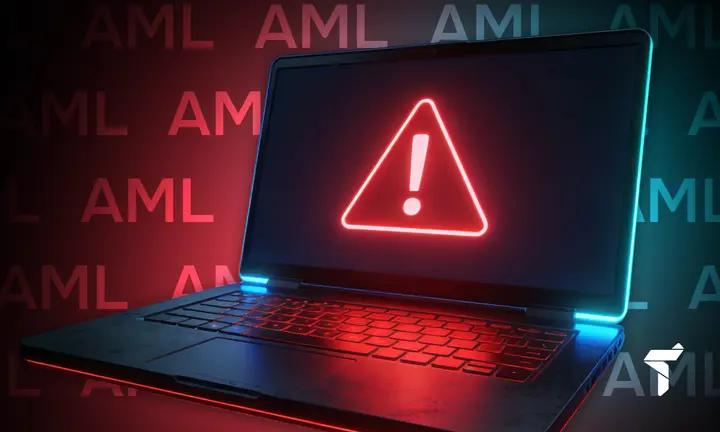
Here’s something most crypto users don’t realize: you can receive funds from a completely normal-looking address and still end up with a problem. Blockchain doesn’t label coins as “Good” or “Bad.” Every token looks identical at the network level, but the history of how those funds moved matters enormously to the platforms and exchanges that will later touch them.
Think of it this way: blockchain remembers everything. Every address your funds touched before reaching you is part of the public record. AML systems trace those connections and calculate what percentage of your balance has exposure to flagged sources — even indirect ones.
This is why the “I didn’t know” defense doesn’t help much once funds are already on a platform. The time to find out is before the transfer, not after.
How Trustee Handles This Automatically
Trustee Plus screens every incoming deposit before crediting it to your balance. This isn’t something you have to set up or opt into — it runs in the background on every transaction.The screening runs on AMLBot infrastructure, the same engine behind the manual checker available on the site.
The outcome logic is straightforward: funds are either credited normally, sent for additional review, or returned to the sender if the risk is too high. The only exception is cases where assets have been formally identified as stolen and are subject to a law enforcement order — in those situations, the platform is legally required to hold them regardless.
When to Run a Check Yourself
The short answer: any time you’re about to interact with an address you didn’t create yourself.
Before Sending To An Unknown Address
If someone gives you a wallet address and you're not sure who's behind it, running a check before sending is a reasonable precaution — not for AML reasons, but as a scam filter. The checker pulls data on whether an address has been flagged as a fraudulent exchange, illegal service, or associated with known scam activity.
Especially relevant for OTC deals, investment opportunities pitched via social media, or any situation where you're sending a meaningful amount to someone.
Before Receiving Crypto From Someone You Don't Know
Whether it's a P2P trade or a payment for any services, the logic is the same: if you're about to receive funds from an unfamiliar address into a wallet without built-in AML screening, it's worth checking first. Ask the sender for their address before confirming — most people won't object — paste it into the checker, and decide whether you're comfortable proceeding.
Two minutes before the transaction is a lot easier than explaining the situation later.
How to Use the Trustee AML Checker Online
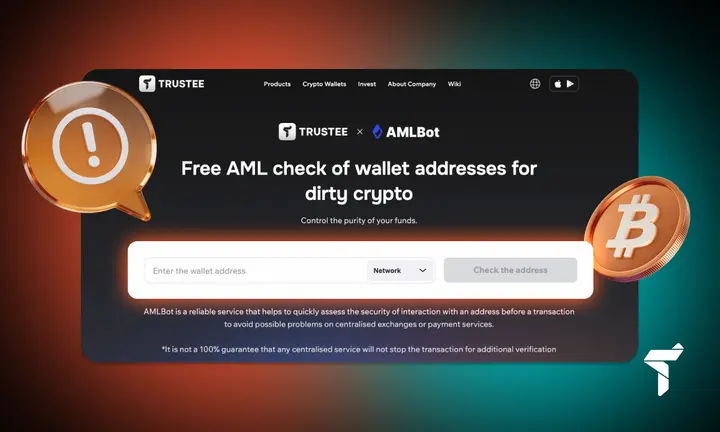
You can run a free crypto wallet screening for any BTC, TRX, ETH, ARB, or MATIC address. Here's how it works:
-
Choose The Network. Select BTC, TRX, ETH, ARB, or MATIC depending on which blockchain the address is on. Make sure you’re matching the network to the address — a TRX address will look different from a BTC address.
-
Paste The Address. Enter the wallet address you want to check. This can be the sender’s address (before accepting funds), a recipient’s address (before sending), or your own wallet address (before withdrawing to an exchange).
-
Get The Result. The check takes a few minutes. Don’t close or refresh the page while it runs. You’ll get a risk percentage, a breakdown of risk sources, blacklist status, cluster associations, and optionally the address balance and transaction volume.
How to Read the Results
The risk score is a percentage from 0 to 100. Here’s what it means in practice.
|
Score |
Level |
What it Means |
|
0–25% |
Low/Safe |
Normal to proceed. Sources are licensed exchanges, wallets, miners, or legitimate services. |
|
25–75% |
Medium/Caution |
Proceed with caution. May include unlicensed exchanges, ATMs, or ambiguous services. Some centralized exchanges may flag these funds for review. |
|
75–100% |
High/Avoid |
Significant risk. Sources may include mixers, darknet markets, sanctions, stolen funds, ransomware, or fraudulent services. Likely to be flagged or blocked by compliant platforms. |
Understanding The Risk Sources
Beyond the score, the report shows you which categories of risk were detected. Here’s what the main ones mean in plain terms:
- Sanctions. The address or a connected address appears on an official sanctions list (OFAC, EU, UN, or similar). This is the most serious flag. Any compliant platform will block these funds.
- Mixer. Funds passed through a mixing service designed to obscure transaction history. Even if your transaction is clean, exposure to a mixer raises flags on most regulated exchanges.
- Stolen Сoins. Funds trace back to a known hack or theft. These assets are tracked globally, and holding or moving them can trigger action from the platforms involved in the original investigation.
- Dark Market. Connected to addresses associated with darknet marketplaces.
- Ransomware. Funds linked to known ransomware wallet clusters. Exchanges have become increasingly aggressive about blocking these.
- Gambling. Associated with gambling platforms. This is medium-risk and depends on the exchange — some flag it, others don’t.
- Exchange (Unlicensed). Passed through an exchange operating without a license. Higher risk than licensed exchanges, but not necessarily a hard block.
- P2P Exchange (Unlicensed). Transacted via an unlicensed P2P platform. Similar to unlicensed exchange: medium risk that varies by destination platform.
One Important Caveat
An AML check is not a 100% guarantee that a centralized service won’t request additional verification. It gives you an accurate, data-driven picture of the risk — but each exchange sets its own thresholds and may apply additional criteria. A clean result significantly reduces the likelihood of problems, but it doesn’t eliminate all compliance checks on external platforms. Use it as a strong signal, not a pass.
Three Things People Get Wrong About AML Checks
“I only deal with known people, so I don’t need to check”
Knowing someone personally doesn’t tell you anything about the history of their wallet. The person might be entirely trustworthy, but if they received funds from a high-risk source before sending to you, that history travels with the coins. AML analysis is about the asset’s chain, not just the sender’s character.
“If Trustee accepted it, I’m fine everywhere”
Trustee’s built-in screening protects your balance inside Trustee. But when you move funds to a third-party exchange, that exchange runs its own independent checks. Each platform sets its own risk thresholds, and some are stricter than others. Passing Trustee’s screen doesn’t guarantee you’ll pass a different platform’s screen.
“AML checks are for big transactions”
Risk doesn’t scale with amount. A 50 USDT transfer from a wallet connected to a sanctioned address is just as flaggable as a 50,000 USDT transfer. The issue is the origin, not the size. Smaller transactions from risky sources can still cause holds or documentation requests.
Practical Habits Worth Building
You don’t need to check every address for every transaction. But these situations are worth making into a habit:
- Check the sender's address before receiving crypto from someone you don't know.
- Check any address before sending a significant amount if you're not sure who controls it — not for AML reasons, but as a scam filter.
- Check your own wallet address before withdrawing to an exchange you've never used, if you've previously transacted with unfamiliar counterparties.
The Bottom Line
AML checks exist because crypto transactions are irreversible and traceable. Once you’ve accepted funds with a problematic history, you can’t give them back to some neutral party — you either hold them, move them further, or deal with a freeze. The check gives you information before any of that happens.
Trustee Plus handles the incoming screening automatically, which covers a lot of ground. But the situations where you’re the one initiating a transaction — a P2P trade, a payment acceptance, a withdrawal to a new platform — are where a quick manual check pays off.
Two minutes to check. Potentially hours or days saved on holds, documentation requests, and support tickets.
Already Have An Address In Mind?
Run the Сheck — BTC, TRX, ETH, ARB, and MATIC supported.
FAQ
Is the Trustee AML Checker Free?
Yes. The AML Сhecker by AMLBot & Trustee is free to try. It runs on AMLBot infrastructure and supports BTC, TRX, ETH, ARB, and MATIC addresses with no registration required.
How Do I Check If A Crypto Wallet Is Clean?
Paste the wallet address into a free AML Checker like the one at trustee.io/aml-checker, select the network, and wait for the risk score. A result below 25% is considered safe. Anything above 75% indicates significant risk and is likely to be flagged by exchanges.
What Does A High AML Risk Score Mean?
A high score (75–100%) means the address has traceable exposure to flagged sources — such as mixers, sanctioned entities, darknet markets, stolen funds, or ransomware wallets. It doesn't necessarily mean the current holder did anything wrong, but compliant exchanges are required to act on it.
Can I Check a USDT address for AML Risk?
Yes. USDT on TRX (TRC-20) and ETH (ERC-20) networks can be checked using the AMLBot & Trustee AML Checker. Select the corresponding network when entering the address.
Why Did An Exchange Freeze My Crypto?
Most exchange freezes happen because an incoming deposit has traceable links to high-risk sources in its transaction history. Running an AML check before depositing to a new exchange can identify this risk in advance and help you avoid holds or documentation requests.
What's The Difference Between AML Risk Score 25% and 75%?
A score under 25% means sources are predominantly clean — licensed exchanges, miners, legitimate services. Between 25–75% indicates some exposure to ambiguous or unlicensed services; some strict exchanges may flag this. Above 75% means significant exposure to clearly illicit sources and is very likely to cause problems on any compliant platform.
Do I Need To Check My Wallet If I Only Use Trustee Plus?
Trustee Plus screens all incoming deposits automatically via AMLBot, so your balance is protected by default. Manual checks are most useful when you're using a non-custodial wallet, receiving funds outside Trustee, or sending to a third-party exchange that runs its own independent screening.