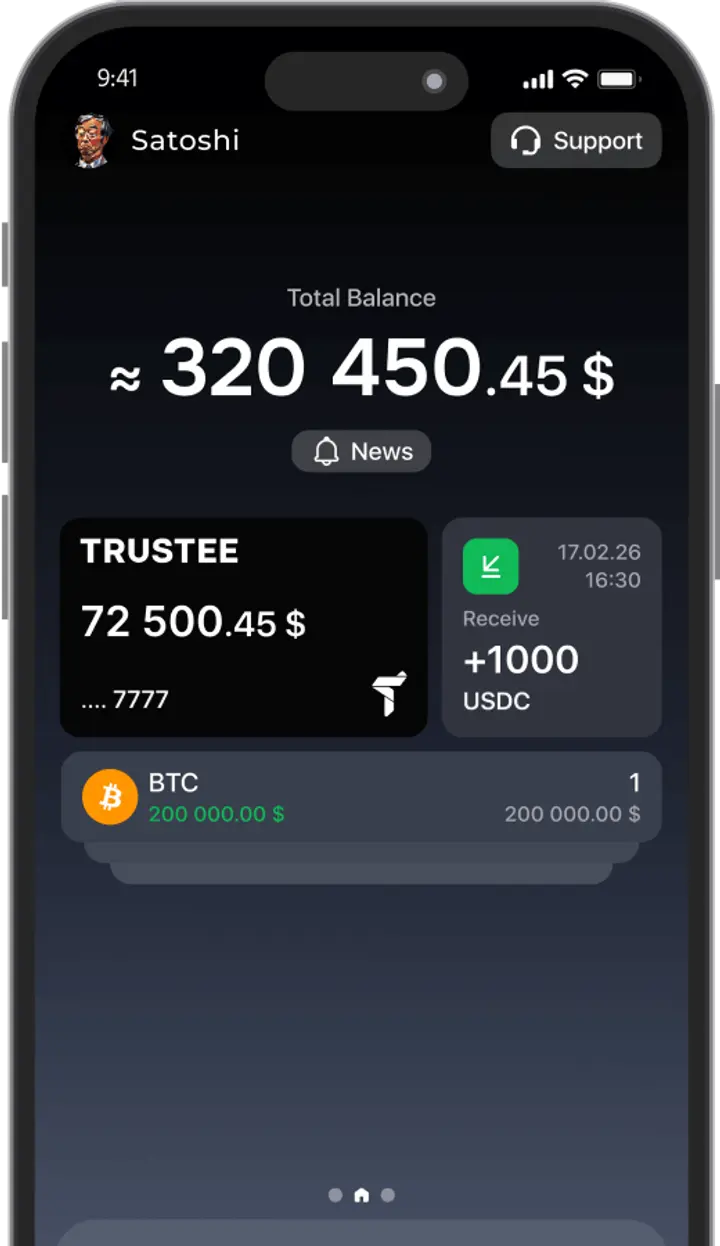






























Many crypto cards advertise "0% fees" and attractive payment conditions worldwide.
To find out which card actually helps users save money, crypto enthusiasts conducted a simple experiment in Warsaw. Nine popular crypto cards were used to pay for the exact same order at McDonald's.
How the Test Was Conducted
To ensure fair and comparable results, the same conditions were applied to all cards:
-
- The same Big Mac Meal was purchased for 23.2 PLN;
- All transactions were completed within a 90-minute period;
- The same POS terminal was used;
- Payments were made via Apple Pay or Google Pay;
- A benchmark value of 6.56 USDC was used for comparison.
Results: The Real Cost of One Big Mac Meal
The gap between the best and worst-performing cards turned out to be surprisingly large — almost 4%.
|
Rank |
Card |
USDC Spent |
Difference |
|
1 |
READY |
6.5100 |
-0.76% |
|
2 |
MetaMask Card |
6.5493 |
-0.16% |
|
3 |
Trustee Plus |
6.5600 |
0.00% |
|
4 |
NEXO |
6.5930 |
+0.50% |
|
5 |
Tippo |
6.6400 |
+1.22% |
|
6 |
KOLO |
6.6500 |
+1.37% |
|
7 |
Redot Pay |
6.6559 |
+1.46% |
|
8 |
WhiteBIT |
6.6943 |
+2.05% |
|
9 |
Bybit Card |
6.7526 |
+2.94% |
At first glance, the difference may seem like just a few cents. However, for users who regularly pay with crypto cards, these costs can add up to hundreds of dollars per year.
Calculator
Want to know how much using a crypto card really costs? Use our interactive calculator: enter your average spending, and it will instantly calculate the fees and show how much money you could save over a month, a year, or any other period.
Your Stack
You overpay
over 12 months vs top‑1
Calculation: spread × subscriptions × months. Excludes cashback, gas, FX fees.
Why Does the Difference Exist?
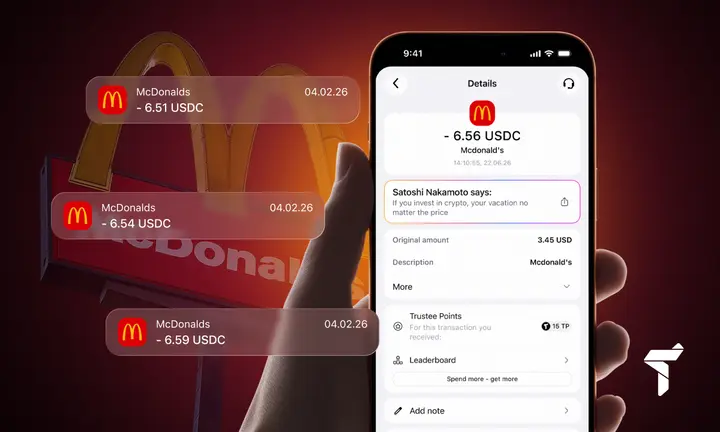
Most providers do not charge a direct payment fee. Instead, they generate revenue through the conversion rate.
For example, if a product costs €10, one card may deduct the equivalent of €10.05, while another may charge €10.30. Technically, there is no explicit fee, but in reality, you are paying more.
Top 3 Cards Based on the Test Results
Trustee Plus
Trustee Plus delivered a result that was virtually identical to the leaders of the ranking.
Advantages:
-
- Fast verification process;
- English-language interface;
- Support for USDT on TRC20;
- No fees for stablecoin exchanges within the platform.
These features make Trustee Plus one of the most convenient options for everyday crypto users.
READY
READY achieved the best overall result in the test and offered the most favorable conversion rate.
Advantages:
-
- Minimal losses during payments;
- Competitive exchange rates.
Disadvantages:
-
- Funding the account may be less convenient compared to some alternatives.
MetaMask Card
MetaMask Card allows users to spend funds directly from a Web3 wallet.
Advantages:
-
- Ideal for DeFi users;
- One of the strongest performances in the test.
Disadvantages:
-
- More complex onboarding process;
- Less beginner-friendly.
The Worst-Performing Cards
The weakest results came from cards that incurred additional costs during cryptocurrency conversion and foreign exchange operations.
As a result, users paid almost 3% more compared to the best-performing cards in the ranking.
What Matters for Travelers
If you travel frequently, conversion rates should not be the only factor you consider.
Other important features include:
-
- Availability of KYC verification;
- English-language support;
- USDT TRC20 compatibility;
- Easy account top-ups.
How Much Could You Lose in a Year?
Let's assume you spend $2,000 per month using a crypto card.
If the exchange-rate difference is around 3%, your additional cost could reach:
-
- Approximately $59 per month;
- More than $700 per year.
In other words, choosing the wrong card may cost significantly more than it initially appears.
Conclusion
The experiment demonstrated a simple reality: not all crypto cards are created equal.
The difference between the best and worst-performing options approached 4%, which can translate into meaningful losses for users who regularly spend cryptocurrency.
The key takeaway is simple: don't focus solely on marketing promises of "0% fees." Always check how much cryptocurrency is actually deducted when making a purchase.