


























Smart contracts have long stopped being a narrow technical term for blockchain developers. Today they are discussed in the context of cryptocurrencies, DeFi, asset tokenisation, NFT, decentralised exchanges, DAO, business automation and even the legal regulation of digital transactions.
In this article, we will explain what a smart contract is in simple terms, how it works on the blockchain, how it differs from a traditional agreement, what types of smart contracts exist, where they are used in practice, what their pros and cons are, and what you need to know before creating your own smart contract.
Key Takeaway
-
- A smart contract is a programme that automatically performs pre-set actions when certain conditions are met.
- The simple logic of a smart contract follows the “if... then...” model: if the condition is met, the action is launched without intermediaries.
- On the blockchain, smart contracts are used to exchange cryptocurrencies, tokens, rights, data and other digital assets.
- The main advantages of smart contracts are automation, transparency, speed, the absence of intermediaries and a lower risk of human error.
- The main risks are code errors, vulnerabilities, dependence on oracles, the complexity of legal regulation and the inability to easily change a contract that has already been deployed.
- Ethereum remains one of the key platforms for smart contracts, although today they are also supported by BNB Chain, Solana, Tron, Polygon, Avalanche, Arbitrum, Optimism, TON, Hyperledger Fabric and other networks.
- Before launching a smart contract, testing, security auditing and precise formalisation of the transaction terms are essential.


What is a smart contract in simple terms?
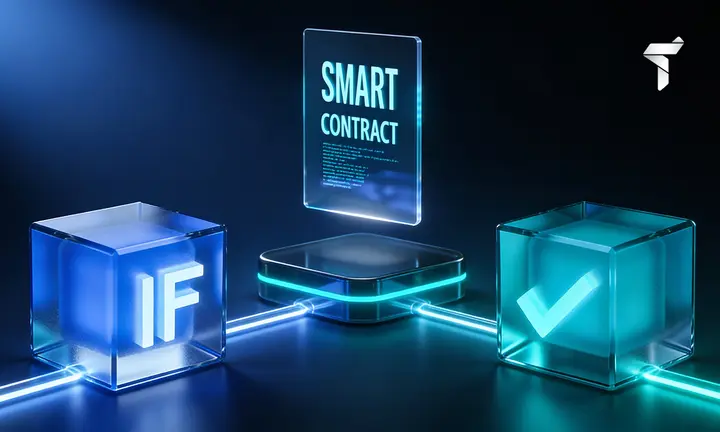
A smart contract is a digital algorithm that allows assets, rights or data to be exchanged when clearly defined conditions are met, without the involvement of intermediaries.
Put simply, it is a programme that automatically performs an action if a pre-set condition occurs. For example: if the buyer sends payment, then the seller receives the money and the buyer receives access to the product or service.
This is why smart contracts are often described using the “if... then...” model. If the condition is met, the action starts automatically. If the condition is not met, the action does not happen.
On the blockchain, a smart contract works as a digital agreement: its terms are written into code, and execution is confirmed by the network. Such a contract does not need to be “pushed” manually: after launch, it is executed according to the rules embedded when it was created.
Why is a smart contract called “smart”?
The idea of smart contracts was formulated back in the 1990s by cryptographer and legal scholar Nick Szabo. He viewed them as computer protocols that help formalise and automatically execute the terms of a transaction.
Different views on what a smart contract is
A smart contract can be described from different points of view:
-
- From a technical point of view, it is a piece of programme code that performs specific tasks when pre-defined conditions occur.
- From a blockchain point of view, it is a programme placed in a distributed network and executed by its participants according to common rules.
- From a legal point of view, it is a digital mechanism for executing an agreement, or a separate element of a contract, using software.
- From a user’s point of view, it is a way to automatically carry out a transaction without having to trust the other party directly.
These definitions do not contradict each other. They simply describe the same technology from different angles. In this article, we will consider a smart contract primarily as a blockchain-based technology.
A brief history: from Nick Szabo’s idea to blockchain
Nick Szabo described a smart contract as a computer protocol that independently conducts transactions and controls the fulfilment of obligations using mathematical algorithms. But when the idea first appeared, the necessary infrastructure did not exist: there was no mass-market blockchain, no cryptocurrencies, no decentralised networks and no convenient wallets.
Bitcoin smart contracts
Initially, the Bitcoin protocol was not created as a full-fledged platform for smart contracts. Its main purpose is to transfer value between network participants. However, Bitcoin does have a built-in scripting language called Script, which allows simple logical operations to be performed.
Turing completeness is an important parameter for smart contract platforms. In simple terms, it is the ability of a system to implement any computable function, provided sufficient resources are available. For a blockchain, this means the ability to create complex programme logic, not only simple conditions.
Examples of smart contracts in Bitcoin
-
- Escrow. To use funds, the signature of a third party acting as the transaction arbitrator is required.
- Multisig. A transaction can be completed only after signatures from several participants from a pre-defined list.
- Conditional inheritance. If a wallet remains inactive for a long time, funds may become available to heirs after a certain block or date.
- Safe. Funds cannot be spent until a specified time or block.
- Atomic swaps. The exchange of assets between different blockchains without a centralised intermediary.
- Payment channels. The basis for second-layer solutions, including the Lightning Network.
Because implementing more advanced logic in Bitcoin is difficult, there was a need for new blockchain platforms focused specifically on smart contracts.
Ethereum smart contracts
The potential of smart contracts and the limitations of Bitcoin were recognised by Vitalik Buterin. This led to the creation of the Ethereum platform, which made it possible to create Turing-complete smart contracts and decentralised applications.
The main differences of Ethereum are the Solidity programming language, the Ethereum Virtual Machine (EVM) and the ability to store the state of an application on the blockchain. This means that the network treats each transaction not as an isolated action, but as part of a wider system.
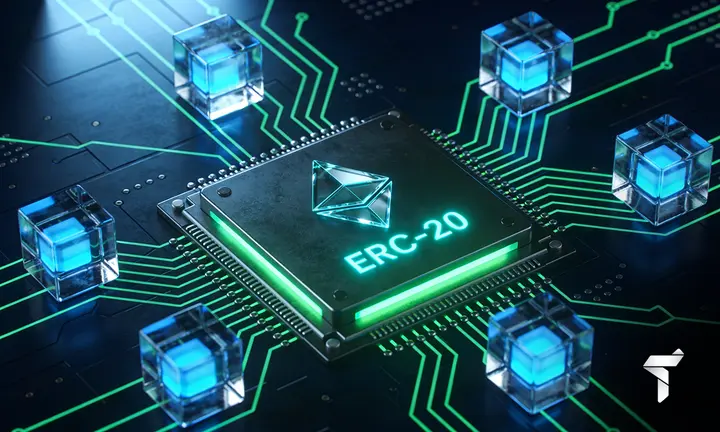
Ethereum also introduced the ability to create tokens according to common standards. The best-known is ERC-20 — a fungible token standard that simplified interaction between wallets, exchanges, DeFi protocols and other projects.
Today, Ethereum remains one of the most in-demand ecosystems for smart contract development, but the market has become much broader. Smart contracts are actively used on BNB Chain, Polygon, Arbitrum, Optimism, Base, Avalanche, Tron, Solana, TON, Near, Cosmos, Hyperledger Fabric and other networks.
For the user, this means more choice: some networks offer lower fees, others higher speed, some better EVM compatibility, and others a stronger focus on enterprise solutions or mobile applications.
Types of smart contracts
Smart contracts can be classified according to several criteria: execution environment, level of programmability, degree of privacy and area of application.
1. By execution environment
-
- Centralised smart contracts. They operate on a centralised platform with a single operator or validator, while the registry is stored on controlled infrastructure. Examples include automated contracts used by banks, insurance companies, mobile operators or marketplaces.
- Decentralised smart contracts. They operate on a blockchain, where execution is confirmed by a network of nodes and data is distributed among participants.
2. By level of programmability
-
- Freely programmable. Turing-complete smart contracts that allow complex business logic to be implemented.
- Limited. Turing-incomplete contracts with a narrow set of permitted operations.
- Pre-set. Contracts with strictly defined logic and a limited set of parameters.
3. By level of privacy
-
- Fully open. The code, conditions and results are publicly available.
- Partially open. Some data is publicly visible, while some is hidden or available only to participants.
- Confidential. They use private networks, encryption, zero-knowledge proof or other data protection methods.
4. By area of application
-
- Financial smart contracts — DeFi, lending, exchange, staking, derivatives and liquidity.
- Tokenisation smart contracts — issuing tokens, NFTs, digital rights and real-world assets.
- Governance smart contracts — DAO, voting, distribution of rights and powers.
- Infrastructure smart contracts — bridges, oracles, multisig wallets and protocol automation.
- Enterprise smart contracts — logistics, document flow, insurance, accounting and compliance.
How smart contracts work on the blockchain

A smart contract is a programme that is created, deployed and executed on the blockchain. It is a digital agreement where the fulfilment of a specific condition always leads to a pre-set result: the transfer of assets, granting of access, registration of a right, change in the state of a record or launch of another action.
Main elements of a smart contract
-
- Platform. The blockchain or distributed environment where the contract is deployed and executed, such as Ethereum, Polygon, Solana or Hyperledger Fabric.
- Subject of the transaction. Assets, rights, data, goods, services, cryptocurrency or tokens transferred under the contract terms.
- Conditions. The rules that must be fulfilled for the action to be triggered.
- Parties. Participants in the exchange who interact with the contract through addresses and digital signatures.
- Oracles. External data sources that transmit information from the real world to the blockchain: asset prices, match results, delivery status, weather data or other events.
- Network fee. The fee for executing operations, often called gas.
Key features of smart contracts
-
- Distribution. Contract data and execution are confirmed by network participants.
- Determinism. Under the same initial conditions, the contract always produces the same result.
- Autonomy. After launch, the contract runs automatically.
- Immutability. Usually, after deployment, the contract cannot be changed without a pre-defined upgrade mechanism.
- Configurability. During development, complex logic and different execution scenarios can be written into the contract.
- Transparency. In public blockchains, the code and transactions are often available for verification.
- Trust in the protocol. The parties trust not each other, but the code, cryptography and network rules.
How a smart contract works
The smart contract process can be described step by step:
- The user initiates a transaction or another action.
- The information is transmitted to the blockchain network, which consists of nodes.
- The nodes verify the data, signatures, balance, contract terms and correctness of the operation.
- If the conditions are met, the transaction enters a new block.
- The block is added to the chain of blocks.
- The contract automatically performs the specified action.
- The result is recorded on the blockchain.
Smart contract use cases
Today, smart contracts are used far more widely than they were in the early stage of the crypto market. They are used wherever transparent, fast and automatic execution of recurring conditions is required.
Main areas of smart contract application
-
- DeFi. Decentralised exchanges, lending, staking, farming, derivatives and automated market makers.
- Asset tokenisation. Issuing tokens linked to property, securities, commodities, rights or digital objects.
- NFT and digital art. Automatic transfer of rights, royalties for creators and confirmation of ownership.
- DAO. Voting, treasury allocation, protocol governance and collective decision-making.
- Logistics. Tracking deliveries, delivery statuses and automating payments when conditions are met.
- Insurance. Automatic payouts when an insured event occurs, such as a delayed flight or adverse weather conditions.
- Games and GameFi. Ownership of in-game items, in-game economies, rewards and asset trading.
- Identity. Managing digital identities, access rights and data verification.
- Enterprise processes. Document flow, settlements, clearing, accounting and control of obligations.
Example use case: buying an e-book with cryptocurrency
- Under the terms of the smart contract, access to the book opens after payment of a certain number of coins or tokens.
- The buyer sends cryptocurrency and initiates a request to gain access.
- The smart contract checks the payment, the recipient address and fulfilment of the conditions.
- After confirmation, the transaction enters the blockchain.
- The seller receives payment, and the buyer automatically receives access to the book.
This process does not require manual verification, an intermediary or a separate payment administrator. If the conditions are met, the result occurs automatically.
Conditions for the widespread adoption of smart contracts

For smart contracts to become a mass-market tool not only in cryptocurrency, but also in everyday life, several conditions are needed.
1. Reliable blockchain infrastructure
Smart contracts need an execution environment: blockchain, a distributed ledger, wallets, oracles, interfaces, audit tools and monitoring systems.
2. Wider use of cryptocurrencies and stablecoins
Cryptocurrencies and stablecoins often serve as the unit of account and “fuel” for smart contracts. The easier it is for users to buy, store and send digital assets, the easier it is to introduce smart contracts into real-world processes.
3. Accessibility for ordinary users
Mass adoption is impossible if smart contracts remain understandable only to developers. Simple wallets, clear interfaces, secure applications and convenient access recovery methods are needed.
4. Legal regulation
Cryptocurrencies, tokens and smart contracts remain subject to developing legal regulation. In Ukraine, virtual assets are not prohibited, but a full special regulatory regime is still in the process of being formed, while in practice general rules of civil, commercial, tax and financial law apply.
For businesses, this means that before using smart contracts in legally significant transactions, it is important to consult specialised professionals, especially when it comes to asset tokenisation, investments, settlements, property rights or working with client funds.
Pros and cons of smart contracts
Smart contracts look promising because they remove intermediaries and automate the execution of conditions. But the technology has not only advantages, but also limitations.
|
Pros |
Cons |
|
Independence. There is no need for intermediaries to execute the conditions. |
Lack of trust among mass-market users. Many people still see blockchain as a complex and risky technology. |
|
Security. Data is recorded on the blockchain and protected by cryptography. |
Code errors. A vulnerability can lead to loss of funds or incorrect contract execution. |
|
Automation. Conditions are executed without manual checks or delays. |
Development complexity. Creating a reliable smart contract requires technical expertise and testing. |
|
Speed. Operations are performed faster than in many traditional processes. |
Network fees. During periods of high load, the cost of executing operations can rise. |
|
Cost savings. Operating expenses and dependence on intermediaries are reduced. |
Legal uncertainty. Not all jurisdictions clearly understand how exactly to classify a smart contract. |
|
Transparency. Conditions and results can be verified on the blockchain. |
Privacy issues. In public networks, data is often available for analysis. |
|
Predictability. The same set of conditions leads to the same result. |
Dependence on oracles. If an external data source is wrong, the contract may execute incorrectly. |
|
Immutability. Conditions cannot be arbitrarily rewritten retroactively. |
Lack of flexibility. If there is an error in the contract, fixing it after launch can be difficult or impossible. |
Creating and developing smart contracts

There are two ways to create your own smart contract: hire professional blockchain developers or try to write it yourself. The second option is suitable only for those who understand the basics of programming, blockchain architecture and security.
How to choose a smart contract platform
The choice of platform depends on the goals of the project. Ethereum-compatible networks are often chosen for DeFi and tokens. For high speed and low fees, Solana, Polygon, BNB Chain, Arbitrum, Optimism, Avalanche or other solutions may be suitable. Hyperledger Fabric and private blockchains are used for enterprise scenarios.
When choosing, it is important to consider:
-
- transaction costs;
- network speed;
- security level;
- ecosystem size;
- availability of developers;
- wallet and exchange support;
- regulatory and business requirements.
Programming languages for smart contracts
Different languages are used for smart contract development:
-
- Solidity — the main language for Ethereum and EVM-compatible networks.
- Vyper — a language for Ethereum with a focus on simplicity and security.
- Rust — used in Solana, Near, CosmWasm and other ecosystems.
- Move — used in Aptos, Sui and several other networks.
- Script — Bitcoin’s scripting language.
- JavaScript and TypeScript — often used for tests, deployment scripts and interaction with contracts.
Why a smart contract audit matters
Before launching a smart contract, testing and an audit must be carried out. This is especially important if the contract will manage user funds, tokens, NFTs, liquidity or access rights.
An audit helps identify:
-
- logic errors;
- re-entrancy vulnerabilities;
- administrator permission issues;
- rounding errors;
- oracle manipulation risks;
- the possibility of funds being frozen;
- unforeseen execution scenarios.
The future of smart contracts
Smart contracts have already become a foundational technology of the crypto market. DeFi protocols, NFT marketplaces, tokens, DAOs, decentralised exchanges, blockchain games and many Web3 applications run on them.
The next stage of development is linked to several areas:
-
- Scaling. Layer-2 networks and new blockchains reduce fees and speed up transactions.
- New-generation oracles. Smart contracts receive more and more verifiable real-world data.
- Tokenisation of real-world assets. Property, bonds, commodities and rights can move into digital format.
- Integration with AI. Artificial intelligence can help analyse data, but the execution of conditions will still be fixed in code.
- Development of regulation. The clearer the legal status of digital assets becomes, the easier it is for businesses to use smart contracts.
- Improved user experience. Wallets and applications are becoming simpler, safer and closer to familiar financial services.
Summary
A smart contract is a hybrid of an agreement and programme code. It automatically performs specified actions when certain conditions are met and allows operations to be carried out without intermediaries.
Smart contracts can not only automate standard procedures, but also change the approach to finance, governance, digital rights, business operations and user interaction on the internet. The main thing is to understand not only their advantages, but also their risks: the code must be verified, the conditions must be correctly formulated, and work with cryptocurrency must be safe.
FAQ — answers to common questions about smart contracts
What is a smart contract in simple terms?
A smart contract is a programme that automatically performs an action if pre-set conditions are met. For example: if payment is received, access to a service opens automatically.
How does a smart contract differ from a traditional agreement?
A traditional agreement requires trust in the parties, intermediaries or a court. A smart contract is executed automatically by code. But it is important to understand: not every smart contract is a full legal agreement in itself. It often acts as a technical mechanism for executing conditions.
Where are smart contracts used?
Smart contracts are used in DeFi, asset tokenisation, NFTs, DAOs, decentralised exchanges, insurance, logistics, games, digital identity, voting and business process automation.
Can a smart contract be changed after launch?
Usually not. If a contract is deployed on the blockchain without an upgrade mechanism, it cannot be changed. Some projects use upgradeable contracts, but this requires additional architecture and a higher level of trust in administrators.
What is gas in smart contracts?
Gas is the fee for performing operations on the blockchain. The user pays it for launching smart contract functions, sending transactions and recording data on the network.
What is an oracle in a smart contract?
An oracle is a source of external data for the blockchain. It transmits real-world information to a smart contract: asset prices, event results, delivery status or other data that the blockchain itself cannot obtain.
Does a smart contract need an audit?
Yes, especially if the contract works with money, tokens, NFTs or user assets. An audit helps find errors and vulnerabilities before launch, when they are much easier to fix.
Are smart contracts safe?
The technology itself can be very reliable, but security depends on the quality of the code, architecture, oracles, administrator rights and testing. An error in a smart contract can lead to loss of funds.
Which platform is best for creating smart contracts?
It depends on the task. Ethereum and EVM-compatible networks are suitable for DeFi and tokens, Solana for high-speed applications, Hyperledger Fabric for enterprise solutions, and Bitcoin for more limited logic and payment scenarios.
Can smart contracts be used without technical knowledge?
Yes, if you use ready-made applications: wallets, DEXs, DeFi services or NFT marketplaces. But before confirming a transaction, it is important to understand what permissions you are granting and which contract you are interacting with.